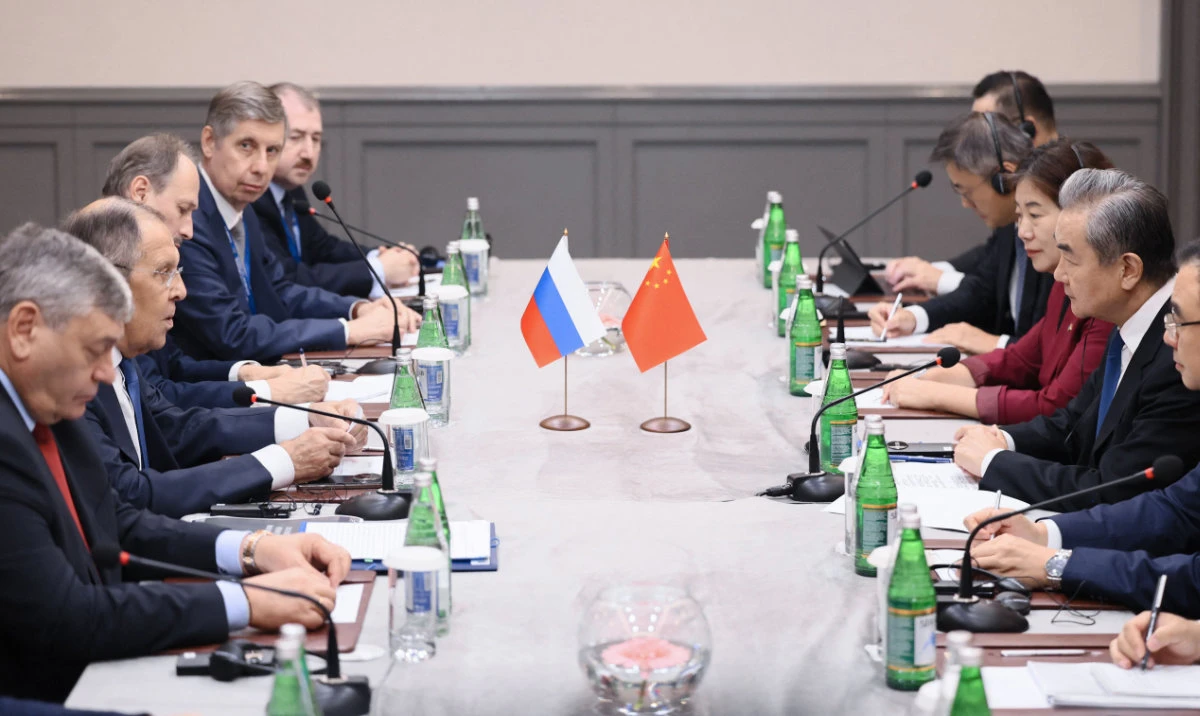
BRUSSELS/BELGRADE: Crunch talks to end the ethnic partition of Serbia's former Kosovo province broke up without result yesterday, in a potential blow to Serbia's hopes of starting European Union membership negotiations this year.
Serbia is under pressure from the West to relinquish its hold on a Serb-populated pocket of majority-Albanian Kosovo if it is to secure accession talks with the EU, in what would be a major boost for the biggest economy to emerge from the collapse of federal Yugoslavia.
Kosovo seceded in 2008 but Serbia does not recognise it as independent. After eight rounds of talks in Brussels, and a marathon 12-hour meeting that ended overnight, the EU said the gap between the two sides was “very narrow, but deep.”
It said they would not meet again formally under the mediation of the EU's foreign policy chief, Catherine Ashton.
A mid-April progress report by Ashton will form the basis of a decision in June by the 27-member EU on whether to open accession talks with Serbia, a process aimed at cementing stability in the region more than two decades since Yugoslavia unravelled in war and ethnic cleansing.
Offering some hope a deal might still be reached, Ashton said the prime ministers of Serbia and Kosovo would return to their capitals for consultations "and will let me know in the next few days of their decision."
Serbian Prime Minister Ivica Dacic, a former wartime aide of late Serb strongman Slobodan Milosevic, said, "This isn't the end."
His Kosovo counterpart, former guerrilla commander Hashim Thaci, mooted the possibility of another meeting next week, but did not say under whose auspices it might take place or where.
"We hope they (Serbia) will use the time in the coming days for sincere reflection," Thaci told reporters. "I remain hopeful an agreement can be reached."
With Croatia about to become the second ex-Yugoslav republic to join the EU in July, the West wants to anchor Serbia in accession talks that would drive reform and help lure investors to the landlocked country of 7.3 million people.
Slovenia joined the EU in 2004, Montenegro, which left a state union with Serbia in 2006, has already begun accession talks and is next in line behind Croatia.
But the EU is conditioning Serbia's progress on a process it calls "normalizing relations" with Kosovo — establishing functional, neighbourly relations and tackling an ethnic partition between Kosovo's Albanian majority and 50,000 Serbs in the north who say they want to remain part of Serbia.
Kosovo, a territory of 1.7 million people, broke away from Serbia in 1999 when NATO bombed for 11 weeks to halt the killing and expulsion of Albanian civilians by Serbian forces under Milosevic waging a brutal counter-insurgency war.
Belgrade retained de facto control over the north in a stubborn ethnic partition that has frustrated NATO's hopes of cutting back its now 6,000-strong peacekeeping force. Recognised by more than 90 countries, including the United States and 22 of the EU's 27 members, Kosovo wants the north back.
Serbia's nine-month-old coalition government, desperate for the economic boost of closer EU ties, has offered to recognise the authority of Thaci's government over the north, but wants autonomy for the Serbs living there.
The talks are stuck on the powers the north would wield, including the possibility of its own judiciary and police.
Analysts say failure to clinch EU accession talks could shatter Serbia's ruling coalition and force an early election, with the nationalist Serbian Progressive Party riding high in opinion polls. It would also inflict more pain on the struggling Serbian economy, which contracted 1.7 percent in 2012.