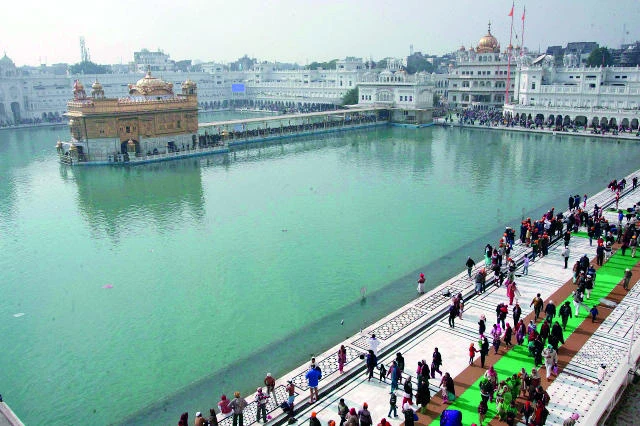
DELHI/LONDON: The police raid on India’s Golden Temple in 1984 rakes up a bizarre controversy besetting the ruling Congress party on the eve of general elections, which is due soon.
The latest row involves Britain which some declassified documents suggest was involved in advising then Indian government as how to proceed with the raid on the temple to flush out militants from the temple in 1984.
Lt Gen (Retd) K S Brar, the military commander who had led Operation Bluestar has however rubbished the claims that UK special forces advised and assisted the Indian operations.
Getting a shot in the arm before parliamentary elections, the main opposition party, the Bharatiya Janata Party (BJP), said the government has to “tell us the truth as to what the real facts were.”
The revelations of the possible UK involvement in the raid came up when a UK MP claimed he possessed declassified documents dated February 1984 that ‘reveal’ that Margaret Thatcher’s government had aided India in the Operation Bluestar by sending in an advisor from the British SAS special forces.
“It sounds like fiction to me. I can assure you that Operation Bluestar was planned and executed by the Indian Army. There is no question of any foreign, British assistance or the SAS planning the operations for us,” Brar, who survived a murder attempt by a radical Sikh group in London in 2012, told local media in New Delhi.
Prime Minister David Cameron has meanwhile ordered an investigation into official papers which suggest the British government of Margaret Thatcher helped India plan an attack against Sikh separatists in the Golden Temple at Amritsar.
The papers, first published by the Stop Deportations blog, detailed a secret advisory mission to India by an unnamed officer from the Special Air Service, one of Britain’s most elite military units.
It’s not clear whether the Indians followed the officer’s plan, but the allegation that Britain played a role in the raid is explosive. The storming of the Golden Temple in Amritsar was one of the most violent episodes in the Indian government’s battle against Sikh separatists, and it led to massive loss of life and a breakdown in communal relations across India.
The attack on Sikhism’s holiest shrine angered Sikhs around the world who accused the Indian army of desecration. The death toll remains disputed, with the Indian authorities putting it in the hundreds and Sikh groups in the thousands.
The assault triggered the assassination of Indian Prime Minister Indira Gandhi, who ordered the attack, when two Sikh bodyguards killed her in revenge several months later.
Recently released British government papers from the time, publicised by Tom Watson, an opposition Labour party lawmaker, suggest Thatcher responded positively to an Indian government request for advice on planning the attack and sent an officer from the elite SAS special air service to help draw up a plan.
A spokesman for Cameron’s office said on Tuesday the British prime minister had ordered an investigation as a result.
“These events led to a tragic loss of life and we understand the very legitimate concerns that these papers will raise,” the spokesman said. “The Prime Minister has asked the Cabinet Secretary to look into this case urgently and establish the
facts.”
Jeremy Heywood, the cabinet secretary, is Britain’s top civil servant. Cameron and Foreign Secretary William Hague had been unaware of the papers prior to their publication, the spokesman added.
Syed Akbaruddin, a spokesman for India’s foreign ministry, said his government was only aware of the story from the media.
“We will take it up with our UK counterparts and seek more information,” he told Reuters TV.
Britain to probe possible role in Golden Temple raid