KATMANDU: A China-Nepal border point that was damaged by April’s devastating earthquake reopened Tuesday just as the small Himalayan nation struggles with supply shortages because of protests that have disrupted border points with India in the south.
Meanwhile, a large number of trucks carrying transport and cooking fuel entered Nepal on one of the southern routes that had been blocked for weeks. India and China are major trading partners of the country sandwiched between the giant Asian rivals.
Both of the two major trading points on the border between Nepal and China were shut down after the earthquake that killed thousands.
The border point at Jilung in southwest Tibet was opened after months of repair, Sun Lijun, who is the head of the port’s management committee, told China’s official Xinhua News Agency.
A customs official at the Nepal side, Durga Subedi, said he did not see any trucks enter Nepal on Tuesday but authorities there are ready for operation.
The Jilung border point was generally used to bring truckloads of clothes, furnishings, electronic and household items into Nepal but never for any oil products. The route is narrow and passes through mountainous terrain.
Since the protests began in southern Nepal by the Madhesi ethnic group, neighboring Indian has restricted fuel supplies, causing severe shortages. India, which has close ties with the ethnic group, has repeatedly denied there is any unofficial blockade and drivers are afraid to drive in Nepal, but trucks were stopped at border points even where there were no protests or trouble.
However, on Monday and Tuesday dozens of trucks, even those loaded with fuel, were allowed to cross the border.
Police official Pramod Kharel said 101 trucks that included 34 diesel, 14 gasoline and 15 cooking gas trucks entered Nepal from the Jogbani border point in the southeast on Tuesday. It was the biggest shipment of fuel to cross at that border point in the past two weeks.
Jogbani is one of the biggest trading points between Nepal and India. The main border point at Birgunj was still closed by protesters who are demonstrating in the middle of the border points between the two countries.
Officials said traffic on other border points was fine and they expected more fuel trucks to enter in the evening.
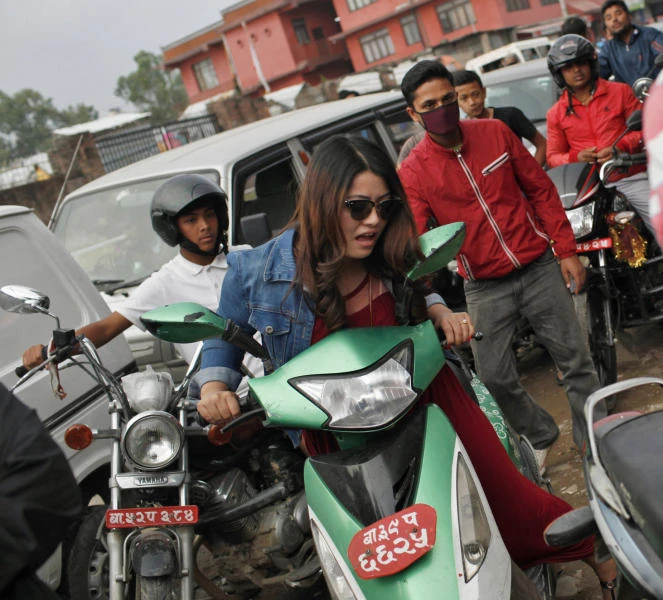
The shortages have forced cars off the streets, shortages of medicines and other supplies.
On Tuesday, the government announced private cars would be given a rationed amount of fuel which was the first time this month.
Tens of thousands of cars and motorcycles lines up outside service stations in Katmandu for miles (kilometers) and police had to control the drivers.
The Madhesis oppose the new constitution because it divides Nepal into seven new states, with some borders slicing through the Madhesis’ ancestral homeland in the southern plains. The Madhesis, along with several other small ethnic groups, want the states to be larger and to be given more autonomy over local matters.
Talks last week made little progress.
United Democratic Madhesi Front, the main Madhesi group, does not plan to ease its protests for the Dasain festival.
Upendra Yadav, one of the leaders of the group, said they would not stop until their demands are fully met.
“We will stop only after constitutional amendments have been made to address our demands. But until then our protests will continue,” Yadav said adding their participation in the voting for prime minister election in parliament was not an indication of them withdrawing their protests.
Yadav said they want changes made in the constitution that would readjust the state border, electoral constituencies would be redrawn on the basis of the population so that there would be more representation in parliament from the more populated southern Nepal, there would be more reservation of seats for the ethnic minorities in parliament seats, government jobs and positions and more autonomy powers to these new states.
Yadad said the main issue was increasing the area for their state.
China-Nepal border point reopens after earthquake repairs