- With India under lockdown since March 24, its workers from the poor and marginalized sections of society have been the worst impacted
- Thousands of domestic workers across India say that they have been left high and dry by their wealthy employers since the lockdown was imposed
NEW DELHI: Sameena Dawood Sheikh is worried about what will she eat when she breaks her fast today.
It has been the same for the past few days since the start of Ramadan in India and will continue until Sheikh returns to duty as a domestic helper at a house in Mumbai.
“Ramadan has come at a really difficult time for us this year,” the 45-year mother-of-two told Arab News.
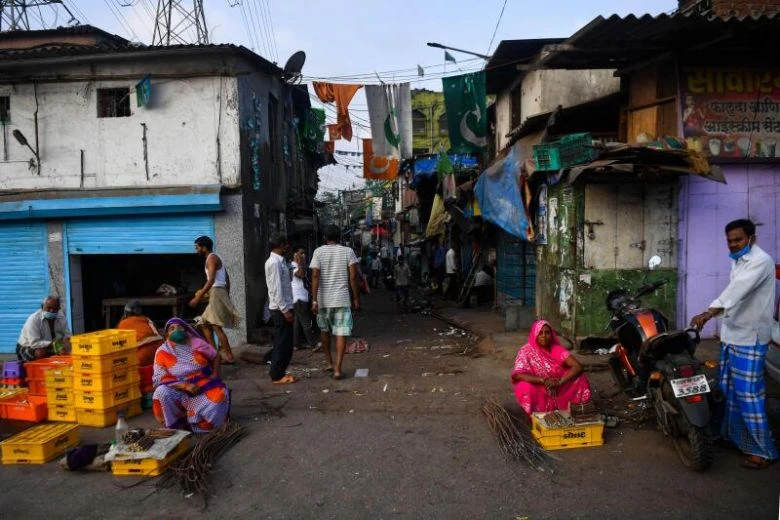
With India under lockdown since March 24 to limit the spread of coronavirus, its workers from the poor and marginalized sections of society have been the worst impacted.
“The house owner asked me to stop coming from March 25 without giving me any advance salary. My husband, who is a daily-wage laborer, has also lost his job and we are literally at the mercy of others to survive,“ Sheikh, who lives in a hut next to a railway track in the Kurla East area of India’s financial capital, told Arab News.
She added that although the government had promised to provide support during these difficult times, “nothing has happened yet.”
“The only assistance we get is a food packet from a local NGO,” she said.
This is also the story of her neighbor, Sunita Hari Tare, who in the absence of her husband is the sole earner for her four children.
“Coronavirus is not my worry . . . staying alive is. We don’t know what will happen to us if we remain jobless like this for long,“ Tare, 46, who is a domestic worker, told Arab News.
Adding insult to injury is the fact that the security guard of the housing society where she has been working for the past nine years has barred her from entering the area “for fear that I may be a virus carrier.”
This is the problem voiced by thousands of domestic workers across India who say that they had been left high and dry by their wealthy employers since the lockdown was imposed.
According to recent data shared by the Indian government, there are 4.2 million domestic workers across the country. However, the Mumbai-based NGO, the National Domestic Workers’ Movement, says it is in the range of 50 million.
“Domestic workers are today in a dire state, facing an existential crisis, with many of them without any money in hand,” Sujata Sawant, of Mumbai-based NGO Adarsh Foundation, which works with thousands of domestic workers in the Kurla East area of the city, told Arab News.
She added that her NGO, with the help of donations from generous citizens, distributes 6,000 food packets to slum dwellers every day.
“But they are not enough. They need more. They need some money at least to drink tea and eat biscuits,” she said.
Three days after the lockdown, the Indian government announced an economic package of $22.6 billion. It made provision for cash transfer to the poor, in addition to a supply of rations for all those with accounts under the prime minister people’s wealth scheme.
“People with ration cards are struggling to get food, let’s not talk about those without one. Effective intervention by the government is needed to address the issue of hunger among the domestic workers,” Sawant said.
Several of the domestic workers who spoke to Arab News hail from smaller towns and previously survived on their monthly income.
“I was washing dishes at home also and working at the construction site too, but the lockdown has dried up my income. I used to send some small amount to my parents back home, but now I am struggling to make ends meet,” Johani Minj, who lives in Delhi, told Arab News.
Three years ago, she came from the eastern state of Jharkhand to look for work in Delhi but says that she now feels helpless.
“No support has come from anywhere. Government assurance has not materialized so far. The only help I got, in the beginning, was from the church nearby,” Minj said.
India’s prominent economist, Jean Dreze, argues that India’s granary is full and “it should not allow its weakest members to starve.”
“Everyone knows that the country has large food stocks, and that some of this could be used to protect people from hunger during the coronavirus crisis,” he said.