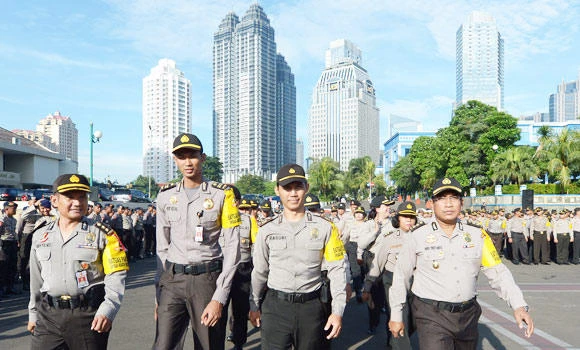
JAKARTA: Indonesians vote Wednesday in parliamentary elections expected to set popular Jakarta governor Joko Widodo, a fresh face in a country dominated by an ageing elite from the Suharto era, on course to become president in July.
Known universally by his nickname of “Jokowi,” 52-year-old Widodo has been a political phenomenon since he became the capital’s leader in 2012, and has topped presidential opinion polls for months.
His common touch — he regularly visits Jakarta’s slums in his trademark checked shirt — has made him a hit with voters weary of the Suharto-era tycoons and ex-military figures who have long been the main political players in the world’s third-biggest democracy.
Polls predict Widodo’s main opposition Indonesian Democratic Party of Struggle (PDI-P) will top the vote in the country’s fourth legislative elections since the end of dictator Suharto’s three-decade rule in 1998.
But voters are expected to punish the Democratic Party of President Susilo Bambang Yudhoyono, following a string of high-profile corruption scandals and criticism that his government has been ineffective in recent years.
The legislative elections set the stage for presidential polls on July 9. A party or coalition needs 20 percent of seats in the 560-seat lower house of Parliament or 25 percent of the national vote to field a candidate.
Film ‘Noah’ banned
Indonesia and Malaysia have banned the film “Noah”.
Film censors in both countries said Monday that the portrayal of Prophet Noah by any actor was against Islamic laws. Depictions of any prophet are shunned in Islam.
“The film Noah is not allowed to be screened in this country to protect the sensitivity and harmony in Malaysia's multi-racial and multi-religious community,” Film Censorship Board chairman Abdul Halim Abdul Hamid said in a statement.
Malay Muslims make up about 60 percent of Malaysia's 30 million people, and Christians about 9 percent.
In the world's most populous Muslim nation, the head of Indonesia's censor board Muchlis Paeni said the plot of the film directed by Darren Aronofsky contradicted both the Qur’an and the Bible.
“We don't want a film that could provoke controversies and negative reactions,” he said.
The Indonesian Council of Ulema, the country's most influential Islamic body, welcomed the move, saying films that could corrupt religious teachings should be outlawed.
Indonesia prepares for parliamentary polls