KABUL: Three men considered front runners in Afghanistan’s presidential election staged dramatic last-minute nominations on Sunday, the start of what is expected to be a chaotic but critical race for the palace in the first democratic transfer of power.
The April election is considered the most crucial since the US-led overthrow of the Taleban regime in 2001, with more than a decade of Western-led reforms resting on its outcome amid increasing Taleban violence.
It comes during the same year as the end of the NATO-led combat mission and will be modern Afghanistan’s first democratic handover to a new leader, with President Hamid Karzai barred by the constitution from running for a third term.
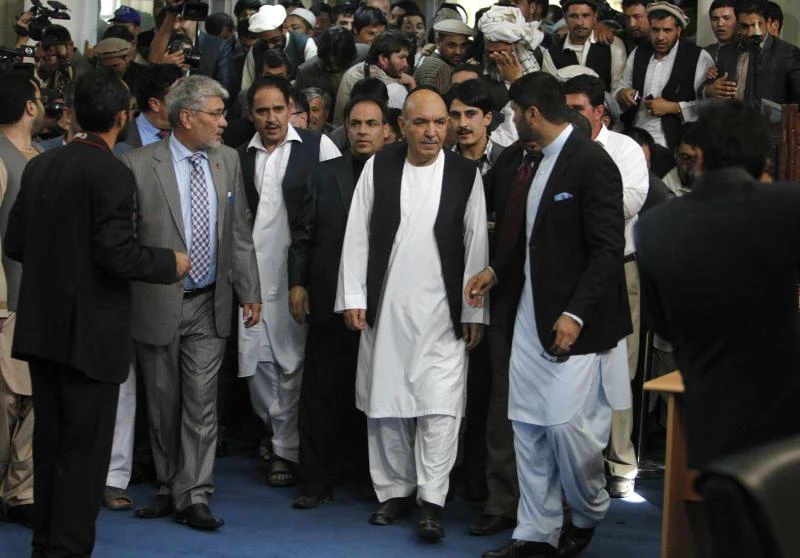
Karzai’s older brother, Qayum, former foreign minister Zalmay Rassoul and Western-leaning intellectual Ashraf Ghani all filed their papers in the last few hours of the three-week-long nomination period.
“With the help of Almighty God and the people, we are ready to form a government,” said Qayum, who has studiously avoided public appearances until Sunday.
There were chaotic scenes outside the Independent Election Commission’s media hall as Qayum, 56, and his entourage walked into the building, with police barring some of his supporters due to overcrowding.
Qayum had arrived in a convoy of dozens of armored four-wheel drive vehicles plastered with posters. Some of the vehicles had government license plates, despite Qayum holding no government post.
He was the last of the major candidates to register, arriving hours after Rassoul and Ghani had filed their papers.
“Afghanistan needs a change, and we will be the ones to win this election,” said Ghani, who came third in the 2009 election.
Germany hands over military base
Germany handed Afghanistan’s security forces control Sunday of a key military base in the country’s northern province of Kunduz, where German troops spent almost a decade as part of the international effort to combat Taleban insurgents.
The handover is part of the gradual pullout of Western forces due to be completed by the end of next year.
The Kunduz base, which lies some 250 km (155 miles) north of Kabul, shaped the German armed forces “like hardly any other place,” German Defense Minister Thomas de Maiziere said according to prepared remarks. Nowhere else since World War II have more German soldiers died in combat.
“(We) built, fought, cried and consoled, killed and fell here,” de Maiziere was quoted as saying.
Some 20,000 German troops were deployed in Kunduz during a 10-year operation, and 20 of Germany’s 35 combat deaths in Afghanistan occurred in the province. Another 17 died of noncombat injuries, including seven who were killed in a 2002 helicopter crash in Kabul.
For many Germans, the base is synonymous with a 2009 NATO airstrike ordered by German forces that killed 91 Afghans and wounded 11, most of them civilians.
De Maiziere made an indirect reference to the incident, which caused a political furor and the resignation of several senior German officials at the time.
Last-minute drama as Afghan presidential front-runners sign up