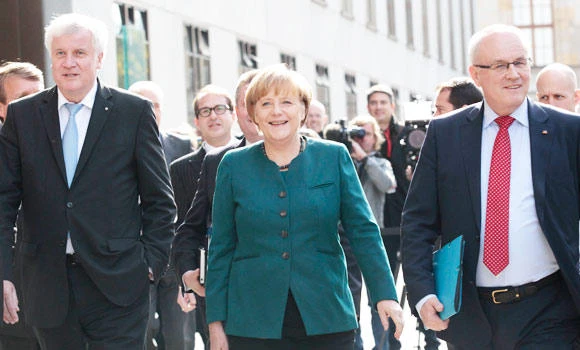
BERLIN: Twelve days after German elections, Chancellor Angela Merkel started exploratory talks Friday with her defeated center-left rivals on whether they can jointly govern Europe's biggest economy.
Although Merkel triumphed at the polls, she fell just five seats short of a majority, kicking off a process of coalition haggling and political poker that, the election losers have warned, could drag on into next year.
On the eve of the talks, Merkel pledged a “fair discussion” and said: “Europe is looking at us and the world is looking at us... We have a shared responsibility to form a stable government.”
For the Social Democrats (SPD), the second ballot box bruising in a row has sparked internal debate on whether to again govern in popular Merkel's shadow, as they did in 2005-09, or rebuild the 150-year-old party in opposition.
In Friday's initial talks which kicked off at 1100 GMT, Merkel's Christian Democrats (CDU) and their Bavarian allies the CSU each sent seven political big guns to jointly face off with seven SPD chieftains.
None of the delegates spoke as they headed into the crucial talks that were expected to take up much of the afternoon.
Should Merkel's conservatives and the SPD fail to agree on another left-right 'grand coalition,' Merkel has a potential Plan B, to ask the left-leaning and ecologist Greens to be her junior partners. Senior CDU figures have stressed to the Greens that they see them as a “real alternative” and not just playing them against the SPD, the Frankfurter Allgemeine Zeitung daily reported.
SPD party chief Sigmar Gabriel warned against “tactical manoeuvring and wilfully protracting negotiations.”
Both sides have stressed the initial talks are about policies, not trading ministerial posts.
Among the SPD's key campaign demands were higher taxes for the rich, a national minimum wage, a ceiling on rental increases, and a women's quota in boardrooms.
Merkel, defeated rivals discuss possible coalition