SEOUL: A senior North Korean diplomat who handles relations with the US said on Saturday Pyongyang would have dialogue with the US administration if conditions were right, South Korea’s Yonhap news agency reported.
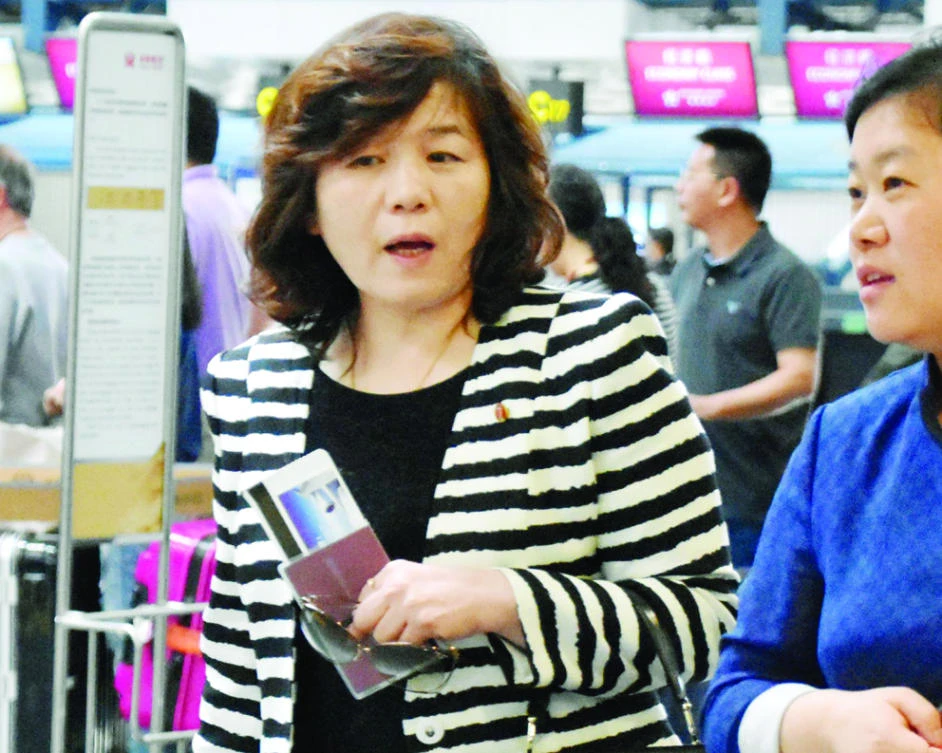
Choe Son Hui, North Korea’s Foreign Ministry director general for US affairs, made the comment to reporters in Beijing as she was traveling home from Norway, Yonhap said.
“We’ll have dialogue if the conditions are there,” she told reporters when asked if the North was preparing to hold talks with the Trump administration, according to Yonhap.
When asked if North Korea was also preparing to talk with the new government in South Korea, of liberal President Moon Jae-in, Choe said: “We’ll see.”
The comments by Choe, who is a veteran member of the North’s team of nuclear negotiators, came amid stepped up international efforts to press North Korea and ease tension over its pursuit of nuclear arms.
US President Donald Trump warned in an interview with Reuters in late April that a “major, major conflict” with the North was possible, but he would prefer a diplomatic outcome to the dispute over its nuclear and missile programs.
Trump later said he would be “honored” to meet the North’s leader, Kim Jong Un, under the right conditions.
Choe was in Norway for so-called Track Two talks with former US government officials, according to Japanese media, the latest in a series of such meetings.
A source with knowledge of the latest meeting said at least one former US government official took part but the US administration was not involved.
South Korea’s Moon, elected this week on a platform of a moderate approach to North Korea, has said he would be willing to go to Pyongyang under the right circumstances and said dialogue must be used in parallel with sanctions to resolve the problem over North Korea’s weapons.
North Korea has conducted five nuclear tests in defiance of UN and US sanctions and is also developing long-range missiles to deliver atomic weapons.
It says it needs such weapons to defend itself against US aggression.
Meanwhile, a North Korean parliamentary committee sent a rare letter of protest to the US House of Representatives over its new package of tougher sanctions.
The sanctions were condemned as a “heinous act against humanity” by the foreign affairs committee of the North’s Supreme People’s Assembly, according to a state media report.
It was not immediately clear how the protest was conveyed — if it was sent by mail or how it was addressed — since North Korea and the US have no diplomatic relations and virtually no official channels of communication. The report, carried by the North’s Korean Central News Agency, said the letter was sent Friday.
The Republican-led House overwhelmingly voted May 4 to impose the new sanctions, which target North Korea’s shipping industry and use of what the bill called “slave labor.”
It’s not unusual for Pyongyang to condemn Washington’s moves to censure it, but direct protests to Congress are exceptionally rare. Pyongyang normally expresses its displeasure with Washington through statements by the Foreign Ministry or other institutions, or through representatives at its UN mission in New York.
Staff of lawmakers on the House Foreign Affairs Committee said they had not received a copy of the letter. However, Rep. Brad Sherman, the top-ranking Democrat on its Asia subcommittee who read the letter online, said it demonstrated North Korea’s vulnerability to sanctions that it was calling for the House to “think twice” about strengthening them.
Koh Yu-hwan, a North Korea expert at Seoul’s Dongguk University, said it’s not unprecedented for the North to directly contact the US legislature or government. Pyongyang sent letters to the US in 1984 calling for the opening of three-way talks between Pyongyang, Seoul and Washington.
But he said Friday’s protest was also notable in that it was sent by the recently revived parliamentary foreign affairs committee, which was discontinued by Kim’s father, Kim Jong Il, in 1998.
The move to restart the committee has been seen as an attempt to create a “window” for contacts with the outside world — Seoul and Washington in particular.
Pyongyang has had more than its usual share of criticism for Washington in recent months.
It has been in high-indignation mode for the past two months because of military exercises between the US and South Korea that it sees as a prelude to invasion. This year’s war games were the biggest ever, and reportedly included training for precision strikes and assaults intended to take out Kim Jong Un and his top lieutenants.
The North also announced last week that it thwarted what it claims was a CIA-backed attempt to assassinate Kim. On Friday, its Central Public Prosecutor’s Office issued a statement suggesting the US and South Korea are harboring suspects and should extradite them to the North immediately.
At the same time, however, a senior North Korean Foreign Ministry official flew to Oslo, Norway, this week to meet with former US officials and scholars in what is known as “track 2” talks on a range of nuclear, security and bilateral issues. The talks, which are held intermittently, are an informal opportunity for the two sides to exchange opinions and concerns.
The US Senate would need to approve the new sanctions next, before they could be implemented. The House bill bars ships owned by North Korea or by countries that refuse to comply with UN resolutions against it from operating in American waters or docking at US ports. Goods produced by North Korea’s forced labor would be prohibited from entering the US, according to the legislation.
Choe Son Hui, North Korea’s Foreign Ministry director general for US affairs, made the comment to reporters in Beijing as she was traveling home from Norway, Yonhap said.
“We’ll have dialogue if the conditions are there,” she told reporters when asked if the North was preparing to hold talks with the Trump administration, according to Yonhap.
When asked if North Korea was also preparing to talk with the new government in South Korea, of liberal President Moon Jae-in, Choe said: “We’ll see.”
The comments by Choe, who is a veteran member of the North’s team of nuclear negotiators, came amid stepped up international efforts to press North Korea and ease tension over its pursuit of nuclear arms.
US President Donald Trump warned in an interview with Reuters in late April that a “major, major conflict” with the North was possible, but he would prefer a diplomatic outcome to the dispute over its nuclear and missile programs.
Trump later said he would be “honored” to meet the North’s leader, Kim Jong Un, under the right conditions.
Choe was in Norway for so-called Track Two talks with former US government officials, according to Japanese media, the latest in a series of such meetings.
A source with knowledge of the latest meeting said at least one former US government official took part but the US administration was not involved.
South Korea’s Moon, elected this week on a platform of a moderate approach to North Korea, has said he would be willing to go to Pyongyang under the right circumstances and said dialogue must be used in parallel with sanctions to resolve the problem over North Korea’s weapons.
North Korea has conducted five nuclear tests in defiance of UN and US sanctions and is also developing long-range missiles to deliver atomic weapons.
It says it needs such weapons to defend itself against US aggression.
Meanwhile, a North Korean parliamentary committee sent a rare letter of protest to the US House of Representatives over its new package of tougher sanctions.
The sanctions were condemned as a “heinous act against humanity” by the foreign affairs committee of the North’s Supreme People’s Assembly, according to a state media report.
It was not immediately clear how the protest was conveyed — if it was sent by mail or how it was addressed — since North Korea and the US have no diplomatic relations and virtually no official channels of communication. The report, carried by the North’s Korean Central News Agency, said the letter was sent Friday.
The Republican-led House overwhelmingly voted May 4 to impose the new sanctions, which target North Korea’s shipping industry and use of what the bill called “slave labor.”
It’s not unusual for Pyongyang to condemn Washington’s moves to censure it, but direct protests to Congress are exceptionally rare. Pyongyang normally expresses its displeasure with Washington through statements by the Foreign Ministry or other institutions, or through representatives at its UN mission in New York.
Staff of lawmakers on the House Foreign Affairs Committee said they had not received a copy of the letter. However, Rep. Brad Sherman, the top-ranking Democrat on its Asia subcommittee who read the letter online, said it demonstrated North Korea’s vulnerability to sanctions that it was calling for the House to “think twice” about strengthening them.
Koh Yu-hwan, a North Korea expert at Seoul’s Dongguk University, said it’s not unprecedented for the North to directly contact the US legislature or government. Pyongyang sent letters to the US in 1984 calling for the opening of three-way talks between Pyongyang, Seoul and Washington.
But he said Friday’s protest was also notable in that it was sent by the recently revived parliamentary foreign affairs committee, which was discontinued by Kim’s father, Kim Jong Il, in 1998.
The move to restart the committee has been seen as an attempt to create a “window” for contacts with the outside world — Seoul and Washington in particular.
Pyongyang has had more than its usual share of criticism for Washington in recent months.
It has been in high-indignation mode for the past two months because of military exercises between the US and South Korea that it sees as a prelude to invasion. This year’s war games were the biggest ever, and reportedly included training for precision strikes and assaults intended to take out Kim Jong Un and his top lieutenants.
The North also announced last week that it thwarted what it claims was a CIA-backed attempt to assassinate Kim. On Friday, its Central Public Prosecutor’s Office issued a statement suggesting the US and South Korea are harboring suspects and should extradite them to the North immediately.
At the same time, however, a senior North Korean Foreign Ministry official flew to Oslo, Norway, this week to meet with former US officials and scholars in what is known as “track 2” talks on a range of nuclear, security and bilateral issues. The talks, which are held intermittently, are an informal opportunity for the two sides to exchange opinions and concerns.
The US Senate would need to approve the new sanctions next, before they could be implemented. The House bill bars ships owned by North Korea or by countries that refuse to comply with UN resolutions against it from operating in American waters or docking at US ports. Goods produced by North Korea’s forced labor would be prohibited from entering the US, according to the legislation.