BRUSSELS: New legal action by the EU against eastern member states for refusing to take their share of refugees shows how the worst migration crisis since World War II still divides the continent.
The images from a crisis entering its third year have become shockingly familiar: capsized boats, refugees teargassed in squalid border camps, a Syrian boy’s tiny body on an empty beach.
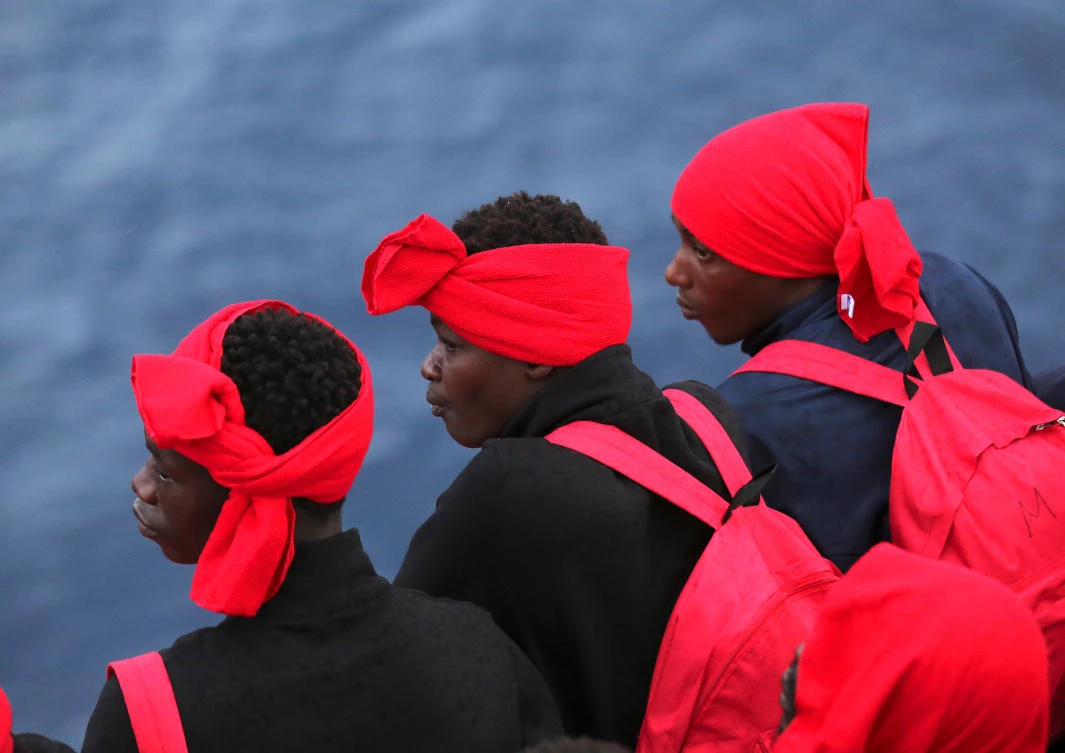
Here AFP looks at the numbers that tell a deeper story. The basic facts are stark: Since 2014, more than 1.6 million people have arrived by sea while 13,500 have died on the way.
The numbers also give answers to the important human questions: Where are these people coming from, where are they going, how many have died, and how many will be allowed to stay?
The migration crisis has no official starting point but statistics from the International Organization of Migration (IOM) offer some chronological yardsticks.
Following gradual yearly increases since 2011, 2014 marked a first turning point with 170,100 people landing on Italian shores and 43,518 on Greek coastlines, up from 42,900 and 11,447 respectively the previous year.
But it was in 2015 that the situation took on dizzying proportions. The arrivals on the Italian coast in 2015 came on the central Mediterranean route, mainly from sub-Saharan African countries: 39,162 Eritreans, 22,237 Nigerians, 12,433 Somalis and 8,932 Sudanese.
There was a sharp drop in migrant arrivals in Greece in 2016, with the IOM registering a total of 363,401 arrivals on Greek and Italian shores, about one-third as many as the previous year.
In Greece, 173,614 arrived by sea, a drop of nearly 80 percent, reflecting the combined impact of a controversial migrant deal between Turkey and the EU and the nearly total closure of the Balkans route.
While the migration crisis is often portrayed as a crisis facing the EU’s roughly 510 million people, smaller countries outside the region have received a far higher proportion of arrivals.
Turkey hosts 3.2 million refugees, Lebanon shelters more than 1 million and Jordan is home to 660,000 according to the UN High Commissioner for Refugees. The vast majority are Syrians.
Behind the migrant influx are human dramas.
In total, nearly 14,000 people have died or disappeared trying to reach Europe in the last four years: 3,283 in 2014, 3,784 in 2015, 5,098 in 2016 and already more than 1,800 since January 1.
Moreover, among the asylum seekers in the EU in 2015 and 2016, around a third were minors, according to the European Commission.
The mass arrival of migrants has shaken the EU, creating tension between its legal obligation to help asylum seekers and the anti-immigration sentiment that has risen in a number of countries, particularly in the wake of a series of terror attacks on the continent.
EU countries had a record number of asylum applications in 2015, with nearly 1.26 million applying for the first time, after 562,000 in 2014, according to Eurostat. These amount to the total requests in member states, which can include people who applied in several countries.
In 2016, the level remained high at 1.2 million first-time requests, filed mainly by Syrians, Afghans and Iraqis, as was the case the year before. A number of the requests were filed in 2015 but counted by Eurostat only the following year.
Many applicants are part of the flow over the Mediterranean, but not all. There are for example 28,925 Albanians and 23,015 Russians who sought asylum in EU countries.
In proportion to the population of each country, 2016 statistics from Eurostat show that the highest number of asylum requests were recorded in Germany, ahead of Greece, Austria, Malta and Luxembourg.
In 2016, EU countries granted protection to about 710,400 people, more than twice the figure of 2015, according to Eurostat.
Faced with the extraordinarily high number of arrivals in Italy and Greece, the EU agreed in September 2015 to make a temporary exception to the requirement that the country where migrants first land must process asylum requests.
The EU then decided to distribute 160,000 Syrians and others in Italy and Greece to other countries in the bloc over two years.
But the relocation plan that was intended to embody EU solidarity ended up exposing divisions among member states, which have either dragged their feet in accepting their share or rejected taking any.
The European Commission launched legal action last Wednesday against Hungary and Poland for refusing to take any migrants and against the Czech Republic for effectively dropping out of the plan. The move starts a long process that could result in fines.
Meanwhile, most of the migrants continue their route north to the wealthier countries, if they can.
The plan has been hit with both logistical problems and reluctance from asylum seekers to travel to assigned countries they fear will not offer them much of a future, particularly in eastern Europe.
As a result of all these obstacles, just over 20,000 have been relocated three months before the deadline.
The images from a crisis entering its third year have become shockingly familiar: capsized boats, refugees teargassed in squalid border camps, a Syrian boy’s tiny body on an empty beach.
Here AFP looks at the numbers that tell a deeper story. The basic facts are stark: Since 2014, more than 1.6 million people have arrived by sea while 13,500 have died on the way.
The numbers also give answers to the important human questions: Where are these people coming from, where are they going, how many have died, and how many will be allowed to stay?
The migration crisis has no official starting point but statistics from the International Organization of Migration (IOM) offer some chronological yardsticks.
Following gradual yearly increases since 2011, 2014 marked a first turning point with 170,100 people landing on Italian shores and 43,518 on Greek coastlines, up from 42,900 and 11,447 respectively the previous year.
But it was in 2015 that the situation took on dizzying proportions. The arrivals on the Italian coast in 2015 came on the central Mediterranean route, mainly from sub-Saharan African countries: 39,162 Eritreans, 22,237 Nigerians, 12,433 Somalis and 8,932 Sudanese.
There was a sharp drop in migrant arrivals in Greece in 2016, with the IOM registering a total of 363,401 arrivals on Greek and Italian shores, about one-third as many as the previous year.
In Greece, 173,614 arrived by sea, a drop of nearly 80 percent, reflecting the combined impact of a controversial migrant deal between Turkey and the EU and the nearly total closure of the Balkans route.
While the migration crisis is often portrayed as a crisis facing the EU’s roughly 510 million people, smaller countries outside the region have received a far higher proportion of arrivals.
Turkey hosts 3.2 million refugees, Lebanon shelters more than 1 million and Jordan is home to 660,000 according to the UN High Commissioner for Refugees. The vast majority are Syrians.
Behind the migrant influx are human dramas.
In total, nearly 14,000 people have died or disappeared trying to reach Europe in the last four years: 3,283 in 2014, 3,784 in 2015, 5,098 in 2016 and already more than 1,800 since January 1.
Moreover, among the asylum seekers in the EU in 2015 and 2016, around a third were minors, according to the European Commission.
The mass arrival of migrants has shaken the EU, creating tension between its legal obligation to help asylum seekers and the anti-immigration sentiment that has risen in a number of countries, particularly in the wake of a series of terror attacks on the continent.
EU countries had a record number of asylum applications in 2015, with nearly 1.26 million applying for the first time, after 562,000 in 2014, according to Eurostat. These amount to the total requests in member states, which can include people who applied in several countries.
In 2016, the level remained high at 1.2 million first-time requests, filed mainly by Syrians, Afghans and Iraqis, as was the case the year before. A number of the requests were filed in 2015 but counted by Eurostat only the following year.
Many applicants are part of the flow over the Mediterranean, but not all. There are for example 28,925 Albanians and 23,015 Russians who sought asylum in EU countries.
In proportion to the population of each country, 2016 statistics from Eurostat show that the highest number of asylum requests were recorded in Germany, ahead of Greece, Austria, Malta and Luxembourg.
In 2016, EU countries granted protection to about 710,400 people, more than twice the figure of 2015, according to Eurostat.
Faced with the extraordinarily high number of arrivals in Italy and Greece, the EU agreed in September 2015 to make a temporary exception to the requirement that the country where migrants first land must process asylum requests.
The EU then decided to distribute 160,000 Syrians and others in Italy and Greece to other countries in the bloc over two years.
But the relocation plan that was intended to embody EU solidarity ended up exposing divisions among member states, which have either dragged their feet in accepting their share or rejected taking any.
The European Commission launched legal action last Wednesday against Hungary and Poland for refusing to take any migrants and against the Czech Republic for effectively dropping out of the plan. The move starts a long process that could result in fines.
Meanwhile, most of the migrants continue their route north to the wealthier countries, if they can.
The plan has been hit with both logistical problems and reluctance from asylum seekers to travel to assigned countries they fear will not offer them much of a future, particularly in eastern Europe.
As a result of all these obstacles, just over 20,000 have been relocated three months before the deadline.