ISLAMABAD: Pakistan summoned India’s deputy high commissioner on Thursday to condemn what it called “unprovoked” firing over the disputed Kashmir frontier that violated a 2003 cease-fire and killed one civilian, the Foreign Ministry said.
India also accused Pakistan of “indiscriminate firing” along the de facto border, which an Indian military official said had killed a woman and wounded a man on Wednesday night. The government in the Indian state of Jammu and Kashmir has ordered the closure of all schools within 2 km of the border.
According to a statement from Pakistan’s Foreign Ministry, Indian Deputy High Commissioner J. P. Singh met with Pakistani officials to discuss the firing on Wednesday and Thursday, which also wounded two others on the Pakistani-administered side of Kashmir.
“The deliberate targeting of civilians is indeed condemnable and contrary to human dignity and international human rights and humanitarian laws,” the statement read.
Indian officials in New Delhi could not immediately be reached for comment on the Pakistan statement.
Meanwhile, two UN special rapporteurs urged the Indian government to lift a ban on social media sites and mobile Internet service in Kashmir.
David Kaye, UN special rapporteur on freedom of opinion and expression, and Michel Forst, special rapporteur on the situation of human rights defenders, said in a statement issued in Geneva that the ban had “disproportionate impact on the fundamental rights of everyone in Kashmir” and had the “character of collective punishment.”
Such restrictions “fail to meet the standards required under international human rights law to limit freedom of expression,” Kaye wrote.
Authorities in Indian-administered Kashmir late last month banned 22 social media sites, including Facebook and Twitter, and 3G and 4G cellphone data services for one month in an effort to calm tensions after videos depicting the alleged abuse of Kashmiris by Indian forces fueled widespread protests. The government said the one-month ban was necessary for public safety because anti-India activists were misusing social media.
Forst said such blocking “disrupts the free exchange of ideas and the ability of individuals to connect with one another and associate peacefully on matters of shared concern.”
Indian telecom engineers struggled for at least three days to block the social media sites after the ban was imposed on April 26, drawing rebuke and mocking by many Kashmiris. Once in place, the ban has had little impact on the ground as many Kashmiris have continued using the banned sites and chat applications through proxy servers.
The UN special rapporteurs said there were at least 31 reported cases of social media and Internet bans since 2012 in Kashmir and called it “a worrying pattern aimed at curbing protests and social unrest in the region.”
The two called on Indian authorities to guarantee freedom of expression in Kashmir and “to seek a solution for the social and political conflicts of the region through an open, transparent and democratic dialogue.”
Last year, US think tank the Brookings Institution in a report said that India blocked access to the Internet in various regions to prevent demonstrations 22 times in the 12 months starting in July 2015, more often than Syria, Pakistan and Turkey did put together.
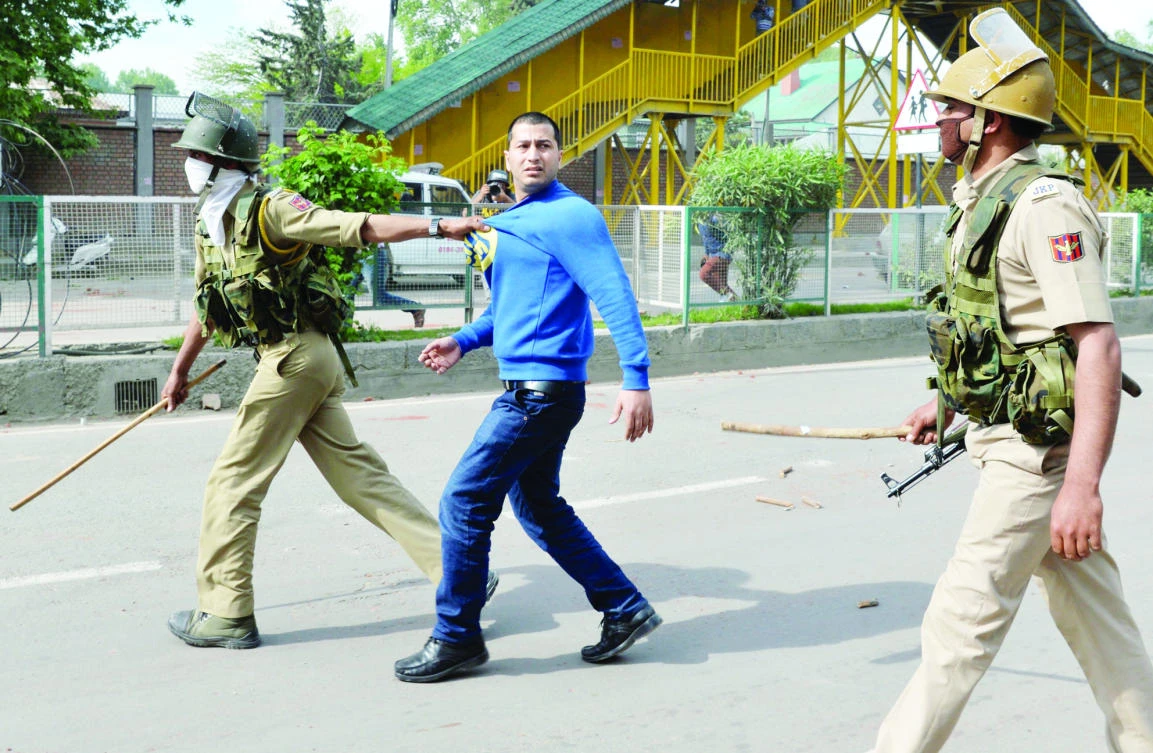
Kashmiris have been uploading videos and photos of alleged abuse for some years, but several recently posted clips, captured in the days surrounding a violence-plagued local election on April 9, have proven to be especially powerful and have helped to intensify anti-India protests.
Indian police and paramilitary officials accuse agitators of using social media to instigate violence.
India also accused Pakistan of “indiscriminate firing” along the de facto border, which an Indian military official said had killed a woman and wounded a man on Wednesday night. The government in the Indian state of Jammu and Kashmir has ordered the closure of all schools within 2 km of the border.
According to a statement from Pakistan’s Foreign Ministry, Indian Deputy High Commissioner J. P. Singh met with Pakistani officials to discuss the firing on Wednesday and Thursday, which also wounded two others on the Pakistani-administered side of Kashmir.
“The deliberate targeting of civilians is indeed condemnable and contrary to human dignity and international human rights and humanitarian laws,” the statement read.
Indian officials in New Delhi could not immediately be reached for comment on the Pakistan statement.
Meanwhile, two UN special rapporteurs urged the Indian government to lift a ban on social media sites and mobile Internet service in Kashmir.
David Kaye, UN special rapporteur on freedom of opinion and expression, and Michel Forst, special rapporteur on the situation of human rights defenders, said in a statement issued in Geneva that the ban had “disproportionate impact on the fundamental rights of everyone in Kashmir” and had the “character of collective punishment.”
Such restrictions “fail to meet the standards required under international human rights law to limit freedom of expression,” Kaye wrote.
Authorities in Indian-administered Kashmir late last month banned 22 social media sites, including Facebook and Twitter, and 3G and 4G cellphone data services for one month in an effort to calm tensions after videos depicting the alleged abuse of Kashmiris by Indian forces fueled widespread protests. The government said the one-month ban was necessary for public safety because anti-India activists were misusing social media.
Forst said such blocking “disrupts the free exchange of ideas and the ability of individuals to connect with one another and associate peacefully on matters of shared concern.”
Indian telecom engineers struggled for at least three days to block the social media sites after the ban was imposed on April 26, drawing rebuke and mocking by many Kashmiris. Once in place, the ban has had little impact on the ground as many Kashmiris have continued using the banned sites and chat applications through proxy servers.
The UN special rapporteurs said there were at least 31 reported cases of social media and Internet bans since 2012 in Kashmir and called it “a worrying pattern aimed at curbing protests and social unrest in the region.”
The two called on Indian authorities to guarantee freedom of expression in Kashmir and “to seek a solution for the social and political conflicts of the region through an open, transparent and democratic dialogue.”
Last year, US think tank the Brookings Institution in a report said that India blocked access to the Internet in various regions to prevent demonstrations 22 times in the 12 months starting in July 2015, more often than Syria, Pakistan and Turkey did put together.
Kashmiris have been uploading videos and photos of alleged abuse for some years, but several recently posted clips, captured in the days surrounding a violence-plagued local election on April 9, have proven to be especially powerful and have helped to intensify anti-India protests.
Indian police and paramilitary officials accuse agitators of using social media to instigate violence.