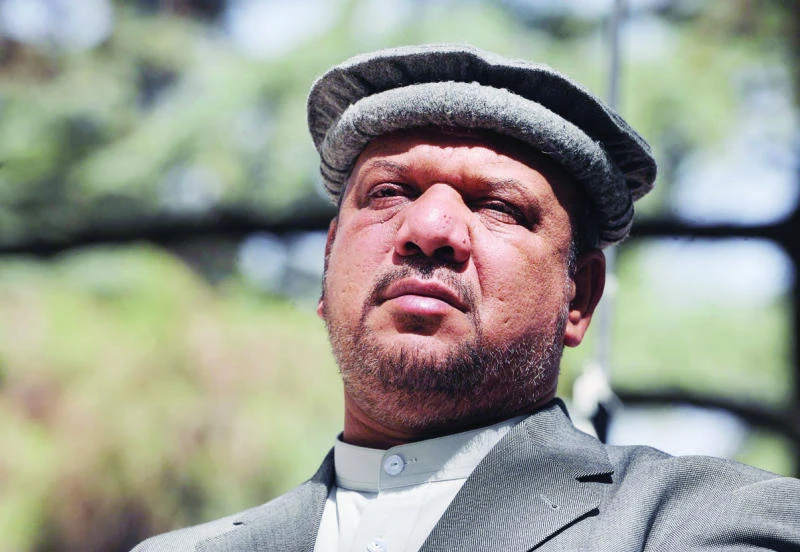
KABUL: Afghanistan’s powerful Vice Pesident, Marshal Mohammad Qasim Fahim, died of natural causes on Sunday, only weeks before the country is due to elect a new leader. He was 57.
Formerly one of the country’s most feared warlords, Fahim had been a top commander in the Northern Alliance, a group of anti-Taleban militia leaders, after the 1992-96 civil war.
President Hamid Karzai called Fahim a true patriot and said his death was “a huge loss for Afghanistan.” He also expressed his condolences to the Afghan nation and Fahim’s family.
The United Nations mission in Afghanistan called Fahim “a good and trusted partner of the UN.” Back in 2009, UN officials and diplomats had criticized Fahim’s appointment because he was accused of serious human rights abuses. It was unclear what, if any, role Fahim had planned for next month’s presidential election.
Fahim served as a influential but brutal intelligence officer under iconic rebel commander Ahmad Shah Massoud, fighting against the Soviet occupation in 1980s and against the Taleban’s 1996-2001 regime.
Fahim died from complications caused by diabetes and heart problems, according to officials who declined to be named.
His death is likely to have limited impact on the April 5 election to choose a successor to Karzai, who is constitutionally barred from standing for a third term in office.
Fahim, a leader of the Tajik ethnic minority, was senior vice-president under President Hamid Karzai, who will step down at elections next month as US-led combat forces pull out of Afghanistan after 13 years of fighting the Taleban.
Aged 56, Fahim was accused of being a ruthless strongman who maintained his own militia forces, but he also received American support as Afghanistan struggled for stability following the fall of the Taleban regime in 2001.
Three days of national mourning will begin on Monday, with the national flag flown at half-mast across the country.
Fahim served as an influential but brutal intelligence officer under iconic rebel commander Ahmad Shah Massoud, fighting against the Soviet occupation in 1980s and against the Taleban’s 1996-2001 regime.
Massoud was killed by an Al-Qaeda bomb two days before the 9/11 attacks in the United States in 2001.
The Taleban were then ousted in a US-led operation for sheltering Al-Qaeda, and Fahim emerged as a leading figure in Afghan politics during the international military and civilian intervention that is now winding now.
With strong backing from Washington, Fahim was appointed to the key position of defence minister in 2002, where he was criticised for appointing mainly Tajik senior officers and failing to build a representative national army.
He also served as a vice-president from 2002-2004, but was removed by Karzai from both jobs in 2004 in one of the many power struggles that have undermined efforts to develop the war-torn and impoverished country.
Fahim returned as senior vice-president in the 2009 election as Karzai sought to broaden his support base in a policy that was widely seen as appeasing some of most violent men in Afghanistan.
At the time, the Human Watch Rights group described Fahim as “one of the most notorious warlords in the country, with the blood of many Afghans on his hands.”
The Essential Field Guide to Afghanistan released this year said he was accused of being “a semi-literate, self-appointed field marshal, and one of the principal obstacles to Afghan unity because of his alleged ruthless threats, beatings and general thuggery.”
Among the front-runners is Abdullah Abdullah, another former close aide of the late rebel commander Massoud.
“With extreme sorrow, Marshal Mohammad Qasim Fahim, the first vice-president of Afghanistan, passed away due to an illness,” the palace said in a statement.
It said that President Karzai expressed his deep condolences over the “uncompensable loss” of “a patriot and a great mujahid.”
Powerful Afghan leader dies; Kabul mourns