- Publication in The Lancet is not an official medical endorsement but does mean the drug has been reviewed by a body of scientific experts and is a serious potential treatment for the disease
- No significant side-effects had been experienced and no adverse results regarding cancer or fertility, Kirill Dmitriev said
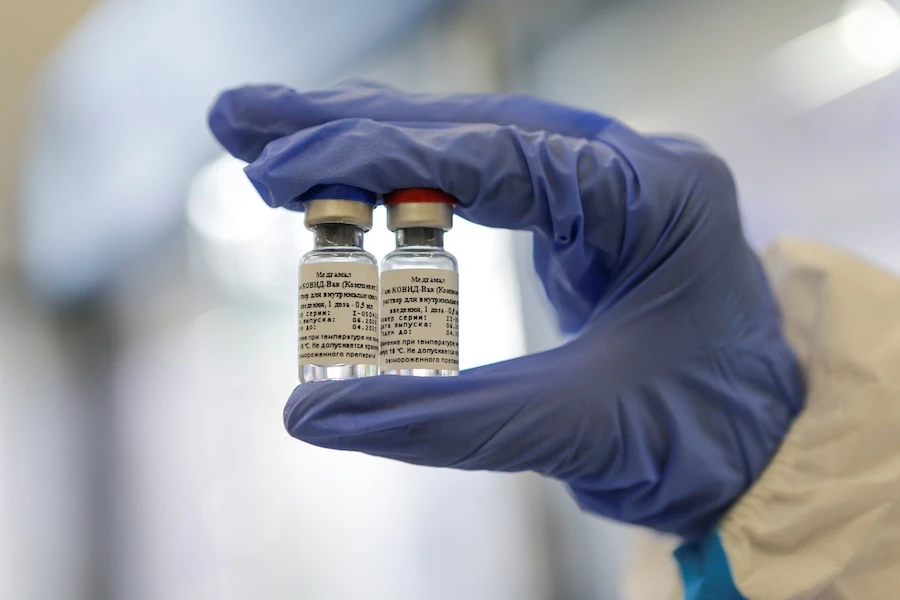
DUBAI: A study of the Russian COVID-19 vaccine has been peer-reviewed and published in the prestigious British medical journal The Lancet, demonstrating some significant advantages over competing Western medicines.
Kirill Dmitriev, the Russian businessman who has led the country’s efforts to develop a rapid response to the pandemic, dubbed the Sputnik V vaccine, said: “It’s about saving people’s lives, and we are convinced that the Russian vaccine is the best.”
Publication in The Lancet is not an official medical endorsement but does mean the drug has been reviewed by a body of scientific experts and is a serious potential treatment for the disease.
Dmitriev, CEO of the Russian Direct Investment Fund, is a partner of Saudi Arabia in many investment initiatives. He said that there will be further visits to Moscow by Saudi health officials this week for discussions about Sputnik V, and that clinical trials will start in the Kingdom this month.
The Lancet results are based on trials of animals and 76 people in Russia. No significant side-effects had been experienced and no adverse results regarding cancer or fertility, Dmitriev said.
“The vaccine has a good safety profile and induced strong humoral and cellular immune response in participants,” The Lancet article said, based on studies by Russian scientific bodies, including the Gamaleya Institute.
Sputnik V has faced criticism, mainly from European and US commentators, who said it had been rushed through testing procedures regarded as standard in the West.
Dmitriev said that US and UK policymakers had recently called for an accelerated process in their countries, allowing them to register a drug before the vital Phase 3 tests were complete.
“Russia was criticized, and now the US and the UK are doing it,” he said.
He also contrasted Russian scientific techniques with Western approaches. Sputnik V is based on human adenovirus transmission, as opposed to mRNA (a genetic molecule) and monkey-virus methods in the West.
Human adenovirus has been used for antiviral treatments for decades, notably in the Ebola treatment Russia perfected.
“I have one question for the West: Are you going to show your people any of the studies that show mRNA and monkey virus have no side-effects on cancer and fertility?” Dmitriev asked.
In addition to humans, The Lancet publication was also based on animal testing. A full-scale human testing program is being rolled out in Russia and some other countries.
Sputnik V is based on a two-shot approach that Dmitriev said is more effective than vaccines being developed by Western drug companies such as AstraZeneca and Johnson & Johnson.
Next week Russia will announce details of international partnerships to sell and distribute Sputnik V, he said.
“We are a peaceful people and we come in peace to offer you our vaccine,” Dmitriev added.