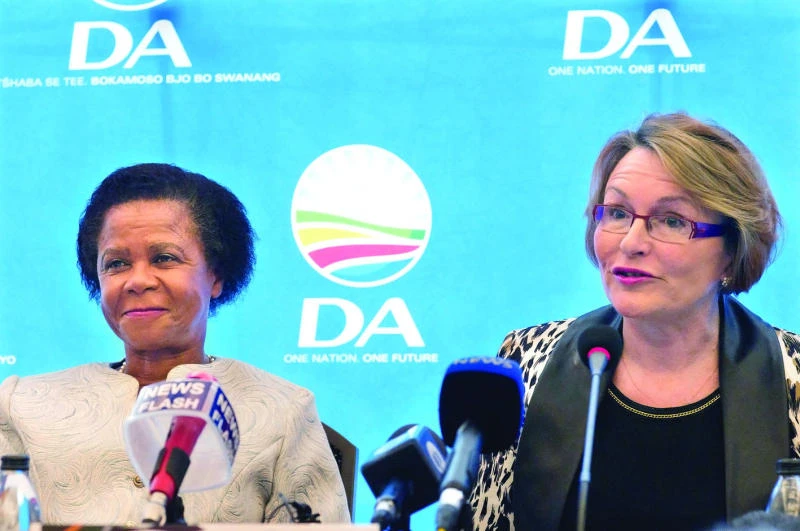
CAPE TOWN/JOHANNESBURG: Anti-apartheid activist Mamphela Ramphele will run for president for the Democratic Alliance (DA) in this year’s South African election, giving the main opposition party a prominent black figurehead to challenge the ruling African National Congress (ANC).
Ramphele who was close to Steve Biko and was a World Bank executive has merged her party Tuesday with South Africa’s main opposition party and will be its presidential candidate, challenging the ruling whose popularity has eroded amid corruption scandals and other problems.
Mamphela Ramphele, who also is a medical doctor, had a son with activist Steve Biko, who in 1977 was tortured and died in police custody. Last year, Ramphele formed her own party to challenge the ANC, but said Tuesday the merger with the Democratic Alliance is in the country’s best interests.
“I believe this decision is in the best interests of South Africa as we head into turbulent waters,” she said. “The death of Nelson Mandela has changed many things for South Africa.”
However, the immediate public reaction suggested some voters see the move as a blatant attempt by the DA to win black support, while some accused Ramphele of cynical opportunism.
“Millions want to make a different choice in this election. They say is enough is enough,” Ramphele said. “This is your government-in-waiting.”
President Jacob Zuma and the ANC are the electoral front-runners but they have lost some support because of corruption, poverty, unemployment, police brutality and a lack of adequate government services.
Ramphele spoke in Cape Town alongside Helen Zille, the head of the Democratic Alliance and premier of the Western Cape, the only one of nine South African provinces not run by the ANC. Zille was a journalist on the now-defunct Rand Daily Mail at the time of Biko’s death, and played a lead role in uncovering the circumstances of his death despite denials of wrongdoing from officials in the white racist government.
Zille said “old political formations” in South African were becoming obsolete, and that her party includes apartheid-era liberals who opposed the repressive system at the time, former members of the current ruling party and people, including Ramphele, with a background in Biko’s Black Consciousness movement.
“This is a game-changing moment for South Africa,” said Zille, describing the upcoming general elections as the most contested since the end of apartheid. A date for the vote to be held this year has not been set.
Many analysts expect the ANC to win the election, but with a smaller majority. The opposition is aiming to make inroads in Gauteng, a populous province and business center that is home to the capital, Pretoria, and the country’s biggest city, Johannesburg. The ANC has dominated politics in South Africa since Nelson Mandela was elected president in 1994 in the first all-race elections that spelled the demise of apartheid.
Ramphele has described the ANC as “authoritarian, intolerant of criticism and unaccountable”, and in 2012 accused Zuma of leading an assault on the post-apartheid constitution.
But her supporters will likely be worried that her voice might be drowned out in the DA, which remains largely white-dominated.
South African opposition parties set up united front