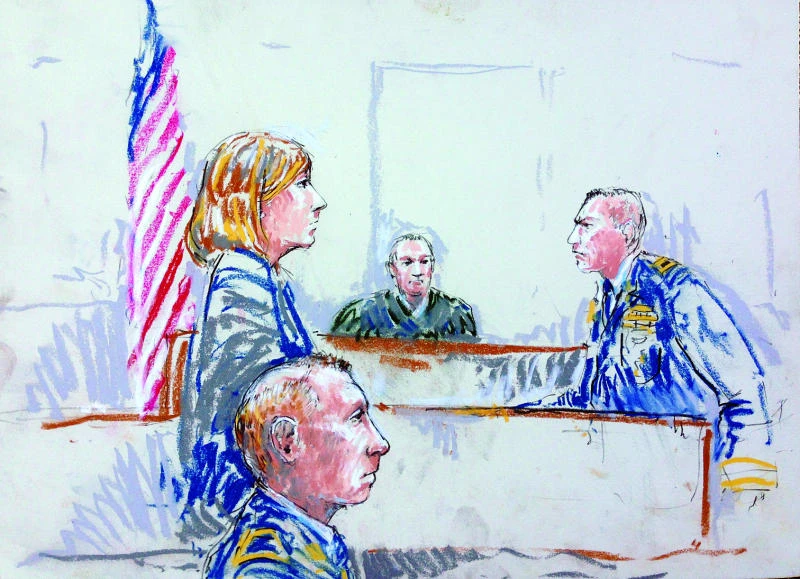
WASHINGTON: The US soldier who killed 16 Afghan civilians in a solo attack on two villages faced more of the victims’ relatives Wednesday, while his lawyers argued that he deserves a chance at parole.
An Afghan farmer shot during the massacre in Kandahar Province last year took the witness stand Tuesday at Robert Bales’ sentencing hearing, cursing the soldier before breaking down.
Bales pleaded guilty in June to the March 11, 2012, attacks to avoid the death penalty. Now jurors must decide whether he is sentenced to life in prison with the possibility of parole or without it.
The hearing gave some victims and relatives their first chance to confront Bales face-to-face.
Haji Mohammad Naim testified through an interpreter and pointed to where he was shot in the cheek and neck.
“This bastard stood right in front of me!” he said. “I wanted to ask him, ‘What did I do? What have I done to you?’ ... and he shot me!“
Naim, who is about 60, said he has suffered from numbness in his hand and a stutter since the shooting. He became emotional and eventually stood up: “Don’t ask me any more questions!“ Naim’s two sons, Sadiquallah, who is about 13, and the older Faizullah, also testified.
Sadiquallah spoke quietly, responding with a simple “yes” when asked if he cried about being shot.
Seven Afghans testified. Four were hurt in the attacks. Three were relatives of the dead or wounded.
Bales left his remote post in Afghanistan in the middle of the night and attacked two mud-walled villages, gunning down men, screaming children and elderly women.
Prosecutors offered the most detailed single account yet of the attack, describing how Bales executed a young girl who was screaming for him to stop beating her father, how he fired into rooms full of children and how he killed 11 members of a single family, many of them still asleep on their blankets.
The 39-year-old Bales was serving his fourth combat deployment when he left his outpost, attacked one village and returned to the outpost only when he realized he was low on ammunition, prosecutors said.
He then woke a fellow soldier, described his actions and said he was headed out to kill more. The other soldier didn’t believe him and went back to sleep. Bales left again.
The massacre prompted such angry protests that the US temporarily halted combat operations in Afghanistan, and it was three weeks before Army investigators could reach the crime scene.
Two more testify in Bales’ massacre case