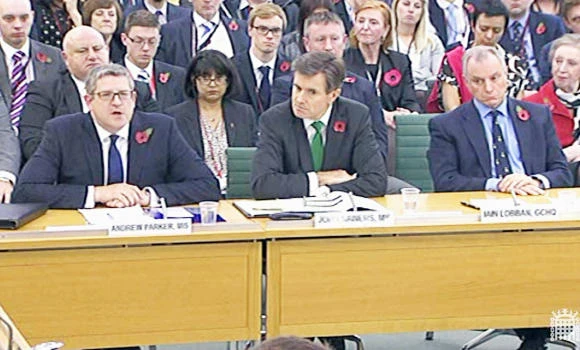
LONDON: Britain’s intelligence chiefs used their first ever joint public appearance to complain that documents leaked by former US intelligence operative Edward Snowden had put secret operations at risk and were being “lapped up” by Al-Qaeda.
In an unprecedented evidence session before parliamentarians that local media likened to a scene from a James Bond film, the heads of Britain’s three main intelligence agencies said Snowden’s disclosures about mass surveillance had prompted them to consider being more open about what they do.
But they said parts of their work had to remain secret for national security reasons and that the data leaks, which detailed Britain’s close cooperation with the US National Security Agency (NSA), had caused huge damage.
“They’ve put our operations at risk,” John Sawers, the head of MI6, Britain’s foreign intelligence service, told a parliamentary committee.
“It’s clear that our adversaries are rubbing their hands with glee, Al-Qaeda is lapping it up.”
The robust nature of his comments underlined how angry intelligence chiefs are about Snowden and what they believe is the irresponsible way some newspapers published his information despite warnings not to do so.
Civil liberties groups, parts of the media and lawmakers from all parties have argued that Snowden’s disclosures about the scale of government monitoring show it needs to be reined in and security agencies put under greater oversight.
Iain Lobban, the director of GCHQ, Britain’s electronic eavesdropping agency, told lawmakers that intelligence chiefs were “actively considering” whether more information should now be shared with the public.
But he argued that certain methods should remain secret, citing what he said were specific examples where the Snowden data leaks had harmed national security.
“We have actually seen chat around specific terrorist groups who, even close to home, discuss how to avoid what they now perceive to be vulnerable communications methods, or how to select communications which they now perceive not to be exploitable,” he said.
Defending the use of electronic surveillance, he said GCHQ did not spend its time listening to the phone calls or reading the emails of most Britons, saying it would be illegal to do so and that it only acted in very specific cases.
UK spy chiefs blast Edward Snowden