CARACAS: Venezuela’s government held a controversial vote Sunday for a new, all-powerful “Constituent Assembly” to rewrite the Constitution, as security forces violently broke up protest road blocks in the capital.
The election was taking place in an atmosphere of high tension, with the opposition calling for a boycott and mass demonstrations, and thousands of troops fanning out to confront any disruption.
In the western Caracas district of El Paraiso, security forces using armored vehicles cleared away protesters to the sound of gunfire, according to reports and witness accounts on Twitter.
The vote has been fiercely opposed by demonstrators at months of street protests that have left over 100 people dead.
Venezuela’s opposition says it is a bid for Maduro to cling to power by getting around the National Assembly, which the opposition controls.
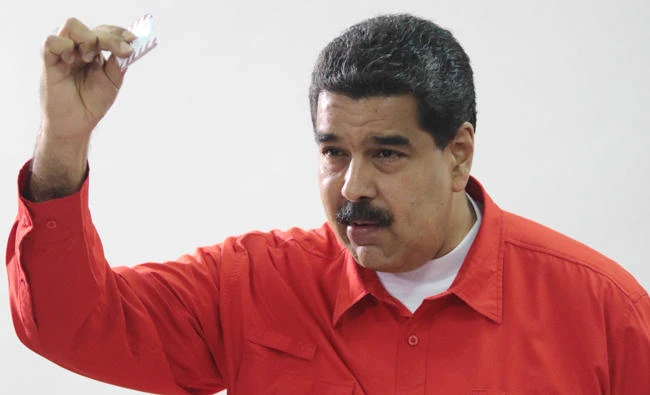
President Nicolas Maduro kicked off the vote by casting his ballot in a west Caracas polling station for the 545-member citizens’ assembly that will be empowered to dissolve congress and change laws as it reforms the nation’s charter.
“I’m the first voter in the country. I ask God for his blessings so the people can freely exercise their democratic right to vote,” the president said. He was accompanied by his wife, Cilia Flores, who is a candidate to sit on the new assembly.
Turnout will be key. But that will be difficult to ascertain as the election — in which candidates are drawn from social sectors as well as geographically — allows most voters to vote twice.
The opposition said the vote was a move toward a Maduro “dictatorship” with the backing of the military.
Surveys by Datanalisis, a pro-opposition polling firm, show more than 70 percent of Venezuelans opposed the idea of the new assembly — and 80 percent reject Maduro’s leadership.
These months of violent street protests against Maduro have exposed deep political divisions in this oil-rich nation reduced to economic ruin.
Maduro decreed a ban on further protests during and after the vote, threatening prison terms of up to 10 years for anyone violating the order.
Fear of the violence worsening has rippled across the region, and beyond.
The US, the EU and Latin American powers, including Argentina, Brazil, Colombia and Mexico, have come out against the election, saying it would destroy Venezuelan democracy.
Several foreign airlines, including Air France, Delta, Avianca and Iberia have suspended flights to the country over worries about security.
Families of US diplomats have been ordered to leave following the imposition of American sanctions on 13 current and former Venezuelan officials.
Maduro — who has described the Constituent Assembly as a “card that will win this game” — on Saturday called the vote “the most important election held in Venezuela’s political system.”
One voter on Sunday, Ana Contreras, said: “I have come to vote to tell the gringos and the opposition that we want peace, not war, and that we support Maduro.”
Freddy Guevara, an opposition lawmaker, said the new assembly was “fraudulent” and Maduro was “making the biggest historical mistake he could commit.”
The head of Datanalisis, Luis Vicente Leon, said the Constituent Assembly “wasn’t being formed to solve the country’s problems,” but was instead a political gambit because the uncharismatic Maduro — whose term is meant to finish next year — “can’t win elections.”
Colombia and Panama — refuges for tens of thousands of Venezuelans fleeing the chaos at home — have said they will not recognize the results of Sunday’s election in Venezuela.
At an overnight protest in Villa del Rosario, a Colombian town on the Venezuelan border, hundreds of Venezuelans taking shelter there decried the election.
“We don’t know what’s going to happen in this situation created by this president,” said one of them, Bella Buitrago, 48. “We’re all extremely nervous.”
“We don’t want Mr. Maduro... he should leave the country,” said another, Sindry Borges.
Some in Maduro’s administration have broken ranks with him, most prominently his attorney general. Two diplomats resigned this week in dissent: One at the UN and another at the embassy in Panama.
The Venezuelan leader has blamed the mounting unrest against him and his policies on the US, working hand-in-hand with the Venezuelan opposition to wage an “economic war.”
The election was taking place in an atmosphere of high tension, with the opposition calling for a boycott and mass demonstrations, and thousands of troops fanning out to confront any disruption.
In the western Caracas district of El Paraiso, security forces using armored vehicles cleared away protesters to the sound of gunfire, according to reports and witness accounts on Twitter.
The vote has been fiercely opposed by demonstrators at months of street protests that have left over 100 people dead.
Venezuela’s opposition says it is a bid for Maduro to cling to power by getting around the National Assembly, which the opposition controls.
President Nicolas Maduro kicked off the vote by casting his ballot in a west Caracas polling station for the 545-member citizens’ assembly that will be empowered to dissolve congress and change laws as it reforms the nation’s charter.
“I’m the first voter in the country. I ask God for his blessings so the people can freely exercise their democratic right to vote,” the president said. He was accompanied by his wife, Cilia Flores, who is a candidate to sit on the new assembly.
Turnout will be key. But that will be difficult to ascertain as the election — in which candidates are drawn from social sectors as well as geographically — allows most voters to vote twice.
The opposition said the vote was a move toward a Maduro “dictatorship” with the backing of the military.
Surveys by Datanalisis, a pro-opposition polling firm, show more than 70 percent of Venezuelans opposed the idea of the new assembly — and 80 percent reject Maduro’s leadership.
These months of violent street protests against Maduro have exposed deep political divisions in this oil-rich nation reduced to economic ruin.
Maduro decreed a ban on further protests during and after the vote, threatening prison terms of up to 10 years for anyone violating the order.
Fear of the violence worsening has rippled across the region, and beyond.
The US, the EU and Latin American powers, including Argentina, Brazil, Colombia and Mexico, have come out against the election, saying it would destroy Venezuelan democracy.
Several foreign airlines, including Air France, Delta, Avianca and Iberia have suspended flights to the country over worries about security.
Families of US diplomats have been ordered to leave following the imposition of American sanctions on 13 current and former Venezuelan officials.
Maduro — who has described the Constituent Assembly as a “card that will win this game” — on Saturday called the vote “the most important election held in Venezuela’s political system.”
One voter on Sunday, Ana Contreras, said: “I have come to vote to tell the gringos and the opposition that we want peace, not war, and that we support Maduro.”
Freddy Guevara, an opposition lawmaker, said the new assembly was “fraudulent” and Maduro was “making the biggest historical mistake he could commit.”
The head of Datanalisis, Luis Vicente Leon, said the Constituent Assembly “wasn’t being formed to solve the country’s problems,” but was instead a political gambit because the uncharismatic Maduro — whose term is meant to finish next year — “can’t win elections.”
Colombia and Panama — refuges for tens of thousands of Venezuelans fleeing the chaos at home — have said they will not recognize the results of Sunday’s election in Venezuela.
At an overnight protest in Villa del Rosario, a Colombian town on the Venezuelan border, hundreds of Venezuelans taking shelter there decried the election.
“We don’t know what’s going to happen in this situation created by this president,” said one of them, Bella Buitrago, 48. “We’re all extremely nervous.”
“We don’t want Mr. Maduro... he should leave the country,” said another, Sindry Borges.
Some in Maduro’s administration have broken ranks with him, most prominently his attorney general. Two diplomats resigned this week in dissent: One at the UN and another at the embassy in Panama.
The Venezuelan leader has blamed the mounting unrest against him and his policies on the US, working hand-in-hand with the Venezuelan opposition to wage an “economic war.”