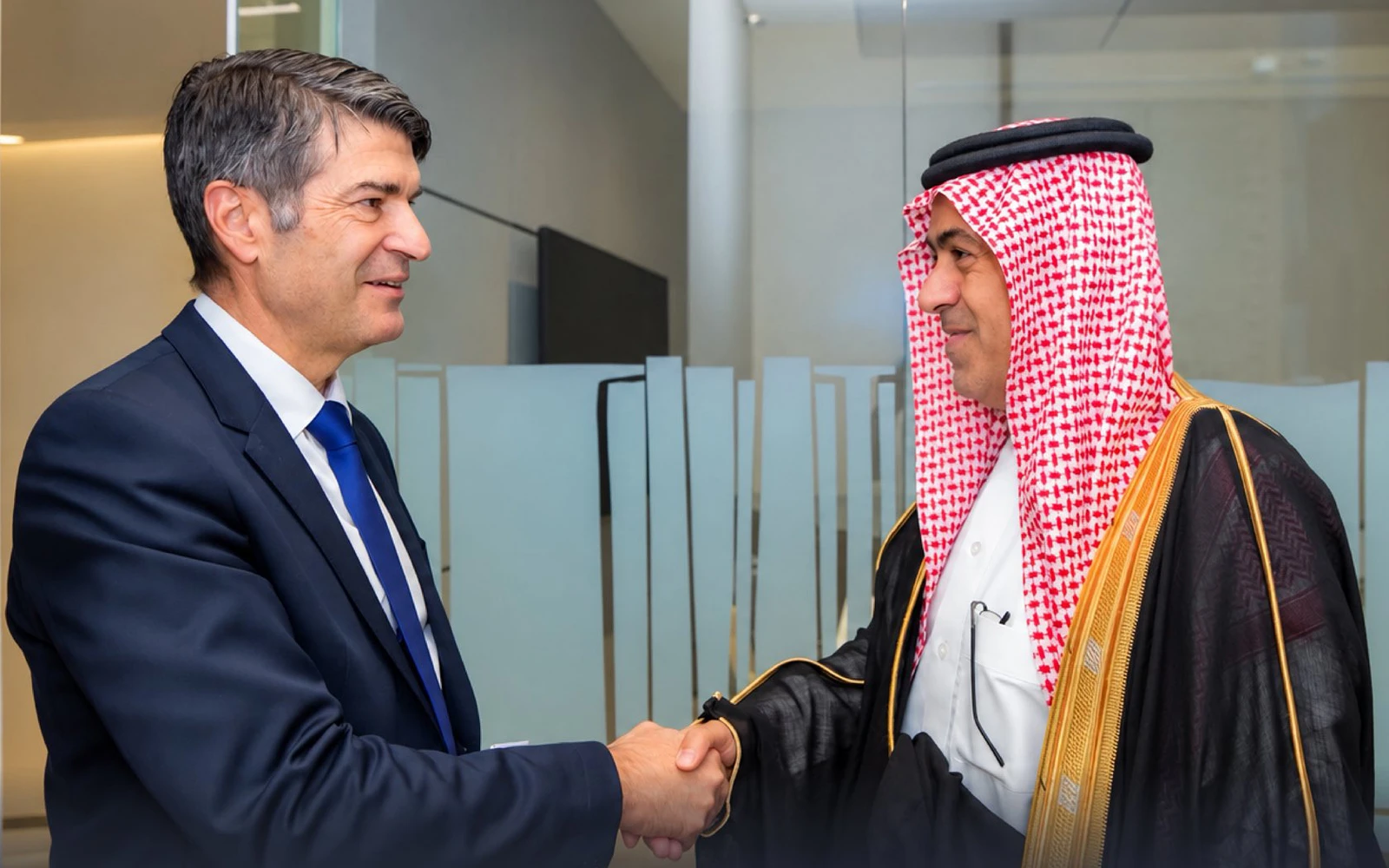
RIYADH, 7 March — The Saudi-Japanese Business Council concluded its two-day session here yesterday with a call for promoting joint ventures, especially in the field of small and medium enterprises, which constitute 83 percent of the members registered with the Riyadh Chamber of Commerce and Industry.
This was one of the recommendations of the council, which also responded positively to the Saudi proposal to send a private sector mission to Japan. It was also agreed that the next meeting of the council will be held in Tokyo on a mutually agreed date in the fourth quarter of this year.
Yesterday’s session was attended by Abdulrahman Al-Jeraisy, co-chairman on the Saudi side, and Yoshiyuki Fujisawa, his counterpart on the Japanese side. Osama Al-Kurdi, secretary-general of the Council of Saudi Chambers of Commerce and Industry, was also present.
The Japanese delegation indicated that it might consider direct investment in the Kingdom in the light of the economic reforms undertaken by the Kingdom. However, any such decision to be taken by the private sector would depend on the competing Middle East interests in the region, the incentives on offer and the infrastructure facilities in place.
The tone of the deliberations was set by Takayuki Maeda, secretary-general of the Organization for Promoting Japanese Investment to Saudi Arabia.
He said Japan has a lot of small and medium business enterprises that are eager to facilitate the transfer of their technology abroad.
“We will send mission of this kind in the second quarter of this year... The delegates will be looking for potential partners,” Maeda said.
Responding to the Saudi businessmen’s request to consider the Kingdom for their investment options, the Japanese side said supply of raw materials at cheap price could help promote petrochemical joint ventures as well as power generation and water desalination projects.
The Japanese side also stressed the importance of Saudi Arabia setting up an investment promotion office in Tokyo, where more than 50 such offices from other countries were already operating.
Earlier, Hiroshi Yokokawa, executive vice president of Japan External Trade Organization (JETRO), said 41 percent of Japan’s overseas investment was in North America, followed by Europe (23 percent), Asia (17 percent) and the Middle East (0.8 percent). He said the total Japanese investment in Saudi Arabia and the rest of the Middle East stood at $19 million in 2000 — just 0.04 percent of direct Japanese overseas investment.
The reason for the poor showing of the Middle East in terms of attracting Japanese investment was the restrictive economic environment in the region. Now that the Saudi economy was being liberalized, JETRO hoped that the flow of information on Saudi Arabia through its Riyadh office would help increase investment in the Kingdom by Japanese firms.
Yokokawa said another factor that should engage the Kingdom’s decision-makers was that Japanese companies base their investment decision on the performance of other Japanese companies already operating in the Kingdom.
“I would sincerely ask Saudi Arabia to continue providing support to these companies for running their business smoothly,” he added.