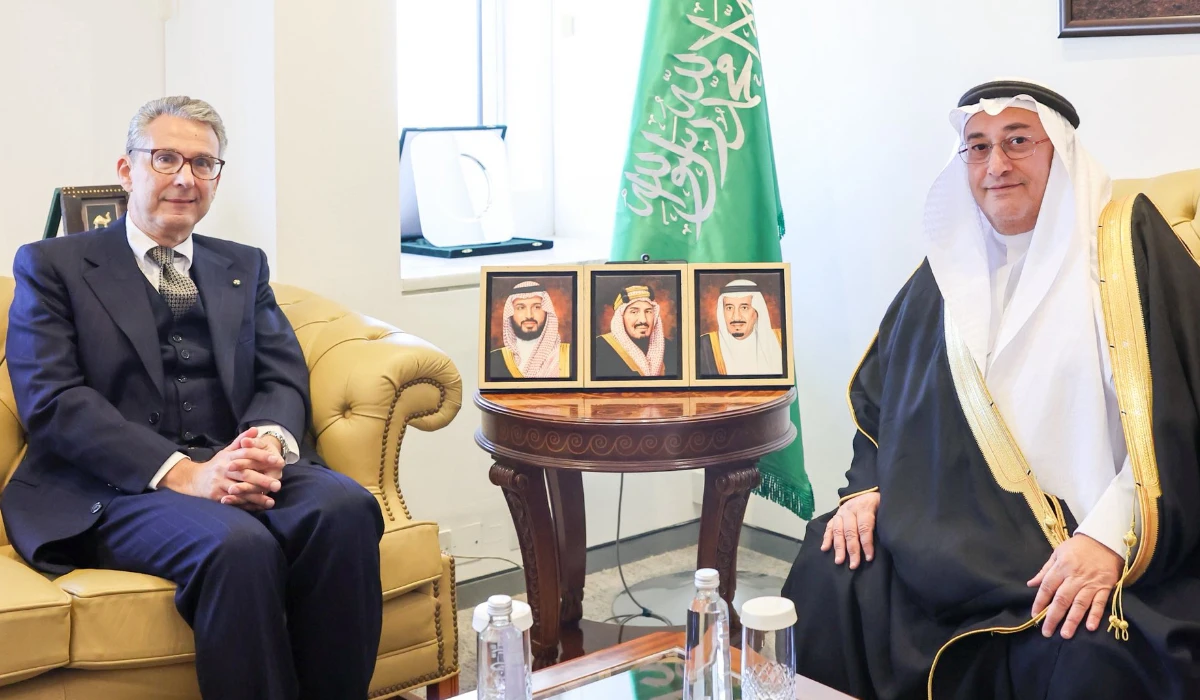
Several leading Saudi thinkers and businessmen have put forward the idea of sending "friendship delegations" to communicate with the US cultural and media establishments. The aim of the delegations would be to explain the Saudi viewpoint concerning the ongoing discussions in the media as well as in political and academic circles.
They would certainly focus on the report submitted by a certain respected intellectual entity in the US urging that the Kingdom of Saudi Arabia be put on a list of enemies.
What message, I wonder, are we going to take to a people who have been shocked and angered by the September attacks on New York and Washington? The media has for some time been striving to put the blame squarely on the Kingdom.
Unless the message is very carefully prepared, the idea of the "friendship delegations" is likely to boomerang back into our faces. US society is not the same as it was at the time of the Gulf War when it was full of compassion for Saudis and Kuwaitis. It has recently undergone a complete about-face in its attitude to the Kingdom.
Thus the message of any delegation will have to be realistic, reasonable and direct — in other words, completely different from the kind of barren views and opinions currently being circulated in the Kingdom. It is not only unreasonable but wrong to believe that others, particularly Westerners, will listen to our claims that we are an infallible society, totally free from the issues and evils of the age and that any criticism of us is only "a smear campaign" or "a conspiracy."
No doubt we would earn the respect of a considerable number of people in the US, including many decision-makers, if we told them plainly that we are as human as any other society and that we also have interests and ambitions like any other society.
We must admit that we have problems which prevent our making progress. We must admit that we were facing terrorist threats even before September. Our society, like any other, has a human face and that face was damaged and disfigured by the flood of angry reaction in the US.
Those who undertake to convey any message to American society should have a deep and comprehensive understanding of everything being written about us in the American media. They should be able to answer calmly and correctly harsh questions about our history, social system and political and cultural relations with the outside world. They should be capable of giving logical and objective answers to questions posed by people who are total strangers to, or who have been grossly misinformed about, Arab and Muslim culture.
The situation also demands a good dose of objective "self-criticism." If this were done, it could lead to a new Saudi experience in communicating with other societies, a new experience totally different from our usual supercilious and conceited treatment of others.
We must also cure ourselves of an extreme sensitivity to criticism. We must not grow annoyed by others who discuss our problems inside or outside our country. Vibrant and progressive societies do not fear constructive criticism; rather they welcome it. Only by accepting and evaluating criticism will we discover the extent of our own self-deception. This self-deception is so strong that it prompts us to think of going to the US, believing that we will be able to persuade the Americans to change their views of us by nothing more than insisting that they not listen to our critics!
And we need to make very sure that we speak to the outside world only after we have had frank discussions of all our issues and problems among ourselves.
19 August 2002