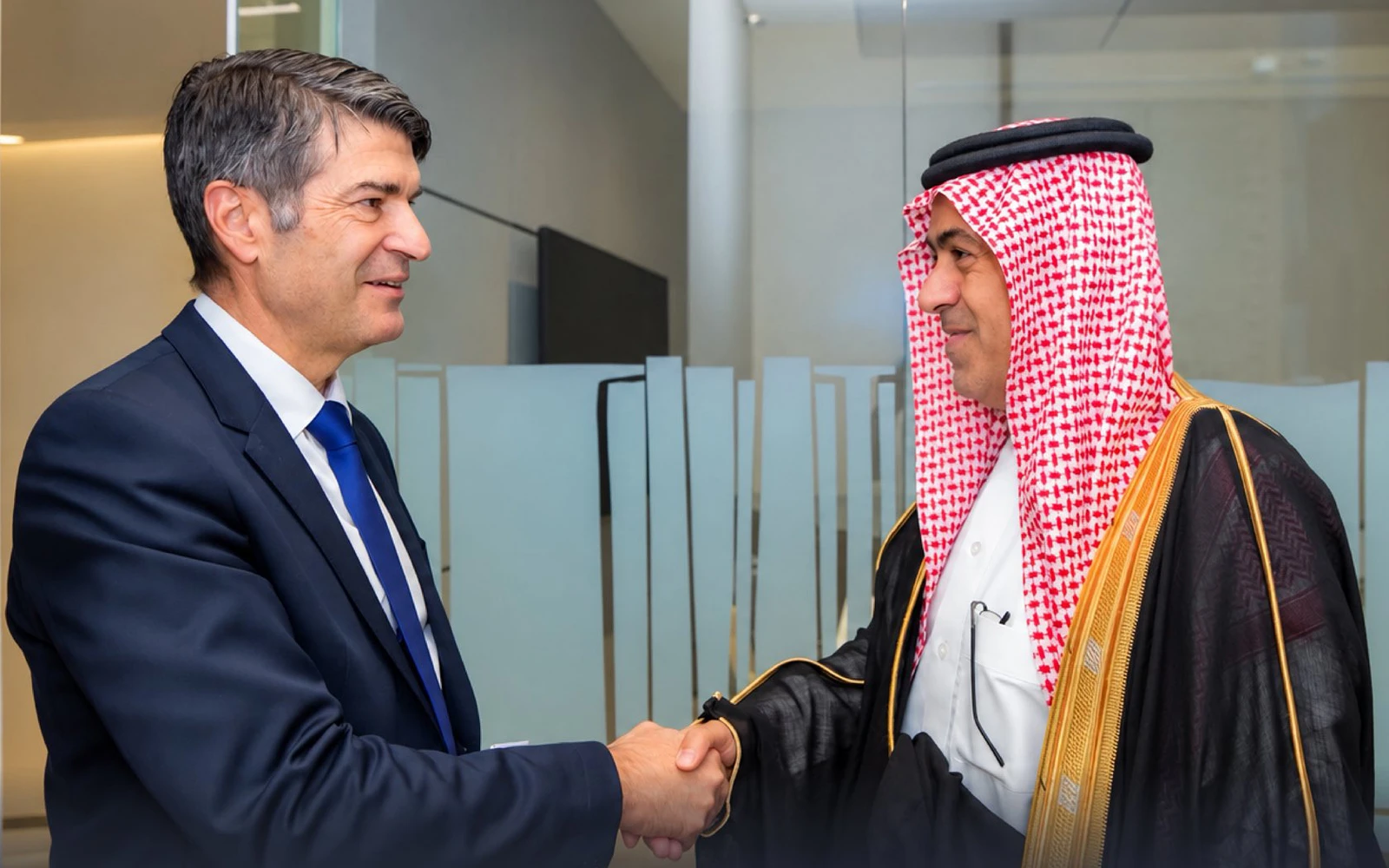
RIYADH, 29 October — A British media specialist has called for injecting a high degree of professionalism in the Arab media if it wants to be taken seriously on the news front.
"What is it that makes people watch CNN? Obviously, it is its professional approach, live coverage, and the ability to provide breaking news with expert comments," Gerard Russell, head of the Islamic Media Unit at the British Foreign and Commonwealth Office, told newsmen here.
He was meeting newspaper editors, reporters and academicians during his first visit to the Kingdom at a reception hosted at the residence of Nicholas Abbott, first secretary at the British Embassy.
The Islamic Media Unit is a new unit of the British Foreign Office set up in the aftermath of the Sept. 11 events. It has a particular focus on the Arab media to which it reaches out through personal interaction for an exchange of views. It also engages in dialogue between Islam and the West, besides offering courses on Islamic studies for the staff of Foreign and Commonwealth Office.
Other activities of this unit involve organizing visits of British Muslims to Muslim countries to promote understanding between Britain and the Islamic world. It also distributes pamphlets setting out the position of British Muslims after Sept. 11.
Gerard said that even though it is a new set-up, it fulfills a long-felt need. In this context, he quoted British Prime Minister Tony Blair as saying during a visit to the unit that it should have been established a long time ago.
During his stay in the capital, Gerard met Prince Abdullah ibn Faisal, governor of the Saudi Arabian General Investment Authority (SAGIA), and Prince Turki ibn Sultan, assistant minister of information, besides visiting MBC.
He left for Jeddah yesterday to see more Saudi journalists, academicians businessmen and Chevening scholars.
He discussed the differences between Arab and Western media as well as the projection of news and views from their own perspective. During the discussions, the participants felt that the main problem was the media. According to them, the Western and, especially the American, media tended to be biased in its reporting, which reflected the Israeli viewpoint on the Middle East issues. This clouded the judgment of the people and prevented them from examining the issues in their true perspective. Responding to such criticism, Gerard said a major factor that makes CNN and BBC click with their audience is their commitment to professionalism on the news front.
The participants agreed that there was a need for an independent TV channel to which the Arab audience could relate just as enthusiastically as they do while watching the Western TV channels. Gerard said the Arab public should take advantage of the British media, which is independent-minded and more balanced in its coverage than its counterpart in the US. This kind of interaction between the two societies, he observed, could help dispel the misconceptions between Islam and the West.
The important thing was to keep the communication channels open between them, so that it acts like a fuse and prevents recourse to radical means for ventilating their grievances — a reference to the Sept. 11 events.
"There are democratic means of making your opinion known. We do listen to and pay attention to them. One of the great and intended victims of the Sept. 11 atrocity was rational dialogue. And it is very important that we do our best to keep it alive," he added.