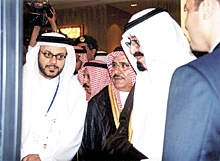
JEDDAH, 2 July 2003 — Crown Prince Abdullah, deputy premier and commander of the National Guard, launched the Umrah International Electronic Network in a private ceremony at the Jeddah Hilton yesterday.
Haj Minister Iyad Madani said the website would make it easy for pilgrims from the Kingdom and abroad to become familiar with pilgrimage procedures and arrange their pilgrimage from anywhere in the world. It will also make pilgrims aware of their rights vis-a-vis Umrah companies. It was designed by the ministry in cooperation with the private sector using the experience of international companies specialized in the field.
Deputy Haj Minister for Umrah Affairs Muhammad Bantan said the electronic network was one of the biggest in the world. There are more than 200 local Haj and Umrah operators with more than 3,500 agents in some 160 countries around the world. The new network allows Muslims to buy a complete Umrah package, pay for it, and get the visa from the nearest Saudi mission within 24 hours.
The launch of the website comes at a time when the new Umrah system has been approved. Its main goal is to save time on registration procedures, Madani said.
Where Umrah operators promise services they are unable to provide, the website can also help pilgrims claim their rights, he added.
An estimated 10 million pilgrims are expected to complete the pilgrimage in the next five years.
The minister said that until three years ago, outside organizers controlled the Umrah market, and there was insufficient access to rules and regulations that pilgrims could refer to when signing contracts with these operators. The new system remedies the situation, he said.
The ministry contacted the Saudi Umrah operators to offer packages and find agents the world over to market them. The minister said international and local companies including HP, CISCO and TIBCO were involved, and the ministry also came to an agreement with Ernst & Young to consult on and supervise the project.
The minister said the network was a perfect example of “how to conceive of a creative partnership with the private sector, how to bridge the digital divide and adapt state-of-the-art technology to local needs, and how to reverse the direction of capital spending and bring it back home.”