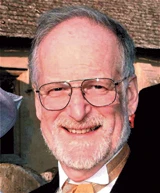
SOUTHMOOR, England, 19 July 2003 — The discovery of a body found in an Oxfordshire wood, believed to be that of an expert on Iraqi weapons programs, has added a dark twist to questions about the intelligence Prime Minister Tony Blair used to justify war.
Police yesterday tentatively identified the body as that of David Kelly, a missing Defense Ministry weapons expert who had been called before Parliament and denied being the source of claims that the government hyped its intelligence reports on Iraqi weapons of mass destruction.
Kelly’s wife reportedly said he was stressed and “very, very angry” about being caught up in a public controversy.
As the prime minister flew to Tokyo to begin an Asian tour, his office announced there would be an independent inquiry if the dead man is positively identified as Kelly.
Opposition Conservative Party leader Iain Duncan Smith urged Blair to cancel his tour and return to London. “There are very many questions that will need to be asked over the coming days,” Duncan Smith said.
The death was a sensational development in a long-running controversy on two fronts: The big issue of whether Blair misled the country about Iraq’s weapons of mass destruction, and a highly personal feud between Blair’s communications chief and a journalist about a government dossier released in September.
The government had suggested Kelly could have been the source of a British Broadcasting Corp. report that quoted an intelligence source as saying the government had ignored experts’ doubts in claiming that Iraq could deploy some chemical and biological weapons within 45 minutes.
The BBC reporter, Andrew Gilligan, subsequently said that his source had accused Blair’s communications chief Alastair Campbell of insisting that the claim be included.
Campbell denied that in testimony to the House of Commons Foreign Affairs Committee. Kelly told the committee that he had met Gilligan, but did not believe he was the source of the report.
Asked if he believed Campbell had interfered in drafting the dossier, Kelly responded: “I do not believe that at all.”
Kelly, 59, was reported missing late Thursday, some eight hours after he failed to return from a walk. The body was found yesterday morning on the edge of a clump of woods within a mile (1.6 kms) of Kelly’s home in the village of Southmoor about 20 miles (30 kms) southwest of Oxford.
“What we can say is that the description of the man found there matches the description of Dr. David Kelly,” said acting Superintendent Dave Purnell of Thames Valley police. There was no word on the cause of what Purnell termed “an unexplained death.”
Kelly, a former UN weapons inspector and Oxford-educated microbiologist, was the senior adviser to the Proliferation and Arms Control Secretariat in the Ministry of Defense for more than three years.
Television journalist Tom Mangold said Kelly had been a source for many reporters, because he was eager to help them understand a complex topic. Mangold said he spoke yesterday with Janice Kelly, who said her husband had been upset.
“She didn’t use the word depressed, but she said he was very, very stressed and unhappy about what had happened,” Mangold said. Several policemen stood guard yesterday outside Kelley’s neat brick and brownstone home, which sits across the street from an old-fashioned country pub and next to an open field.
“He was just a perfectly straightforward family man, just Mr. Kelly in the village — that’s how everyone knew him,” said Ann Lewis, a neighbor for 20 years.
In another development, a CIA analysis has determined that an audiotape aired on Arab television this week was “probably” the voice of Saddam Hussein and could have been recorded in recent days, a US intelligence official said yesterday.
“It cannot be determined with absolute certainty because the quality of the tape is not good, but the assessment is that it is probably Saddam Hussein’s voice,” the intelligence official said on condition of anonymity. “The exact date of the recording cannot be determined, but it could very well have been recorded in recent days,” the official said. That would support the perception that Saddam survived the war in which two US bombings specifically targeted him and his two sons. US forces have been operating on the assumption that Saddam was alive and probably hiding in northern Iraq where his hometown of Tikrit and former power base is located.
The audiotape message that aired on two Arab satellite television networks on Thursday called for resistance “to inflict losses and evict the enemy from Iraq.”
Saddam’s fate has been a mystery since Baghdad fell to US forces in April. Without hard evidence of Saddam’s death, Iraqis hold onto a view that the former Iraqi president could be alive and possibly regain power.
A top Pentagon architect of the US-led war on Iraq was in Baghdad yesterday as a panel of experts warned that Washington had three months to create law and order or risk descent into chaos.
A US military spokeswoman in Baghdad said yesterday Deputy Defense Secretary Paul Wolfowitz had arrived in Iraq but could not say what he would be doing.
Wolfowitz is a powerful deputy to Defense Secretary Donald Rumsfeld, who visited Iraq in April, and is seen as one of the most hawkish figures in the Bush administration’s Iraq policy. A team of five experts, invited by Rumsfeld to assess postwar reconstruction in Iraq, issued a 15-page report asserting that “the next three months are crucial to turning around the security situation, which is volatile in key parts of the country”.
The experts recommended “the entire effort be immediately turbo-charged” by swiftly increasing funding and personnel for reconstruction, involving many more Iraqis in rebuilding the country and improving communication with them.