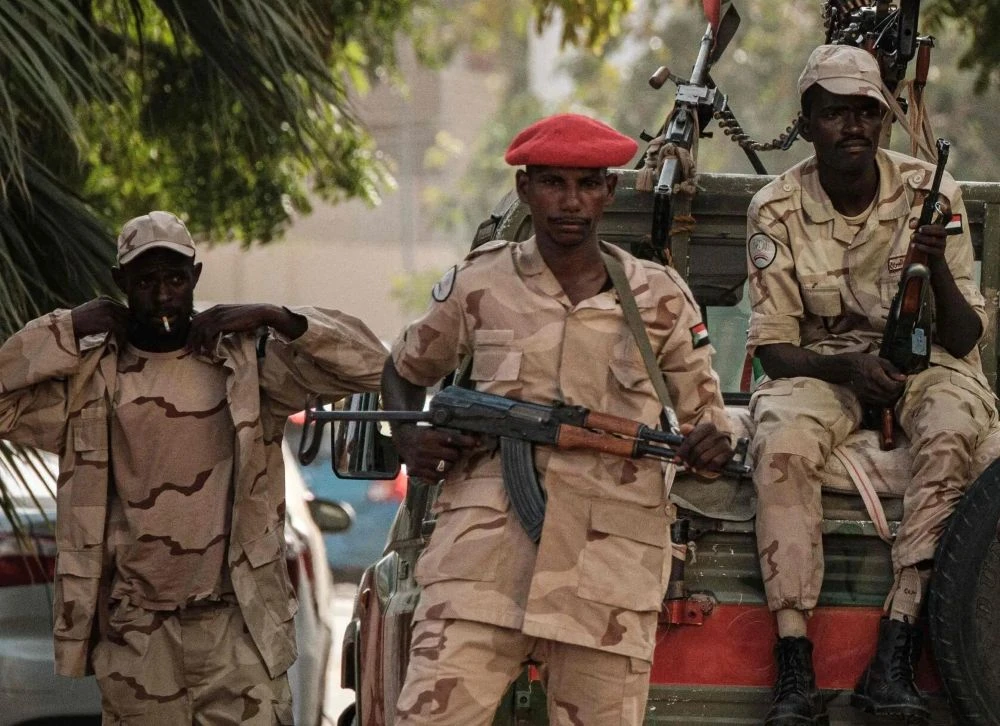
KHARTOUM, 11 August 2003 — Sudan’s president pledged to provide more political freedom in Africa’s largest country, which he has ruled since a 1989 military coup, a Sudanese newspaper reported yesterday.
President Omar Hassan Al-Bashir told members of political parties and civil society groups on Saturday that new measures would include reviewing a list of political detainees, Al-Rai Al-Aam newspaper reported.
Sudan’s most prominent political detainee is Islamist Hassan Al-Turabi, who was Bashir’s former chief ideologue. Turabi was arrested in February 2001 for crimes against the state following a power struggle with Bashir. A government-appointed human rights body has called for his release, a local newspaper reported last week.
Sudan recently freed 32 political prisoners in what analysts said could be an attempt to broaden support for ongoing peace talks in Kenya with the southern rebel Sudan People’s Liberation Movement to end a 20-year-old civil war.
Bashir also promised to end media censorship and lift a state of emergency, in force since 1999, as soon as peace was achieved in Sudan, the newspaper said. But he said it would only be lifted in areas where “peace is not threatened”.
Apart from the civil war in the south, Khartoum faces an uprising by another rebel group in western Sudan. Over the past few years Sudan has allowed greater, albeit erratic, press freedom. Bashir’s Islamist government said in late 2001 it had lifted censorship of all the country’s main daily newspapers, but several have said the curbs remain.
The country’s shaky peace process enters a critical phase today when talks resume with experts warning that failure could spark even greater destruction in a conflict that has already killed two million people.
“If this best chance for peace in 20 years is missed, the arms build-up on both sides suggests the war will become more deadly and destructive than ever,” said the International Crisis Group think tank. “Any crack in the international community’s unanimity (in supporting talks) would allow the parties to back away from an attainable peace and condemn Sudan to further war and famine.”
The Sudan government and SPLA have been fighting over religious freedom, oil, ideology and the right of southerners to rule themselves. Delegates were heading today to a hotel in central Kenya where the talks are to be held. Mediators working for a regional conflict resolution body called IGAD have said they are aiming for a final peace deal this month and the combatants are under pressure to compromise.President Al-Bashir, who last month angrily attacked the mediators’ ideas, was more upbeat in an interview with Egypt’s Al-Ahram newspaper published yesterday. “We will give the current (IGAD) initiative a chance, he said. “It is even possible for us to say that what has been achieved up until now is in itself a (kind of) agreement and the remaining issues can be solved even after the signing of a peace agreement, because I think the remaining issues are details.”
Asked if SPLA leader John Garang could be a partner in government, Bashir said: “Naturally, if he comes to peace with an open spirit, and we sign a peace deal with him, there is nothing to prevent the establishment of that partnership.” But he added: “There is doubt which still grips us about Garang’s actions, which aim to stir up dispute.”
SPLA spokesman Samson Kwaje told Reuters the SPLA would negotiate seriously and he hoped Khartoum could reciprocate.
Flood threat: Around one million people in Khartoum were in danger of losing their homes to flooding from the Blue Nile, a spokesman for the International Federation of the Red Cross and Red Crescent said yesterday in Nairobi. The latest threat comes after the city of Kassala, approximately 500 km to the east, was struck for the second time in 10 days by floods from the River Gash on Friday. According to the federation, the Sudanese government is to build a tent city with 10,000 tents from Saudi Arabia.