MONROVIA, 11 August 2003 — Liberia’s leader-in-waiting said yesterday he was “100 percent sure” he could bring peace to the West African country after President Charles Taylor bows out under US pressure to end 14 years of strife.
Rebels with a stranglehold on Liberia’s capital offered only skepticism.
But Vice President Moses Blah insisted Taylor would follow through with a pledge to hand over power to him in a formal ceremony at one minute before noon today.
As soon as Taylor leaves office, he said, he would invite to his home the leaders of rebels whose attacks on Monrovia have left at least 2,000 dead since June and stranded hundreds of thousands without food.
“This is over. We should lay down the guns and smoke the peace pipe,” said Blah, whom the rebels have said they will reject as just another of Taylor’s old guard.
“I have no interest in being president, I’m calling on them to unite the country,” Blah told reporters, pausing as he drove his jeep past the president’s house. Asked if he could bring peace, he said “I’m 100 percent sure.”
Rebels on the other side of the front-line river remained skeptical of any promises from Taylor’s administration.
“Until Taylor resigns, I won’t believe it. He is a criminal,” said a rebel civilian official, A.L. Hadjia Sekou Fofana. Fofana allowed that if Taylor indeed fulfills his vow to cede power, “it will be a step in the right direction.”
Fofana renewed rebel pledges to give up the city’s port to a gathering West African peacekeeping force when the force has sufficient strength to hold the harbor from Taylor’s fighters.
American and West African military officers ventured into Monrovia’s rebel-held port for the first time on Saturday since the two-month siege to find aid warehouses looted and corpses floating by the docks.
The US and West African officers negotiated for days to gain access to the port, across front lines. The access is crucial to opening humanitarian lines for Liberia’s capital — especially for the cut-off government side, where tens of thousands of civilians have little to eat but leaves.
Rebel fighters, clutching rocket launchers and taped-up assault rifles, escorted the West African troops, three US Marines, and a US Embassy military attaché, Col. Sue Ann Sandusky, through the port to view damage from more than two months of rebel sieges.
The West Africans and US Marines, all in green camouflage, surveyed shelled, charred piers — looking for docking for aid ships to deliver desperately needed food to the war-ruined capital.
Discolored bodies, victims of the fighting, floated next to upended, rusted ships.
Presence of a slowly building West African peace force, and Taylor’s promise to resign have helped bring a weak truce to Monrovia, while fighting persists in the countryside.
As the clock ticked on Taylor’s regime, his spokesman warned that government fighters might create chaos when he leaves.
Vaani Passawe, Taylor’s spokesman, said Saturday “our morale has been sapped.”
“The situation is likely to collapse unless some pressure is put to bear” on rebels, Passawe declared. “Once the president leaves, our boys might be stigmatized. If that is the case, you must expect chaos. Hell might just break loose.”
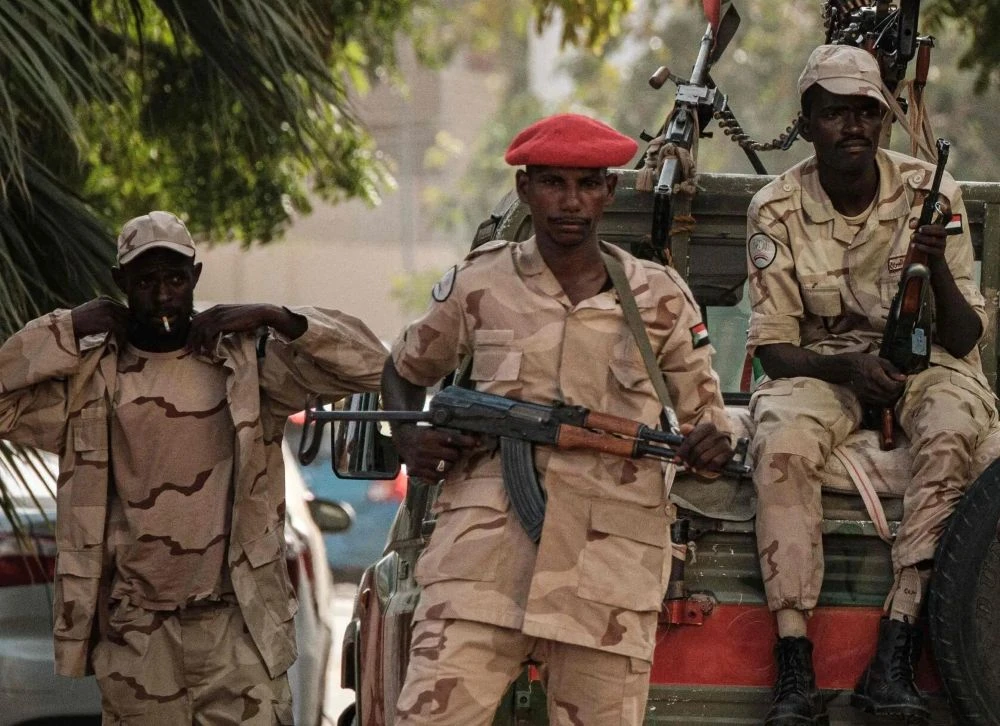
“We are ready to kill and steal anytime,” said one marijuana-toking government fighter, who goes by the name Red Devil. He spoke Saturday at an abandoned, bullet-pocked hotel serving as an outpost for Taylor’s fighters on Monrovia’s front lines.
The peace force had 687 troops on the ground in Liberia on its way to a promised 3,250-strong deployment.
UN workers returned to Monrovia for the first time Saturday after evacuating during fighting in late July. They had hoped to find largely intact World Food Program warehouses, holding the bulk of the agency’s 10,000-ton stockpile of wheat, corn meal and other goods.
Instead, the US-West African assessment mission found looted warehouses, with a trail of corn meal and crushed crackers in the otherwise all-but-empty buildings.
The West African peace force’s chief of staff, Col. Theophilus Tawiah of Ghana, told reporters that rebels had agreed to put in place a US-backed proposal for a humanitarian corridor to the port as soon as peacekeepers build up an adequate force. Tawiah did not say when that would be.
Kabineh Ja’Neh, a top rebel official at off-and-on peace talks in Ghana, said he favored the humanitarian corridor “in principle.” He stressed rebels had yet to make a formal decision on it. Ja’neh insisted the rebels are still “committed to the cease-fire, now more than ever.”
Taylor, a former warlord blamed for 14 years of conflict here, has pledged to go into exile in Nigeria some unspecified time after his resignation.
Taylor was recording a farewell address, to be broadcast later yesterday to a country founded in hope by freed 19th century American slaves and now a byword for anarchy, spread by a generation of intoxicated young killers.
At least a quarter of a million people are thought to have died in Liberia’s war and closely entwined conflicts in Sierra Leone, Guinea and Ivory Coast.
Controlling only part of his own capital, told to step down by US President George W. Bush and wanted for war crimes by a UN-backed tribunal in Sierra Leone, Taylor had little choice but to step down or fight to the death. His one condition for bowing out was that West African peacekeepers arrive to ensure order. The first elements of a Nigerian force flew into Monrovia last week to a heroes’ welcome from weary Liberians desperate for peace and change.
In addition to the nearly 800 West African troops, the United States has 2,300 Marines on ships anchored offshore but has not said it will commit itself to more than a backup role for the regional peacekeepers.