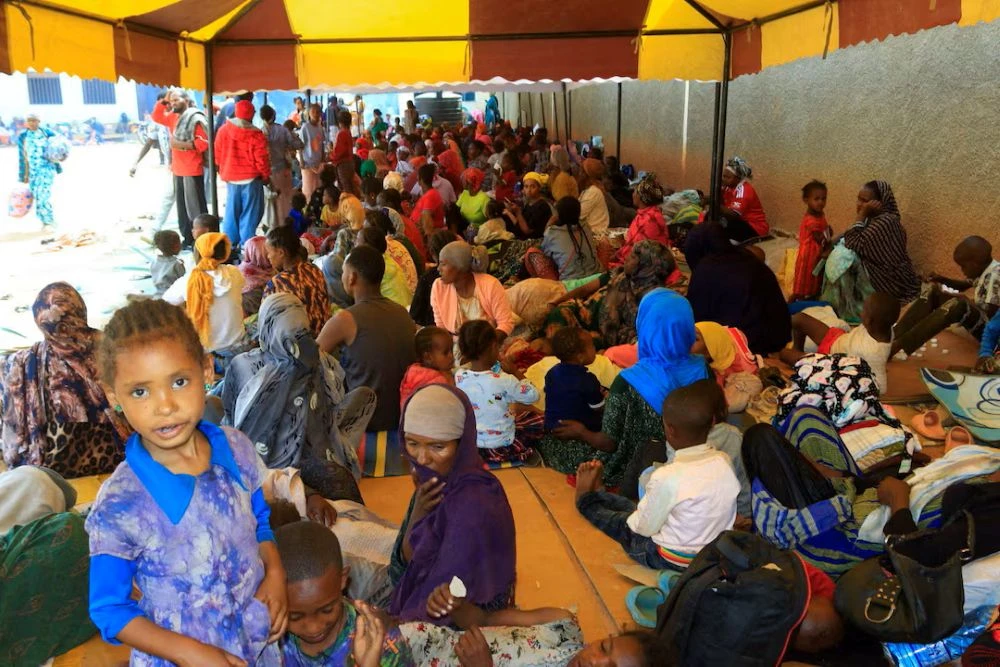
DHAKA, 13 September 2003 — Some 250,000 Biharis, Urdu-speaking people stranded in Bangladesh since the country’s independence in 1971, said yesterday they saw some hope of being able to live in Pakistan after the visit here by Pakistani Foreign Minister Khurshid Mahmoud Kasuri.
“We pleaded our case and we are happy with the outcome,” said Mohammad Nasim Khan, leader of the Bihari community here, who held talks with Kasuri late Thursday and handed over a petition.
“The foreign minister is a very powerful man and he will again talk to (Pakistani) President Pervez Musharraf.... He has promised to do whatever he can for us,” Khan told reporters late Thursday after meeting Kasuri. Khan said he proposed the holding of a tripartite meeting between officials from Bangladesh and Pakistan and his Stranded Pakistanis General Repatriation Committee (SPGRC).
“I am sure such a meeting will be able bring a solution to our problem,” he said.
He said the repatriation of some 1,000 families was an urgent matter as they have fallen on particularly hard times after the state-run Adamjee Jute Mills, one of the biggest in the country where many of them worked, was closed down by the government this year.
SPGRC’s Khan said being able to settle in Pakistan was not the only issue for the Biharis, but also how to improve living conditions for people in the camps, which lack basic sanitary facilities. Financial aid to support the education of the community’s children was also needed, he added.
Some 250,000 Biharis have lived in several camps across Bangladesh since Bangladesh’s independence from Pakistan 32 years ago. Many Biharis migrated to Bangladesh, then known as East Pakistan, from India’s Bihar state after the 1947 partition of the subcontinent.
They sided with the Pakistani Army in Bangladesh’s 1971 war of independence from Pakistan and refused to accept Bangladeshi citizenship at the end of the war, although some younger members of the community are now seeking citizenship.
Kasuri told AFP that the problem was linked to both “political and financial” matters.
“Certain people in a particular province of Pakistan do not want to accept the stranded Biharis in their province because it will change the demographic situation there,” he said, referring to the North West Frontier Province.
But he added that “some Biharis have one way or the other managed to go to Pakistan.”
Kasuri, who was scheduled to leave Dhaka for Nepal yesterday, held talks with President Iajuddin Ahmed, Prime Minister Khaleda Zia, Foreign Minister Morshed Khan and main opposition leader Hasina Wajed during his three-day visit.