
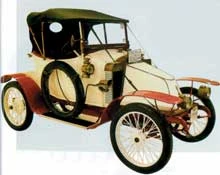
BAHRAINI businessman Akram Miknas started collecting vintage cars thirty years ago because, he says, he loves the fact that they defy time and distance. Since then, he has been hunting high and low for unique and rare models. For a long time he had no particular goal in mind, and it was not until his hobby developed into a fully-fledged obsession that he began to contemplate the idea of establishing the first car museum in the Kingdom of Bahrain and the second of its kind in the Arab world.
One goal of the museum is to get more people interested in collecting.
“There are many car museums in Western capitals,” Akram told Arrajol. “I visit them all the time because they are great places for lovers of this sport to gather and exchange ideas, and this is what we miss here in the Arab world. Therefore, I decided to establish a new museum in Bahrain.”
The museum’s first-rate collection of vintage cars includes models
going back to the beginning of the 20th century and as recent as the 1960s. It also includes motorcycles and old traffic lights signals. There are 24 cars and six motorcycles, in addition to old and rare spare parts.
Another principle is to give visitors an idea of the history of a technology that transformed the world like no other until the IT revolution. The oldest car in the museum dates from 1913, a voluminous Clement Bayard, one of the first comfortable cars in the world. Another highlight of the collection is the 1975 Jaguar E-type, which was once described as the finest car in the world.
The 1917 and 1926 Ford models mark another landmark in the history of technology, because they were the first cars in history to be mass-produced. Ford’s revolutionary assembly line meant each worker was responsible only for a single step in the process but carried out that step repetitively hundreds or even thousands of times a day.
It was only with the advent of computerization and robotics that this soul-destroying method of production could be largely abandoned. Henry Ford has entered the dictionary with two famous remarks. One was, “History is bunk.” The other, more pertinent here, was:
“You can paint it any color you want as long as it’s black.”
All of the cars in the collection are lovingly restored and maintained; they receive the same care as the unique and treasured works of art cars their owner feels they are.
Akram is planning to expand this museum to include more vintage cars that owned by other local collectors. The love of collecting old cars has prompted him, for one, to look deep into the history of autobiles. “Cars the way we see them today are not the product of the idea or invention of one man. There are more than 100,000 separate inventions that taken together make up a modern car. The credit for inventing what we drive today therefore goes to a huge number of people who labored largely in obscurity. It’s only fair that we should highlight some of the work they did for technological
advancement,” he said.
Cars of course are commercial propositions and epitomize more than any other commodity the unstoppable march of capitalism. They are status symbols, they prop up entire economies, they built cities like Detroit and Wolfsburg. So what about the value of Akram’s collection? “It’s approximately $2 million,” he said. But while he may be willing to trade an individual car for a better one for the sake of the museum, the collection as a whole is not for sale.
The museum is open to the public from 2 p.m. till 9 p.m. daily at the Al-Dannah commercial complex in Bahrain.
- Arab News Review 16 October 2003