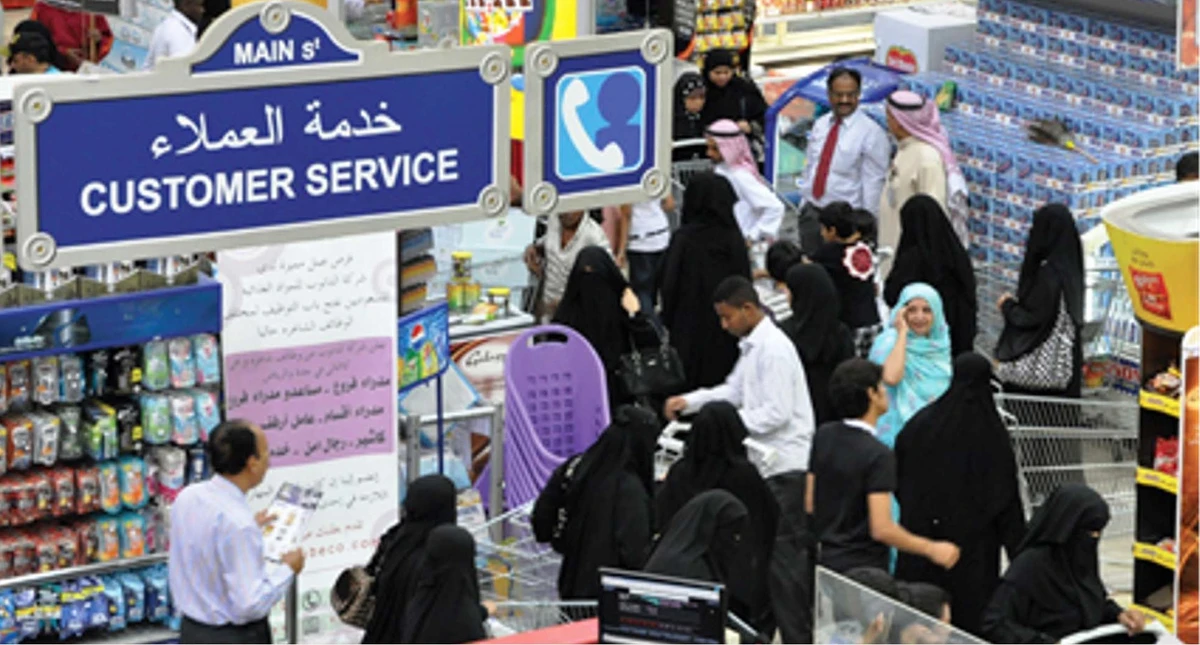
THE look of downtown Jeddah has changed with the arrival of the holy month of Ramadan. With the season of fasting comes a change of terms — traditional spiritual, recreational and business. On Sunday, the last day of Sha’ban, people were racing against time to complete their shopping. Shoppers could hardly walk in Al-Alawi market in Balad because it was so crowded. Another change that downtown Jeddah with Ramadan is children’s playgrounds. Children’s swings, pool tables and board soccer games are very popular during this month.
Abdulsattar Ali, a shop owner, said, “What I like is the atmosphere in the neighborhood in Ramadan. Unlike ordinary days, in Ramadan people who work downtown bring and share their Iftar — fast-breaking meal — and sometimes their Sohor — the last meal before dawn — as well. This emphasizes the spirit of Ramadan, which should be a month of love, warmth, goodness and giving.”
Abdulrahman Seraj, a shopper, said, “Another aspect of the spirit of Ramadan is people in the street who offer free Iftar to people at sunset. This adds to the meaning of Ramadan, which should be linked to thinking of others and sharing with them as you do with yourself. Ramadan is a month for people to get to know each other.”
Businessmen have put the final touches on the kiosks in which they sell traditional Ramadan foods and other items. Different kinds of dates are the most popular food during this month.
The vast majority of Muslims break their fast with dates. It is the central part of the daily Ramadan table setting. And there is no Ramadan without dates.
Muhammad Abkar, a Yemeni working in a kiosk, said, “I have been working in Ramadan kiosks for 14 years. During that time, as much as some things change, others stay the same. Every Ramadan, the same kinds of foods are popular, such as sambosa, puddings, muhalabeya, konafa and Arabic coffee.
There are also drinks that we see only in Ramadan such as subiyah, gamar-ad-deen (apricot juice) and toot, a concentrated berry juice. I enjoy working in the kiosk because of the number of people I come in contact with. The kiosks can make a lot of money in the month and the key to good profits is directly related to the kiosk’s location.”
Foud Salem, a husband and father, said, “I love to come here and shop for Ramadan. Al-Alawi Market in downtown Jeddah is the best place for me to shop for what I want because everything is available here for reasonable prices. I shop for the whole month, especially for the things that are going to be used daily — dates, juices and Arabic coffee. But dates are the most important thing because it is our tradition to break the fast with dates and Zamzam water. Downtown Jeddah is a shopping area I can bring my children — they enjoy coming here because of the atmosphere.”
Al-Sham is another popular downtown area of Jeddah which has made preparations for Ramadan.
In Al-Sham, we met Mustafa Abdul Wahab, a resident of north Jeddah who comes specifically to this place in Ramadan. He said, “Every year, I make sure that I come here with my family because we feel the approach of Ramadan in this place. The environment reflects the arrival of the holy month. The atmosphere here is family-oriented; the children are entertained by the recreational facilities or by the treats being sold in the kiosks.
The festive air of Ramadan is something I remember as a child and something that I want my children to experience. Here in downtown Jeddah in Ramadan is different from north Jeddah where we hardly see any changes. Here, the old Ramadan traditions of downtown Jeddah never change and never end and that’s why my family and I enjoy coming here.”
On a more sober note, Abdullah Abdul Salam spoke of the Ramadan’s spiritual side. “It is essential that people not only care about the traditional, recreational and profitable aspects of Ramadan. For me, Ramadan is all about the soul. Ramadan is a spiritual luxury.
It is a chance for people to focus on praying, reading the Qur’an and catching up on other forms of worship. It is also a time for people to review their actions - past, present and future. Sadly, I think and feel that many people get distracted and lose the real meaning of Ramadan. It is a month in which we should discipline ourselves and reconcile ourselves with God. It is a month to increase the number of our good deeds. Ramadan is not a month to watch TV, stay up late at night or making food the top priority. Yes, we should have fun and enjoy ourselves and our children should celebrate the coming of the month, but we have to organize our priorities and remember what is important and what is not.”
- Arab News Review 30 October 2003