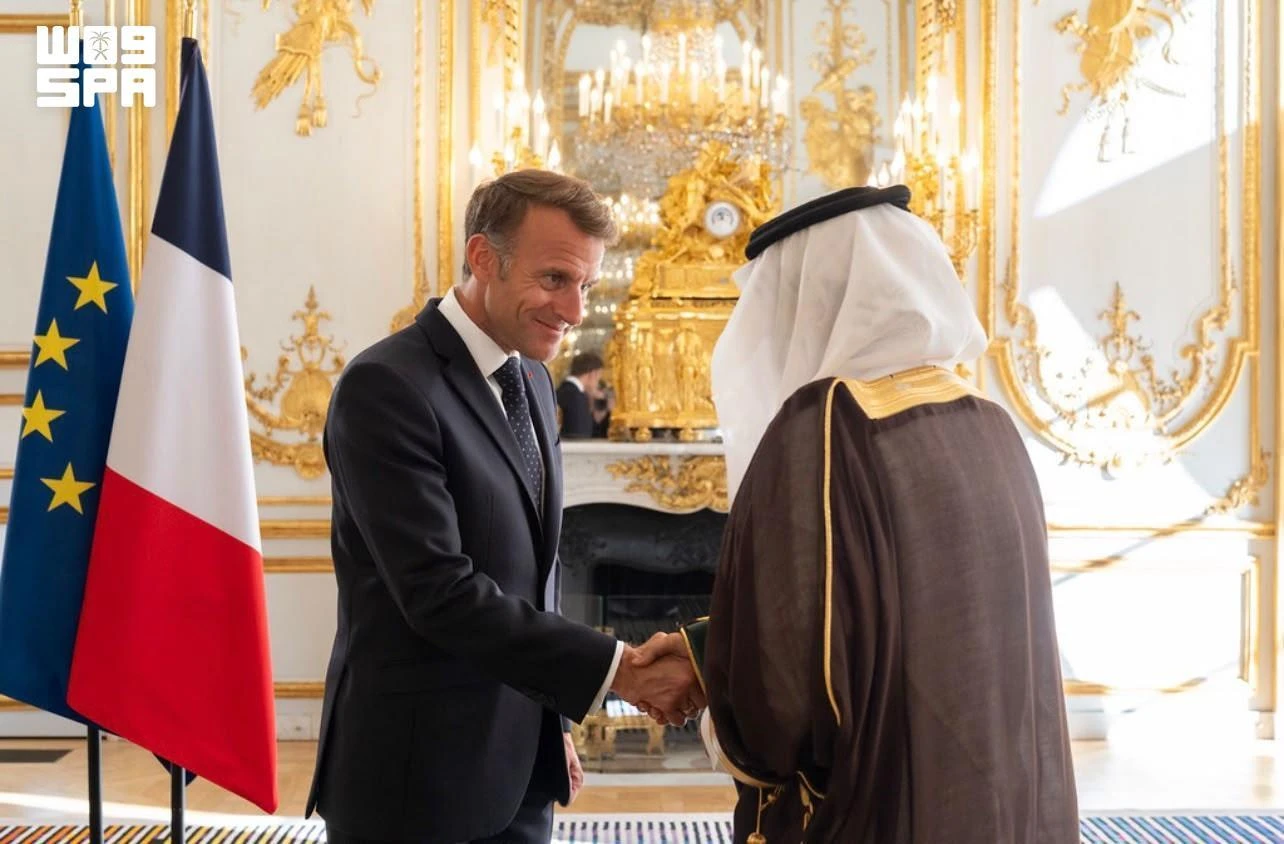
JEDDAH, 4 November 2003 — The government must give priority to developing an appropriate mechanism to amortize public debts and maintain fiscal balance, Hamad Al-Sayyari, governor of the Saudi Arabian Monetary Agency, has said.
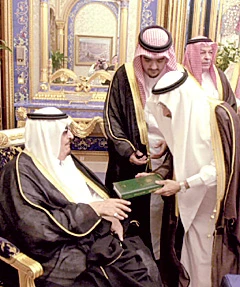
“Stable oil prices and the success of efforts aimed at controlling public expenditure and balancing the budget will help reduce public debt,” he said while presenting SAMA’s 39th annual report to Custodian of the Two Holy Mosques King Fahd on Sunday.
The Kingdom’s public debt is estimated at more than $170 billion, almost entirely owed domestically to commercial banks and two public funds. Press reports have said that a surplus in budget will help the government pay part of its huge debts.
Al-Sayyari also said the country’s gross domestic product (GDP) grew in 2002 by 2.8 percent as a result of a four percent increase in private sector activities, while higher oil prices led to a 2.5 percent increase in the oil sector.
The balance of payments increased to SR44.5 billion from SR35.1 billion in the previous year. The budget deficit in 2002 decreased from SR27 billion to SR20.5 billion.
He said higher oil prices would have a positive effect on the country’s economy in the current year.
“In 2003, the national economy will make greater progress than in the previous year because of the stability of oil prices and as a result of the government’s regulatory and structural reforms in the national economy,” said Al-Sayyari in a speech carried by the Saudi Press Agency.
The governor underlined the significance of the privatization program. “The success of this program will clearly help reduce the fiscal burden on the state budget, improve the use of available recourses and upgrade the quality of services,” he added.
Moreover, it will enhance the opportunities for domestic and foreign private investment in important sectors such as telecommunications, electricity, water, communications, transport and other vital sectors.
He expressed the hope that the new capital market law would contribute to the success of privatization. The law will also contribute to restructuring the Kingdom’s capital market on new and sound foundations.
During 2002 and the current year so far, the Kingdom’s monetary policy continued to maintain the stability of the national currency and domestic prices and ensure the soundness and strength of the domestic banking system, the report said.
During the first three-quarters of this year, money supply went up by 4.1 percent and bank deposits increased by 4.8 percent. Commercial bank claims on the government and private sectors rose by 10.8 percent.
Moreover, banks enhanced their capital base, concentrated on high-return and low-risk assets and intensified their use of modern technology. “This contributed to an increase of 5.0 percent in their profits and a high capital adequacy ratio of 18.7 percent compared with eight percent prescribed by the Basel Committee,” the report said.
Al-Sayyari said the introduction of reforms, the enactment of new legislation and a privatization program were modernizing the economy.
In the past year the Kingdom restructured a number of ministries and approved draft legislations for a new capital market and the insurance industry as well as to stop money laundering.
“Accelerated changes witnessed on the domestic and international economic fronts will require continued work to enhance the participation of the private sector in developments efforts,” Al-Sayyari said.
He highlighted the acceleration of population growth in the Kingdom. “The annual number of young people entering the labor market has increased at rates higher than those of new job opportunities, creating thereby a challenge to economic and social development,” he said.
Approximately 100,000 young Saudis enter the job market every year while unemployment is unofficially estimated at more than 15 percent. The Ministry of Planning projects the Kingdom’s population will increase to about 29.7 million in 2020.
“During 2002 and the current year so far the Saudi economy has made considerable progress, despite the adverse circumstances prevailing in the Arab world... What is more significant is the fact that the growth of the economy has been achieved within a non-inflationary environment,” the governor said. The general cost of living index dropped by 0.6 percent during the year, he added.
The domestic share market continued to perform well for the fifth consecutive year, reflecting great optimism about the domestic investment climate, the governor said. The share price index rose in the first three-quarters of this year by 61.1 percent.
Based on the strength of the Saudi economy and its banking and financial sector, the international rating agency of Standard & Poor’s has granted the Kingdom an “A+” rating for national currency debt and “A” for long-term foreign currency debt. “These are high ratings compared with international and regional ratings,” he said.
Al-Sayyari urged all government and private agencies to disclose data and information that could play a crucial role in helping the government and private sector to take appropriate economic and investment decisions.