
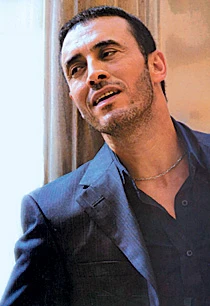
There are two subjects that Iraqi singer Kazem Al-Saher says he won’t talk about even to his closest friends — politics and family matters. Al-Saher is known for not having a bad word for anyone in the music industry. However, in an interview with Sayidaty, a sister publication of Arab News, he agreed to offer a rare look behind the scenes — though some subjects remained off-limits.
Kazem Al-Saher had a difficult beginning both socially and politically. Growing up in a poor family of ten brothers, he lived trough a period of dictatorship that stifled artistic expression. Having outgrown but not forgotten his humble beginnings, Al-Saher, sees himself as a singer for all Arabs and Iraqis, and he says his cosmopolitan lifestyle does not change that.
Last year, he was often spotted accompanying a beautiful woman in downtown London. “I will tell you a secret,” Al-Saher told Sayidaty. “She is my fiancée, and she is from a Spanish-Lebanese background. We are going to live together in Paris, and very soon I am going to announce her name and a wedding date,” he said. Does that mean he will settle down? “I’m still going to move between Canada, France, Egypt and Lebanon. But I think soon it may be time to settle down in one country.”
Iraq, however, remains his spiritual home. “Despite the fact that I am far away from Iraq now and have not been there for six years, I have Iraq in my heart. I carry Iraq with me to every song festival and concert. I sing many songs about Iraq and to the children of Iraq. That is the responsibility of the artist toward a country that he grew up in and gave him love. “When security and peace are restored in Iraq, I will go back,” he vows.
He is deeply influenced by his mother, who he says endured much hardship to raise her many children. “My mother taught us to be patient and overcome difficulties. Sometimes when I think my life is difficult, or when I’m feeling blue, I think of my mother’s patience and the sacrifices she made to raise us during the years of poverty. I cannot say that my childhood was happy, but I learned a lot from the difficult times we lived through.”
The reason he will not talk about politics is that his medium is music, he says. But that in itself sends a powerful political message. “I am not afraid to express anything through music. He has just produced a song with Sarah Brightman entitled “The War is over”, and he was happy with the experience. When the producers called me and I heard the song, I was very impressed with it and I wanted to add some Arabic words in it. We always ask this question in Iraq — when are we going to live in peace? I immediately took to the song’s message; I think this is a message to all humanity. Another song he did sang with Lenny Kravitz just before the war and titled “We want peace” unfortunately flopped.
Under his own steam, he has taken part in a number of festivals in the US. How did audiences react to him there? “American audiences and the media were very curious,” he says. “Half of the audience that attended my concerts were Americans who had listened to the song ‘Baghdad’. Their newspapers were asking the question, how can we bomb a country that has such music? I tried my best to send the message to western audience through my songs, on TV conference and at music festivals. I told them: Baghdad represents civilization, music and literature; it does not represent aggression and war.”