JEDDAH, 21 November 2003 — At a new exhibition of paintings and sculptures here, Saudi and Arab artists are exploring the potential of cultural change in a break from traditional peninsula art.
Hisham Gandeel, Alilieh Gallery manager and organizer, has brought together artists from around the Kingdom and the Middle East, some well-established, others new to public display.
The exhibition continues a now well-established tradition among the five main galleries in Jeddah over the last 20 years to encourage, promote and bring the burgeoning “affordable art” scene to public attention. All the works are for sale; many have found buyers already, at prices ranging from SR5,000 to SR12,000.
Works by such well-known figures as Abdullah Idrees, Jailan Al-Ghamdi, Rasha Mustapha and Abdullah Hammas stood alongside the work of Saudi women including Samia Ba-Hammous, Olla Hijazi and exciting newcomer to the art world, art teacher Ammal Al-Nowaiser. Her prize-winning sculpture of a crouched figure has won considerable critical acclaim.
The exhibition is themed loosely on Ramadan. Whilst many of the works incorporate Islamic symbols, a feeling of exploration and willingness to integrate new cultural elements with the traditional permeates the exhibits. Many of the works are challenging expressions of the artist’s willingness to explore and re-examine traditional themes.
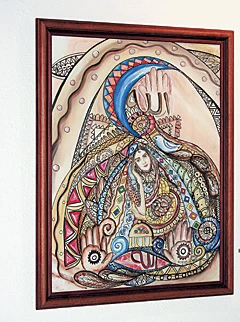
The symbolic portraits by Rasha Mustapha and Aboud Salman contain a welter of images that seem to surface for consideration but then under examination submerge back into the picture’s pattern.
The exhibition shows an incremental movement toward a wider vision of cultures inside and outside the Arab tradition. Jailan Al-Ghamdi uses collage and overlaid transparent paint to hint at the distant but real influence foreign — though not necessarily enviable — cultures are inexorably bringing to bear on the peninsula’s culture. It is a theme repeated throughout the exhibition.
A striking textural painting by Abdullah Idrees, at first seemingly of a decorated door, shows panels with a face behind it. The thought behind the piece is to raise the question whether the figure is evaluating the viewer from behind a cultural barrier or whether the viewer is sympathizing with what he assumes is a prisoner. If there is a consistency in the exhibition, it is the idea of duality, alternative viewpoints and conflicting though reconcilable perspectives.
Samia Ba-Hammous, who will be holding her own exhibition early next year, presented a misty, dreamlike image of minarets seen through a haze peopled with polymorphous shapes that trigger associations in the viewer’s mind but leave more questions than answers.
In contrast, yet with a similarly chimerical effect, Abdullah Hammas presents a striking black-framed three-dimensional triptych that seems to shimmer as it remains motionless. “Abdullah is fascinated by the possibility of a fourth dimension,” said Jailan Al-Ghamdi. “The idea of being present but not palpably present at the same time is confusing and exciting. Abdullah uses a ‘trompe l’oeil’ with tapering strips of primary colored patterns to question the viewer’s assumption of stability in their world.”
The exhibition ends on the last day of Ramadan. The Alilieh Gallery, off Tahlia Street near the International Market, is open after Isha prayer.