JEDDAH, 16 December 2003 — Education and training got the lion’s share in Saudi Arabia’s 2004 national budget, which projected revenue at SR200 billion ($53.3 billion) and expenditure at SR230 billion ($61.3 billion).
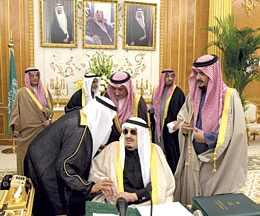
The deficit budget, which was endorsed by the Council of Ministers chaired by Custodian of the Two Holy Mosques King Fahd in Riyadh yesterday, earmarked SR63.65 billion ($16.97 billion) for general education, higher education and manpower training.
The new budget showed an increase of SR21 billion ($5.6 billion) in expenditure from last year’s SR209 billion and decrease in deficit to SR30 billion ($8 billion) from last year’s SR39 billion ($10.4 billion).
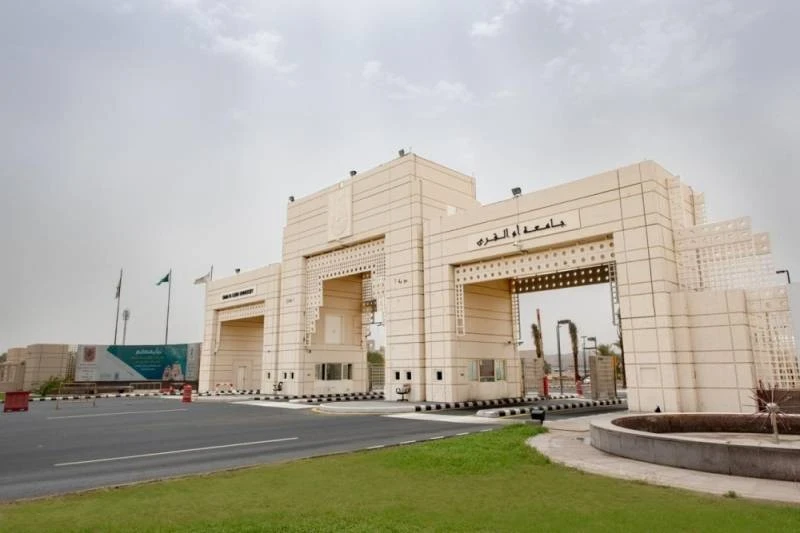
Culture and Information Minister Dr. Fouad Al-Farsy said the new budget allocates funds for three new universities in Madinah, Qasim and Taif, bringing the total number of universities in the Kingdom to 11.
It also makes allocations for the opening of a number of colleges and vocational training centers as well as for the launch of professional military training. Some 10,000 young Saudis a year will be given military training from next academic year.
In his written budget address, King Fahd said he expected the Kingdom’s gross domestic product to grow this year by 12 percent to reach SR791.9 billion ($211.17 billion) in current prices and 6.4 percent to SR677.6 billion ($180.69 billion) in fixed prices.
Private sector GDP was expected to grow 3.7 percent this year in current prices and 3.4 percent in fixed prices, the king said quoting Finance Ministry figures. The non-oil industrial sector was expected to grow by 3.9 percent this year, telecommunications, transport and storage by 4.3 percent, and water, gas and electricity by 6.2 percent.
“The economic reforms carried out by the government had an effective role in achieving these positive growth rates,” the king said in the address, which was read out by Abdul Aziz Al-Salim, secretary-general of the Cabinet.
The Finance Ministry said that actual income for 2003 was SR295 billion, 77.3 percent higher than the projected revenue of SR170 billion.
Actual expenditure was SR250 billion, up 19.6 percent on the projected spending of SR209 billion. The ministry said the rise in spending was due to some emergency security matters.
Saudi Arabia has registered a budget surplus only once since 1982 — $6.1 billion in 2000.
The 2003 surplus is attributed mainly to better-than-expected oil revenue, which was projected at around $30 billion, and is believed to have more than doubled. Saudi oil prices remained around $25 a barrel, up from the estimated $17.5 used by the government to estimate the budget.
The budget allocates SR41.6 billion ($11.09 billion) for new projects, which includes construction of 150 primary health care centers, furnishing of newly constructed hospitals, and expansion of existing hospitals.
“Of the SR41.6 billion, SR32.6 billion will go to new projects in education, health, social welfare, municipality, water, sewage, transportation and infrastructure projects,” Al-Farsy told the Saudi Press Agency.
The huge budget allocation for education — up by SR6.2 billion from last year’s SR57.5 billion — shows the government’s commitment to quality education and training for its citizens, the minister said.
The budget allocates SR8.5 billion to universities and colleges. Allocations have also been made for the construction of 3,030 new schools for boys and girls.
According to the budget address, 26 hospitals with a total of 4,300 beds will be ready in 2004. Eighty-eight hospitals with 11,000 beds are under construction. The budget allocates SR24.3 billion for new health projects.
The address noted the government’s plan to widen public participation in local affairs — a reference to plans for partial elections to municipal councils next year.
King Fahd also highlighted the political and economic reforms introduced in Saudi Arabia this year, including the new Stock Market Law, Investment Tax Law, and Insurance Law.
A royal decree authorized the Finance Ministry to borrow to cover the deficit but did not say if the loans would be sought locally or from foreign financiers.
The decree said the budget surplus would be allocated to pay the country’s public debts, which are estimated at $170 billion.
Spelling out budget allocations for different sectors, Al-Farsy said the transport and communications sector received SR7.25 billion including SR3.5 billion for the construction of 3,800 km of new highways and roads. This covers the Baha-Abha Road, the Jeddah-Jizan Road, the Khamis Mushayt-Najran Road and the Yanbu-Amlaj-Dhuba-Sharma Road. Water and electricity are to be goiven SR15.1 billion including SR9 billion for new desalination projects, dams and water and sewage networks.
The Finance Ministry said the Kingdom’s lending institutions would continue to provide loans to carry out industrial, agricultural, and real estate projects. These loans are projected to reach SR10.6 billion in 2004.
“The robust growth in the private sector has been accompanied by a number of factors enhancing confidence in the national economy and should continue to have a positive impact on private sector growth,” the ministry said.
These factors include the sovereign credit rating by Standard & Poor’s for the Kingdom with A+ for long-term local currency and A for long-term foreign currency grades, the ministry said.
According to the preliminary data issued by the Saudi Arabian Monetary Agency, the current balance of payment account is estimated to have recorded a surplus amounting to SR101.9 billion in 2003 compared to SR44.5 billion in 2002.
Non-oil exports are estimated to have grown by 1.6 percent in 2003, totaling SR33 billion and representing 10 percent of total exports, it added.
The ministry said bank deposits recorded a growth of 4.5 percent during the first 10 months of 2003, and total banks claims on the public and private sectors increased by 12.3 percent, with their capital and reserves increasing by 2.9 percent and profits rising by 7.4 percent.