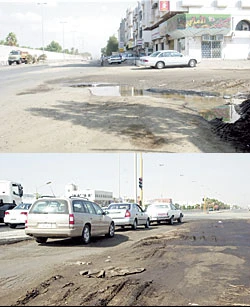
JEDDAH, 28 December 2003 — After every rain, the picture is the same. Potholes fill with water, sewage overflows to the point of making some roads impassable for days, and garbage is strewn everywhere. In the puddles, insects breed in profusion.
Residents say the municipality is not doing enough, and that what it is doing is merely short-term. Days, sometimes weeks after the rain, the municipality may come and drain the small swamps that have been allowed to develop. Narrower streets and poorer quarters may see no drainage at all. Sewage festers until the water evaporates in the desert sun.
“What is the point of fixing these roads if the problem returns every year?” Jeddah resident Fouad Ali asks. “These are always short-term solutions. What they need to do is fix the infrastructure and install proper canalization so the water can run off.”
Damage from potholes alone cost him SR300 in repairs for his car, he says. “Why should I spend SR300 on a brand new car?” he says.
Osama Ahmad agrees. “I live in mortal fear of potholes,” he says. “If I can avoid them I will, but there are only so many streets that lead to my office or my home.”
Others wonder why garbage disposal has still not progressed beyond Third World standards. The open skips turn into sodden, malodorous breeding grounds for disease, but occasional announcements that things will change soon never appear to work out.
“The municipality will have to do something, and fast,” says Hassan Al-Oufi. “Otherwise there will be a catastrophe.”