
Next door to Saudi Arabia in the Emirate of Dubai, a celebration of conspicuous consumption has been under way since Jan. 15. Everyone probably knows the event I am describing as advertisements for it have been plastered all over the Kingdom. The 9th Dubai Shopping Festival (DSF) has just a few days left and then Dubai’s merchants can relax and count their takings.
When DSF began in 1996 it ran for 43 days, attracted 1.6 million visitors and earned 2.15 billion dirhams. Last year the event lasted 32 days, attracted 2.92 million visitors and concluded with a total spend of 5.12 billion dirhams. Which nation has the largest number of visitors to DSF? Saudi Arabia of course. This country which has made a reputation for consuming far more than it produces is perfect prey for a nearby shopping festival.
To be fair, people from many nations come to DSF. Those from Europe are looking for a warm vacation spot where they can thaw out and have a bit of fun. But air travelers are constrained in what they can buy simply due to luggage weight restrictions limiting their haul to about 30 kgs. However, visitors from Saudi Arabia are free from similar curbs. Dubai is a nine-hour drive from the Kingdom’s Eastern Province and it’s amazing how much stuff can be packed into and onto a sport utility vehicle. Strangely, most of the items Saudis drag home with them, could have been bought in Saudi Arabia for the same or better prices.
This year DSF was timed with the winter sales common to most of the outlets in the city’s shopping malls. Those stores instead of having special sales for DSF were able to dump their old merchandise on the festival crowds. How convenient for them. The shops that weren’t having winter sales held “part sales.” In a “part sale” only the least desirable goods are offered at a discount. The word “sale” in this case is used to lure shoppers in the hope that while they probably won’t buy the sale goods, they may buy some other item nicely displayed nearby.
In the more traditional retail areas of Dubai, few merchants were participating in DSF. I asked one fabric salesman why his shop didn’t have a DSF sign and C.T. Kutty explained: “Our prices are already very low and we would lose money if we reduced them. DSF is mostly for the shopping malls where the margins in the stores are high. Honestly though, even during DSF I don’t think people get better prices at the shopping malls — especially for staple goods. The market here is highly competitive and most smaller merchants already price their goods as low as possible to keep customers coming back year round.”
It’s important to point out that while people think they are coming to Dubai for special prices during the festival, some of the sectors that earn the most from DSF don’t reduce prices at all. The hotels were full. Getting a room was an expensive proposition. One very old five-star hotel priced double rooms at 765 dirhams plus 20 percent tax. Newer five-star hotels were asking upward of 1,200 dirhams plus 20 percent nightly. Traffic was horrible, especially on weekends and the taxi drivers were making a killing, taking tourists on circuitous routes through the mess and even cheating them outright. One Arab News staff member was charged double the fare when the taxi’s meter was inexplicably “broken.”
One of the most enthusiastic supporters of DSF is the gold sector. Hani Rashid Al-Yateem, vice chairman, Dubai’s Gold and Jewelry Group, stated that gold is selling higher this year internationally than last year, so DSF visitors will pay more for their jewelry purchases. During DSF 2003, gold and jewelry worth 300 million dirhams were sold.
“We do sell at low margins so our prices are some of the best in the world,” Al-Yateem said. “Nationals from the GCC and Subcontinent buy the most. This year we launched the World Family commemorative gold coin and had already sold 50 kgs of the coins before the festival began. I believe it is the 47 kilos of gold to be won during this year’s DSF that attracts many buyers.”
There are many raffles during DSF. Some are based on spending a certain amount to get a chance to win. A few just require registration of name and contact details. Others border on gambling by requiring an outright ticket purchase. Gift giveaways are also popular. One large luxury goods chain was offering gifts with a specified minimum purchase. Unfortunately when shoppers went to buy various colognes and cosmetics to meet the purchase requirement they found that the most popular items were, “out of stock.”
A sales representative at the store explained: “We sold quite a lot of our goods as gift purchases during the winter holidays, which just passed. The new stock hasn’t arrived yet. We hope it will come soon.”
One of the worst scams going on at DSF is the sale of “bargain” electronics goods, which come without international or even GCC warranties. Most people don’t become aware of the warranty fiasco until they return to their home countries and the item suddenly stops functioning. Even residents of Dubai admitted that getting after-sales service from the discount electronics retailers in Dubai is a nightmare.
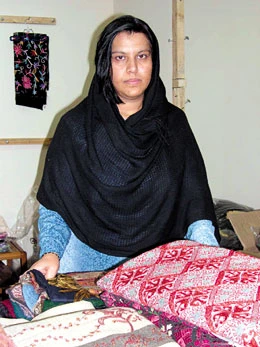
However, the most appalling tale of DSF 2004 was the one told by Zarina, the marketing manager of the DACAAR Sewing Center in Peshawar, Pakistan. DACAAR is a non-profit organization managed by and for Afghan refugee women. Established in 1984, the primary objectives of the center are to provide Afghan refugee women with an income while keeping alive Afghan culture through the use of embroidery patterns based on Afghan designs.
DACAAR came to DSF 2003 and barely covered their costs. Unhappy, they spoke with the DSF organizers and were promised that accommodations would be made, since the group is a charity, and that hopefully DSF 2004 would be a better experience. As the event opened, Zarina had not witnessed any improvement.
“Our goods were late clearing customs,” she said. “Even though DACAAR is a non-profit organization, we had to pay customs duties. We also had to pay the standard 18,000-dirham fee for space to sell our goods in the Global Village and 27,000 rupees transportation fees for the goods. Too much money has been spent even before the event begins, but what can we do? The women have already worked for months sewing for this event so we must do our best to sell and hope people will be in the mood to buy.”
Arab News readers may be wondering why they’ve never heard such DSF tales as these before. After all, the Saudi media is packed with glowing accounts of the event. Perhaps everyone should know that since 1997 DSF has been handing out awards to those journalists who, according to DSF CEO Saeed Mohammed Al-Nabouda, “creatively showcase the success and development of the event.” This year $80,000 in prize money will be given away to the deserving media. Keep those prizes in mind the next time you read a “fair and balanced” report about the Dubai Shopping Festival.