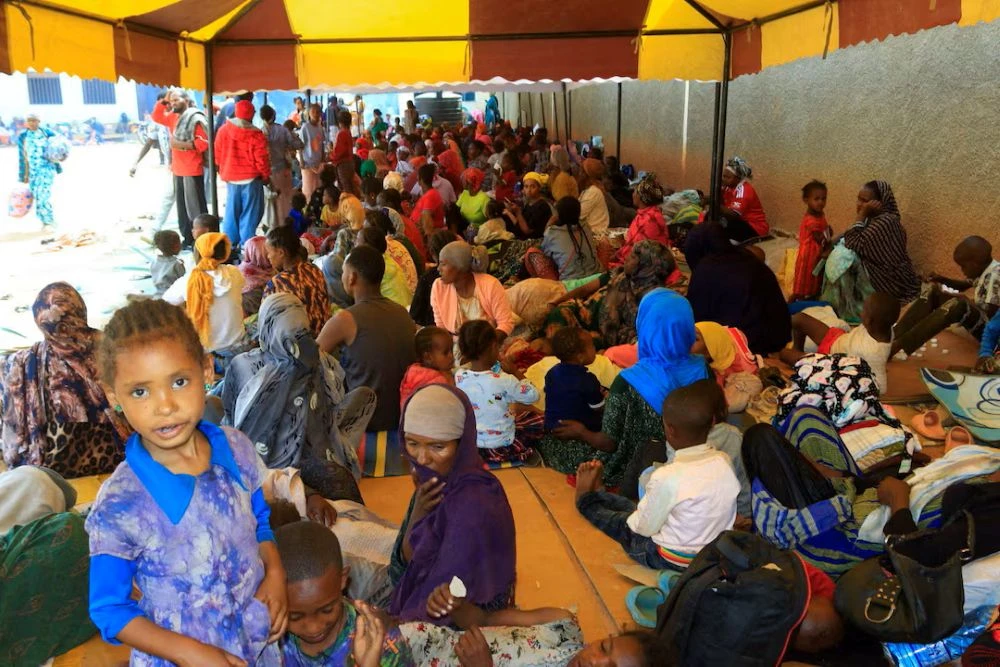
JEDDAH, 29 February 2004 — More than 200,000 people in Somalia’s northern and central regions face extreme food shortages due to a prolonged drought considered the worst in 30 years, a new report has warned.
The report, which was jointly issued by the UN, the European Union’s Food Security Assessment Unit and the United State’s Famine Early Warning Systems Network, said that several years of below-normal rainfall have caused “extreme stress” in the pastoral areas in northern and central regions, leading to massive deaths of livestock and loss of income from sales of milk and meat.
“Between 20 and 80 percent of livestock in these regions died during the years of drought, leading to sharp increases in the cost of trucked water and mounting indebtedness. For most of the population, this has meant the inability to access food. About 89,100 people (10 percent) of the population of the affected districts already constituted a humanitarian emergency.
A further 113,900 were considered to be experiencing a livelihood crisis, the report said.
The affected areas were the Sool Plateau, Togdheer and Lower Nugal regions in the north, and villages of Hirale and Hurshe in Galgaduud region in central Somalia. The Sool Plateau, the report says, was the worst-affected area, where an estimated 64,000 people were experiencing a humanitarian emergency, and another 28,600 were hit by a livelihood crisis.
It noted that the food vulnerability situation in central areas was exacerbated by civil insecurity.
“Field reports indicate highly dynamic pastoral movements throughout the Sool Plateau area, as pastoralists search for pasture and water for their remaining animals,” said the report.
On Friday, UN aid agencies and non-governmental organizations operating in Somalia have appealed for $111 million to assist the country this year.
***
The UN Security Council has warned Somali faction leaders that it will keep a close watch on those blocking efforts to resolve the conflict in Somalia, UN Media Center said on Thursday.
“The Security Council condemns those who obstruct the peace process and stresses that those who persist on the path of confrontation and conflict will be held accountable,” the UN Security Council President for February, Ambassador Wang Guangya of China, said in a statement agreed on by the 15 members.
He said the council urged the Somali parties to build on progress made so far and to swiftly conclude the Somali peace talks in Kenya with a durable and inclusive solution to the conflict, by establishing a viable transitional government.
The talks are sponsored by the Intergovernmental Authority on Development (IGAD), an East African body.
The statement urged international support for IGAD, as well as for the African Union (AU), which is prepared to send a military observer mission to Somalia.
Guangya also voiced the council’s concern over the continued flow of weapons and ammunition to Somalia, calling on states to cooperate with a monitoring group set up to oversee the international arms embargo against the country.