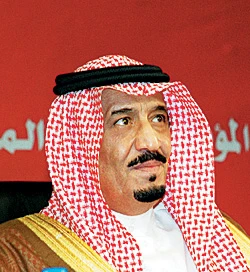
RIYADH, 29 February 2004 — The Riyadh International Communications & IT Conference and the Saudi Communications 2004 which Riyadh Governor Prince Salman inaugurates today at the King Faisal Conference Hall and the Riyadh Exhibition Center, respectively, is a landmark event in several respects.
To start with, it marks the 20th anniversary of the event. It is also significant in terms of the geographical spread of the exhibitors and speakers who are drawn from 11 countries around the world with China being the largest exhibitor.
An important feature of the event, according to Khalid Al-Gari, conference project manager, is the high profile it has acquired through the patronage of the Riyadh governor. And the support of the Ministry of Communications and Information Technology. Also, it has attracted some major IT players from around the world.
The event, which is divided into two segments, should, according to Dr. Akram Masri, director of technical affairs at the Riyadh Exhibition Center, facilitate technology transfer and help in human resource development. The theme of lectures at the King Faisal Conference Hall covers the whole gamut of communications and information technology — from telecom policies and regulations, the status of regulations for the Kingdom’s telecom sector to trends in a changing telecom world, overview of Saudi data and future plans and the future technology, among other topics of discussion.
The STC will present a 15-minute documentary on the occasion highlighting the growth and development of the telecommunications sector in the Kingdom. Another highlight of the conference is the holding of tutorials at the KF Hall for the benefit of people from the IT industry.
Al-Gari said the conference- cum–exhibition is taking place at a time when the Kingdom’s telecom sector is experiencing a market boom. He pointed out that while the annual growth rate of fixed telephone lines stands at seven percent, the mobile phone sector has registered a phenomenal growth rate of 80 percent. As for the Gulf region as a whole, the growth rate is around 35-40 percent.
However, the main point of interest among the consumers, Dr. Akram notes, is what the technology has to offer in terms of its applications. “The end-users are not interested in technology per se but rather in what it will deliver to them. So the applications of the new technology will be the focus of the lectures to be delivered by experts in the field.”
The lectures will start on March 1, when Awad Al-Assaf, deputy governor, legal affairs, CIT Commission, will speak on the “Status of regulations for the Kingdom’s telecom sector.” The ministry of ICT will unveil official plans for the gradual privatization of the telecom sector. Already the Communications and Information Technology Commission (CITC), the regulator of the telecommunication and IT markets in the Kingdom, has announced that those interested in being prequalified to bid for tenders relating to a new mobile operator and two new data telecommunications service providers should submit their documents by March 7.
The move follows the conclusion of a public consultation process which ended on Dec. 31. EFG-Hermes, Goldman Sachs and Riyad Bank are acting as financial advisers to the CITC on the licensing process. After reviewing responses to the Request for Pre-Qualification (RFPQ), the CITC will notify the prequalified candidates and invite them to prepare their proposals.
Commenting on the launch of the licensing process, Awad Al-Assaf said: ”We are very pleased to commence the formal licensing process for both the mobile and data telecommunications markets which allow us to open both markets for competition in 2004 in accordance with the relevant resolutions and the liberalization schedule previously announced by the CITC.
“The high level of participation and quality of responses we received have been very valuable to the commission in formulating its approach to this process.”
Al-Assaf said this plan emphasizes, in the first instance, the public interest, while respecting the interest of all parties involved. He also stressed that this measure would contribute to the improvement in the quality of telecommunications services in the Kingdom, the reduction in cost of services, the creation of job opportunities for Saudi citizens and to attract investments, which are among CITC’s priorities.
As Dr. Al-Masri points out: “A major development is the convergence of IT into ICT. This convergence means you don’t know where IT ends and communication starts. When you are carrying a phone, it also acts as an organizer, and as a computer. Is it a phone or a computer? We have now reached a stage when voice, computing and telephone have merged into one device that also allows access to the Internet. This explains the significance of establishing the new ministry of CIT.”
He said the conference would play an important role in technology transfer, since it will feature some prominent speakers including deputy minister for technical affairs at the Ministry of Commerce and Industry, Dr. Fawaz Al-Alami, the deputy governor of the Communications and Information Technology Commission Abdullah Al-Dharab, STC President Khalid ibn Abdullah Al-Mulhem, Dr. Ihsan Bu-Hulaiga, member of the Shoura Council, Dr. Turki ibn Saud ibn Mohammed, director, Space Science Institute of the King Abdul Aziz City for Science and Technology (KACST), and Carlo Maria Rossotto, regulatory economist at the World Bank, to name a few.
Dharab will speak on the “Technical challenges in regulating the telecommunications market in the Kingdom”. On behalf of the STC, Saud ibn Majed Al-Daweesh, vice president of STC and president of the Mobile Unit, will give a presentation on “Operational challenges for GSM operators in the Kingdom.”
“These professionals,” Dr. Akram observes, “will explain how to apply technology in useful ways. Thus people can attend these lectures and then visit the exhibition for a practical demonstration of what they learned during the lectures.”
“This interaction could be useful in terms of human resources development,” he said, adding that there are 24 keynote presentations in addition to the technical speeches. These technical sessions are meant to facilitate technology transfer. This is in addition to six tutorial sessions.
He pointed out that another interesting aspect of the conference series is the shift in telecommunication services. One aspect of this emerging technology is the specialized 700 service offered by STC enabling you to access the required information, such as medical advice or commercial information, for a fee.
This has helped some TV channels to diversify their sources of income. Instead of relying solely on advertisements, the TV stations generate additional revenue for themselves by letting members of the audience make phone calls to the TV station to identify the most popular program of their choice.
The charge accruing from the phone call is split between the TV station and the telephone service provider.
Another new service, he points out, is VOIP (Voice Over Internet Protocol). The current level of technology needs a major investment to facilitate a switchover to VOIP. Once in place, it would make use of the Internet to generate phone calls at much reduced rates vis-à-vis the conventional land and mobile lines.