DAMMAM, 1 March 2004 — Being in hospital is no fun for anyone. For a young child who does not understand what is wrong with him and why he has to stay there, it must be terrible. No wonder there are tears and tantrums. Mustashfa Wilada, the children’s wing of Dammam’s maternity and children’s hospital, is a heart-wrenching place to visit. There are frail little bodies barely a year old, writhing in pain, attached to tubes, their bodies poked and probed. Older children are uncomfortable, restless, wanting to go home. The nurse says that 90 percent of the beds are occupied. For the children it is a struggle between pain and comfort; for their parents, a struggle between hope and despair.
Qais, a 24-month-old Jordanian boy, looks like any other child his age, except that Qais has just survived four operations. Qais suffers from Hirschsprung’s Disease — a rare congenital bowel disorder which can cause a blockage in the intestines.
He was brought to Mustashfa Wilada in critical condition. Dehydrated, he had to be brought here from a small hospital 300 kilometers away that did not have adequate surgical facilities. His heart had already stopped once.
As his mother was trying to comfort him, 10-month-old Osama became a handful. The hospital had put up a crib for Osama in the small semi-private room, and the hyperactive boy protested at the top of his lungs against being confined there. He then flashed me a beautiful smile, showing off his four brand-new, pearly teeth, but as I patted his cheek, he turned and bit me. His exhausted mother said that she had no choice but to keep Osama with her in the hospital since she was still breastfeeding. She said that she got depressed but then she fought it off by prayer. “I have to be realistic. It is hard, but I have to face it with strength. I seek Allah’s help,” she said.
Tears and prayers. That is what the mothers survive on. No makeup, no fancy clothes. They are barely conscious of themselves. Their only priority is their children. Many would not even talk to Arab News; their pain was too great, too private.
Raniya Maryam was just transferred from the ICU to the ward at Mustashfa Wilada. This three-year-old Indian girl was in a coma for a week after swallowing some of her brother’s seizure medicine.
A nurse says Raniya’s mother, Mumtaz, spent the seven days by her child’s side. Mumtaz said: “I cannot even describe what happened to me in those seven days. I was totally disoriented.”
She needed to talk. She told how she had kept the medicine out of Raniya’s reach. “But she is so clever. She climbed on chairs to reach the bottle. We should never underestimate our children. My message to parents is, keep all medication under lock and key,” she added.
Mumtaz, who has two other boys, said the whole family was distraught. “My husband, my sons, we all cried and prayed. I’m so grateful that Allah has returned my daughter to me. I’ve been fasting to show gratitude and I will fast for one whole year.”
Fortunately, there are the nurses. Extra caring, very gentle. Years of work had not made them uncaring. Perhaps they felt too much empathy. After all, there is no pain greater, no sight scarier than watching a sick child in a hospital.
Ayoob, a seven-month-old Saudi, has had two operations since birth. Ayoob also suffers from Hirschsprung’s Disease.
He is Shara’s fifth child. When the mother noticed that the baby was not passing stool she consulted a private doctor. The problem was not diagnosed correctly, and it was almost a week before she brought Ayoob to Mustashfa Wilada. An emergency colostomy was performed at the hospital.
Ayoob’s condition appears to be improving and he should recover fully after one more operation.
“Ayoob is right now my only priority. I don’t let anyone else hold him. I have four other children but I can only think of Ayoob. I get sad and worried, but then I accept my fate and pray for Allah’s mercy.”
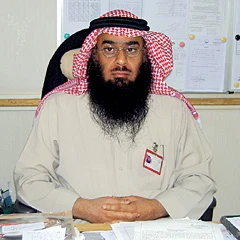
Muhammad Fahd Al-Dossary is the medical director of the 22-year-old hospital. It has 300 beds and an impressive doctor-patient ratio of 1:76.
Al-Dossary said diseases among children and adults are on the rise.
“Changes in lifestyle are the biggest contributor. Children are eating more refined sugar and fast food. Physical play is no longer a part of their life. They just watch TV or play video games.”
As I left, my mind was on a little boy with cancer who had just gone home. I hope he does not come back soon. I went home, hugged my kids and uttered an earnest prayer for all the sick children. May they all have a speedy recovery and a long life.