NAIROBI, 13 March 2004 — Sudan’s First Vice President Ali Osman Taha arrived back in Kenya yesterday to rejoin ongoing talks to end a two-decade war with southern rebels after a trip to Khartoum for consultations with President Omar Bashir.
Taha, head of the Sudan government delegation, declined to speak to reporters on arrival at the country’s main airport before heading off to the venue of the talks at Naivasha town, some 90 km northwest of the capital Nairobi.
A member of Taha’s team said his consultations in Khartoum centered on the disputed oil-rich territory of Abyei, which Sudan suspects the rebels are trying to annex to the south in preparation for eventual secession from the north.
The dispute over Abyei, which is now part of the north, has held up high-level peace talks as Taha consults his government. The current round of the talks, scheduled to end on Tuesday, is to try to forge an agreement on who rules Abyei and two other contested areas, claimed by both sides, and on how to share power once Africa’s longest-running war comes to an end.
“Our discussions were centered around the two outstanding issues of the three areas and power sharing. We held consultations with the president and the National Congress Party,” government spokesman Said Al-Khatib told reporters.
Taha is to resume meetings with John Garang, who heads the rebel Sudan People’s Liberation Army. Low-key talks held at committee-level have been going on, officials say.
Khatib said that next Tuesday’s deadline set by the mediators for the conclusion of the current round of talks still stood, but he would not say whether an agreement by the parties on all the outstanding issues would have been reached by then.
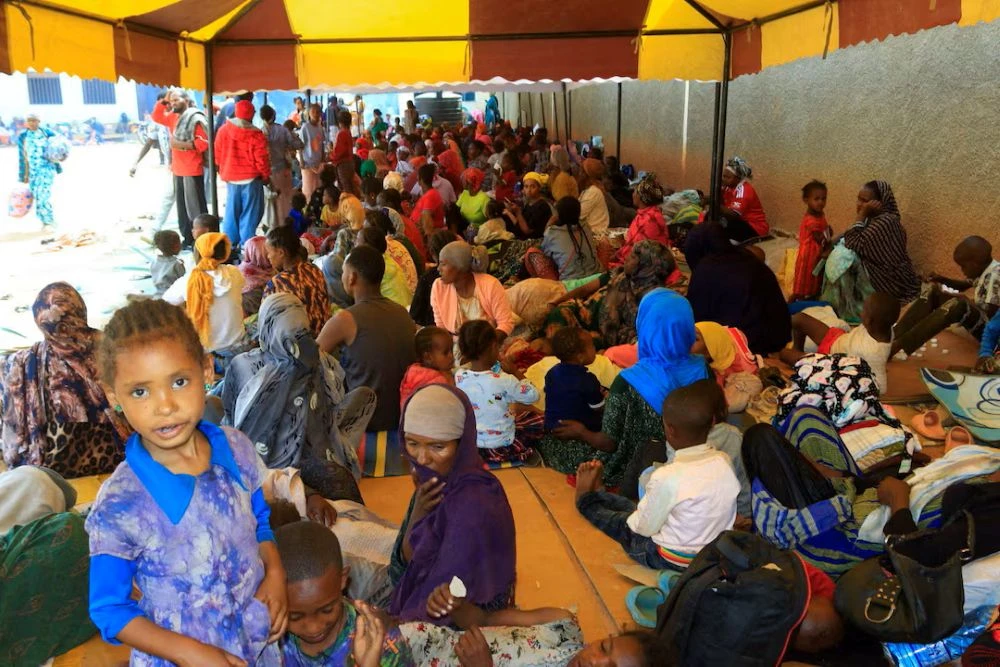
Meanwhile, top US aid and diplomatic officials told a congressional panel in Washington yesterday, the unfolding crisis in the Darfur region of war-torn Sudan has become one of the world’s most pressing human catastrophes.
“Arguably, this is the worst humanitarian crisis in Africa, and perhaps in the world,” said Roger Winter, a top official with the US Agency for International Development, at a hearing of the House of Representatives Subcommittee on Africa.
Winter told lawmakers that atrocities being committed in the region include ethnic cleansing and “massive patterns of rape” against African girls and women by the jenjaweed militia of ethnic Arabs attacking from the north.