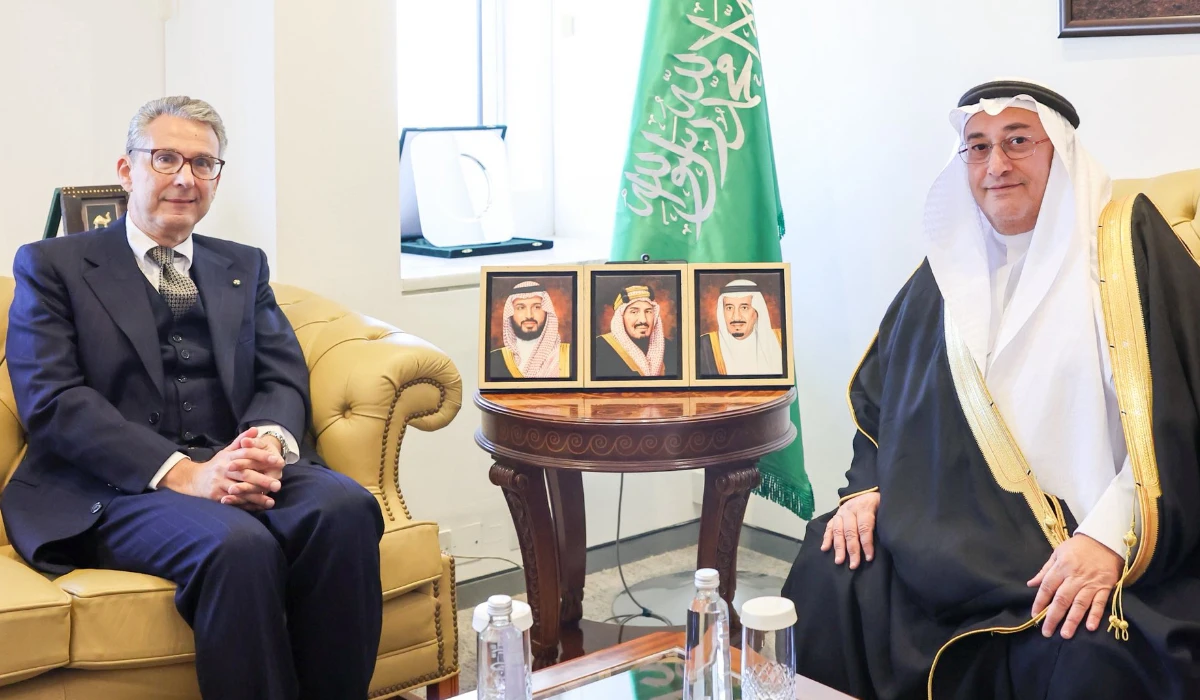
JEDDAH, 11 May 2004 — Saudi Arabia yesterday called for an increase in OPEC’s production ceiling of at least 1.5 million barrels per day, citing rising demand and the need to maintain world economic growth. “The Kingdom believes that increasing OPEC’s production ceiling is essential to maintain the supply and demand balance,” Petroleum and Mineral Resources Minister Ali Al-Naimi said.
“It is apparent that demand, especially that of Asia, has and will continue to increase in the second half of this year... We in the Kingdom estimate the required increase of the ceiling to be no less than one and a half million bpd,” the Saudi Press Agency quoted Naimi as saying.
This was because the Kingdom did “not want to see prices rise to the level where they negatively affect the growth of the international economy or the demand for oil.”
His remarks came after prices on world markets soared to 13-year highs, with crude hitting $40 a barrel in New York on fears of terrorist strikes in the Middle East and US gasoline shortages, before easing yesterday.
The head of the International Energy Agency (IEA), Claude Mandil, said OPEC must send “a strong signal to the market, which includes an increase in production.”
The Organization of Petroleum Exporting Countries agreed in March to cut output by one million bpd to reduce total production to 23.5 million from April 1.
Al-Naimi said OPEC ministers would discuss the market situation during a meeting of the International Energy Forum in Amsterdam on May 21 and “reach an understanding to increase the production ceiling during the extraordinary OPEC meeting to be held in Beirut” in early June.
Oil prices eased yesterday, with benchmark Brent North Sea crude oil for June delivery falling $1.16 to $35.84 at about 1000 GMT in London trading.
New York’s reference light sweet crude for June delivery lost $1.28 to $38.84 in pre-opening electronic deals. The New York contract hit $40 per barrel on Friday before closing at $39.93, the highest finish since October 1990 when Iraq invaded Kuwait, sparking the 1991 Gulf War.