
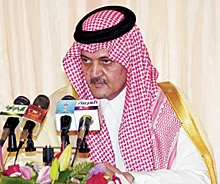
JEDDAH, 11 July 2004 — Foreign Minister Prince Saud Al-Faisal said the Kingdom would do its best to bring its nationals back from the US naval base at Guantanamo Bay in Cuba but denied swapping Saudi inmates with Western prisoners in the Kingdom.
“We would never swap our nationals... but we use all possible means to bring them back from Guantanamo or any other prison,” Prince Saud told a news conference here yesterday.
A total of 124 Saudis are among roughly 600 prisoners held during the US-led war in Afghanistan in late 2001 and incarcerated in extreme conditions at Guantanamo Bay.
Prince Saud was responding to a question about press reports claiming that the Kingdom swapped Western prisoners with Saudi inmates in the US prison in Cuba. Two Canadian newspapers claimed they had evidence that seven Western prisoners were freed by the Kingdom last year in exchange for five Saudi terror suspects from the American camp in Cuba. The New York Times had first reported last week, quoting unnamed officials, that the United States agreed to exchange five Saudi suspects for the Westerners, five Britons, a Belgian and a Canadian.
Prince Saud declined to answer a question whether he had received assurances from the US administration about the release of Saudi prisoners from Guantanamo in the future.
“I do not want to comment because I do not want to give false hope to the families of the inmates,” he said.
Prince Saud also denied any Saudi charity organizations were closed for fear money donated to them would be channeled to terrorists. “No charity organization in the Kingdom has been closed and there is no intention of closing any such organizations. What has been closed were offices abroad after it was found they were not operating properly and according to the recent regulations issued by the government,” he said.
He said a new umbrella organization would control the work of Saudi charities abroad. It would “incorporate the existing charity bodies conducting work outside the country.”
The prince welcomed Friday’s ruling by the International Court of Justice in The Hague that Israel’s separation wall is illegal and must be demolished. The ruling “reflects the illegality of all Israeli policies starting from its occupation of Arab lands and its continued violations of international law and its policies of repression, assassinations, expulsions, ending with the building of the wall of racial segregation.”
He said the court’s recommendations were a wake-up call for the international community to face up to its responsibility to maintain world peace and security and achieve the principles of international legality.
“I look forward to seeing the United Nations perform its duty to enforce these recommendations and put them to action,” he said. “The UN should take the necessary measures leading to halting work on the wall, demolishing what has been built of it, paying reparations for the damage caused by the construction of the wall and putting an end to Israel’s illegal policies aimed at changing the facts on the ground and creating a fait accompli and further complicating the conflict.”

