PARIS, 23 July 2004 — Sudan said yesterday it would reject any British offer of military help with a humanitarian crisis in its Darfur region, saying such forces would suffer attacks similar to US-led troops in Iraq from local people. Foreign Minister Mustafa Osman Ismail also said only Sudan’s forces could disarm Arab Janjawid militias and rebels in Darfur.
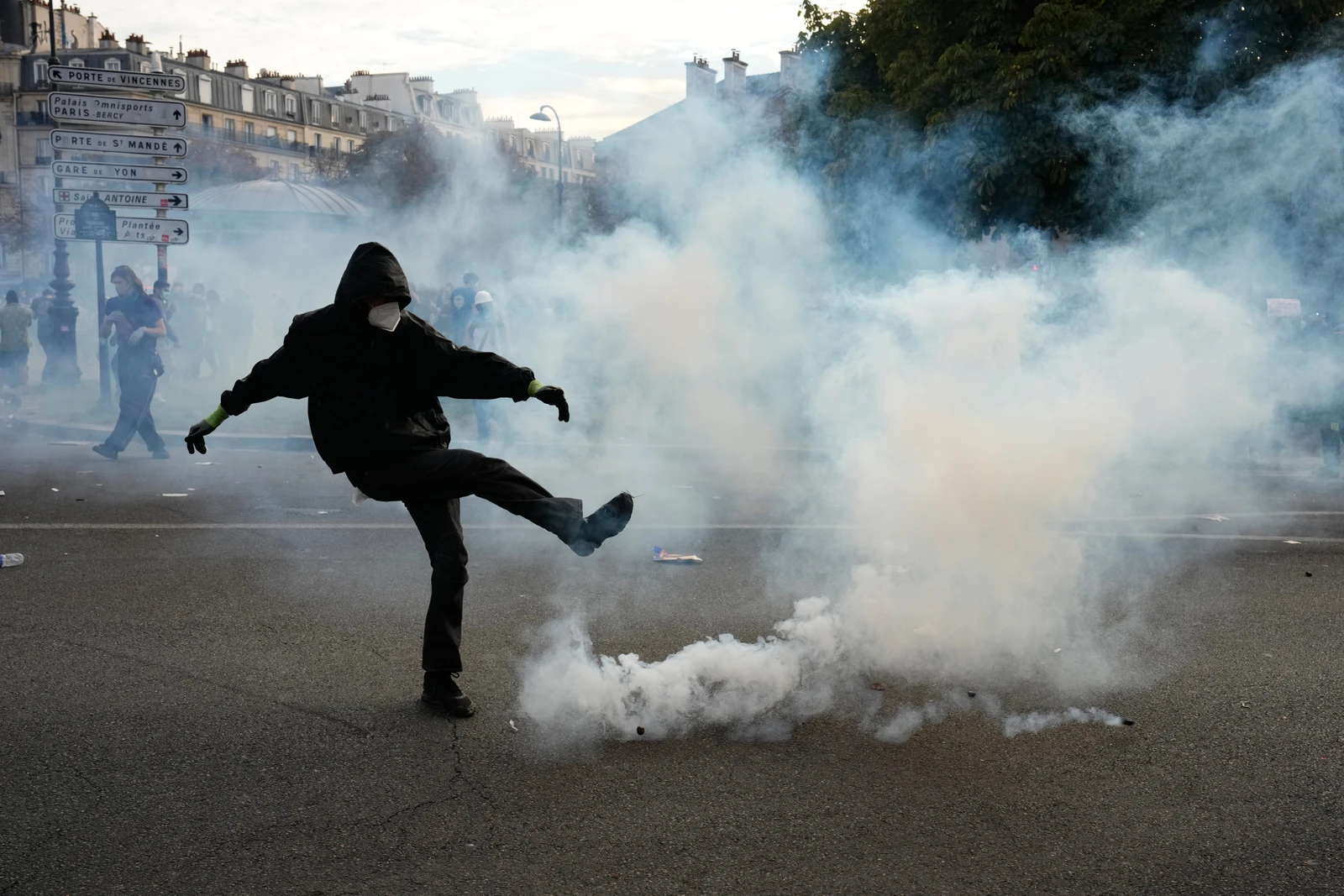
The United States and others have accused his government of backing the Janjawid in a campaign of ethnic cleansing. British Prime Minister Tony Blair said earlier he had not ruled out military assistance for Sudan, but Ismail said any such move would fail. “(After) one or two months these forces are going to be considered by the people of Darfur as occupying forces and the same incidents which you are now facing in Iraq are going to be repeated in Darfur,” he told a news conference in Paris.
Speaking a day after meeting French Foreign Minister Michel Barnier, he was describing a hypothetical scenario of British troops entering Darfur after a pullout by Sudanese forces.
Blair made his comments about military assistance after the Guardian newspaper reported he had asked officials to draw up plans for a possible military role in Sudan.
A 15-month conflict in Sudan’s Western Darfur region has killed an estimated 10,000 to 30,000 people. One million were forced out of their villages and two million are in desperate need of aid, United Nations officials say. But Ismail said his forces should be left to sort out the fighting. “The government is doing its best in order to maintain security, in order to arrest the Janjawid, in order to disarm the militia, but at the same time, the rebels must be cantoned or disarmed,” he said. “This is the correct way and no force in the world can do this except the Sudanese regular forces. That is what we are doing now.”
He said Sudan should be given time to implement a deal reached earlier this month with UN Secretary-General Kofi Annan to disarm the Janjawid militias, protect displaced civilians and suspend travel restrictions on relief workers. The United States has drafted a UN resolution that would impose an immediate travel and arms ban on the Janjawid.
An arms embargo on the Janjawid would not work because the militia was supplied by weapons already in Darfur, Ismail said. “We don’t need any resolutions,” he said. “Any more resolutions from the Security Council will complicate things. I don’t understand why Britain and the United States are systematically increasing pressure against us and not operating through the United Nations,” he added. “(This) pressure closely resembles the increased pressure that was put on Iraq.”
A court in the Darfur region has convicted seven men accused of membership in Janjawid. The court in the South Darfur state capital of Nyala sentenced the men, accused of membership in the Janjawid militia, to execution, crucifixion, cross-amputation, imprisonment or fines, a statement from presiding judge Mukhtar Ibrahim Adam said.
The court in Nyala has already sentenced 10 suspected Janjawid to stiff sentences, bringing the current total to 17. Cross-amputation means the amputation of a left hand and a right foot, or the other way round.
Meanwhile, thousands of people are returning to Sudan’s Nuba Mountains, attracted by the prospect of a final peace deal between government and rebels, an international ceasefire monitor in the region said on Wednesday. The head of the commission overseeing a truce between the Khartoum government and the rebel Sudan’s People Liberation Army since January 2002 said thousands had returned to their homes since the two warring parties signed the ceasefire.
“The local people have reacted very positively to the peace deal and many people are returning to their homes,” Brig. Gen. Jan Erik Wilhelmsen, chairman of the Joint Monitoring Commission (JMC), told reporters in Nairobi.