
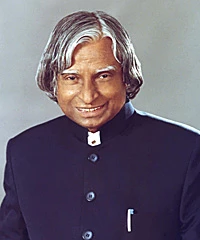
My Dear Citizens of India,
On the eve of the 58th Independence Day, I extend to you my best wishes for your happiness and prosperity. My greetings to all of you at home and abroad. Let us, on this occasion, remember with gratitude, the selfless and devoted services of our armed forces and those of the paramilitary forces, who are guarding our frontiers on the land, at sea, and in the air. I take this opportunity on this Independence Day to convey the best wishes of the people of India, to our men and women participating in the Olympic Games in Athens.
I met 200 freedom fighters from different parts of the country on Aug. 9, 2004. I saw in their ripe age, their enthusiasm to bring back nationalism as a living movement. Let me dedicate this Independence Day broadcast to those great souls who pioneered our independence movement.
Fortunately, after our independence in 1947, we have come a long way in the field of education and have moved toward a knowledge society, as a result of the vision of our educationalists and the policies and actions of successive governments. Many of our educational institutions have excelled in the world. I therefore propose to discuss the education system in some detail in the later part of my address.
General Elections: The nation is happy that the conduct of the recent general elections and transition to a new government has taken place in a peaceful and orderly manner. In an increasingly complex world environment, this significant achievement emerging from India is yet another valuable contribution to world peace and stability.
External Relations: We are steadily strengthening our presence in regional and international institutions including the United Nations. We also realize that it is essential to strengthen and restructure the United Nations to make it more purposeful. We cherish and advocate multipolarity in the world order that respects the principles of sovereignty, non-intervention, freedom and democracy.
Economy: Our economy has yielded a growth rate of the gross domestic product by over eight percent, driven by broad based accelerated growth in agriculture, infrastructure, manufacturing and services. The root cause of poverty lies in illiteracy, unemployment and lack of basic healthcare and there is a need to sharply increase public spending in these areas.
Water Management: Certain regions of the country like Bihar and Assam are constantly affected by floods every year, and we are witnessing that even now. There is a need to find a long-term solution to control floods and to store and utilize surplus water for usage during the dry season and also the linking of regional river basins. In the Gangetic plain and in the northeastern region, I would recommend the construction of layered wells at the entry points of the Kosi River flowing from Nepal and the Brahmaputra River flowing from Tibet.
Employment Generation: A three-pronged strategy is needed to make education more attractive and simultaneously create employment potential — how do we do that? Firstly, the education system should highlight the importance of entrepreneurship and prepare students right from college education to get oriented toward setting up of enterprises. Secondly, the banking system should provide venture capital right from the village level to prospective entrepreneurs for undertaking new enterprises. Thirdly, there has to be an economic pull for generation of marketable products and enhancement of purchasing power among the people.
Mission of Education: Education is the most important element for growth and prosperity of a nation. India is in the process of transforming itself into a developed nation by 2020. Yet we have 350 million people who need literacy and many more who have to acquire employable skills to suit the emerging modern India and the globe. Education is indeed a fundamental right of every Indian child. Therefore, I now propose to address the issues pertaining to education in some detail and suggest some solutions, which can be considered for implementation.
Inequality of Access to Educational Resources: Let me share with you one important concern. Unequal access to educational resources still exists due to a variety of reasons. For example, I have seen in our villages three types of families. The fortunate ones, who realize the importance of educating the young ones at any cost. There are those families, who might realize the importance of education, but are not aware of the opportunities in time, nor the procedures and ways to realize these opportunities for their children. There is a third category of families who are economically weak and do not realize the value of education and hence for generations together, their children are neglected and continue to live in poverty. It is essential that we enlighten and create widespread awareness of education among all sections of society particularly in rural areas and among the urban poor.
Mobilizing Resources for the Mission of Education: Over the last 50 years, successive governments have been committed to achieving the national goal of universal education and have steadily increased the budgetary allocation for education. However, 35 percent of our adult population is yet to achieve literacy. The expenditure on education as a percentage of our gross domestic product (GDP) has a direct impact on our literacy. Today our expenditure on education in India is little more than four percent of our GDP. If we have to achieve nearly 100 percent literacy, it is necessary to increase expenditure on education to about six to seven percent of GDP. Clearly public expenditure alone from governments at the center and in the states might not be able to meet the challenge of mobilizing an additional two to three percent of GDP for the mission of education. It is here that we have to generate additional resources for this noble mission. To augment government resources, I appeal to the entire corporate sector to emulate the example set by some corporate leaders who have focused on education to make a national difference.
Standardization of Teaching: The preferred school concept is arising because of differential quality and standards of teaching. There is a need to make the quality of teaching high in all schools. There also is a need for preparatory education even in rural areas to make the child competitive when he or she joins the regular school.
Planning for Good Education for Children in Villages: I would like to recall a question asked by Master Kuldeep Yadav of Class 10 from Etawah during my visit to Saifai, he asked me: “Mr. President, villages are also full of talent but facilities are available in the towns and cities only. Have you planned something for these children so that they can get good education in villages?”
I was glad to see a child’s concern for his rural counterparts. We need to address this problem, which has multiple dimensions.
The delivery of quality education is possible only through quality teachers. The teacher has to be a committed teacher who loves teaching and children. The teacher also has to be equipped with all the knowledge required for effective teaching.
The Role of Parents: Parents have an important role in the education of their children and making them enlightened citizens. They must be aware of the need for good education of the child, male or female. Like teachers, parents also should set an example for the child in their overall behavior and conduct.
Reducing Dropouts: It is reported that 39 percent of children, drop out from school after studying 5th class and 55 percent drop out after studying up to 8th class. This situation needs remedial action.
System of Entrance Examination: I recently received many e-mails from children and parents regarding too many entrance examinations, which children have to appear in from nursery up to, plus two level for entry into schools, colleges, universities and professional courses. I consider this as a heavy burden on children. We have to devise a common All India examination to be conducted by a nominated institution of the government for entry into universities and professional colleges.
Examination Reforms: I find there is a demand for a more transparent and reliable system of examination, evaluation and reporting. It is also noticed that examinations primarily test the memory of students. I remember during my studies at the Madras Institute of Technology in the mid 1950s, that they used to conduct open book examinations. This used to be one of the toughest examinations for students. I would recommend that examining bodies may consider the introduction of the open book system of examinations.
Renewal of Evaluation System: The examining bodies should have a reliable evaluation system and timely declaration of results. After the initial evaluation of the answer paper, a centralized core group can draw random samples from each batch and carry out independent evaluations.
Need for Adoption of Safety Measures: The recent tragedy involving school children at Kumbakonam must have rung some bells in all educational institutions in the country. Certain safety features must be built-in our school buildings without which it should not be possible to get affiliation by these schools.
Technology Enhanced Education: Constraints of time and space together with the rapid obsolescence of knowledge in some areas of science and technology have created a huge demand for different courses from different institutions in the distance mode. There is a need for a working digital library system that alone can, in the long run, provide the kind of access required for a Knowledge Society. Technology enhanced learning is a solution.
Conclusion: Ultimately, education in its real sense is the pursuit of truth. It is an endless journey through knowledge and enlightenment. Such a journey opens up new vistas of development of humanism where there is no scope, nor room for pettiness, disharmony, jealousy, hatred or enmity. It transforms a human being into a wholesome whole, a noble soul and an asset to the universe. Universal brotherhood in its true sense becomes the sheet anchor for such an education. Real education enhances the dignity of a human being and increases his or her self-respect. If only the real sense of education could be realized by each individual and carried forward in every field of human activity the world will be so much a better place to live in. The mission of education by the government at the center or states or their combination is the foundation to ensure the creation of enlightened citizens who will make a prosperous, happy and strong nation. May God bless you.