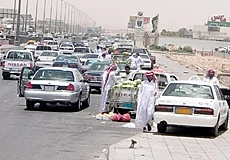
RIYADH, 16 August 2004 — Water and melons are in great demand in Riyadh these days, as the summer heat shows no sign of let-up.
The seasonal trend has sparked brisk business for those selling bottled water at the traffic signals and melons on the sidewalks.
Motorists in the city can hardly miss the youth, women and children selling bottles of water in the noon sun when they stop for street signals while the melon vendors attract buyers with truckloads of the giant fruit.
Each vendor sells at least 100 bottles of water between 11 a.m. and 2 p.m. at each signal light. Invariably, members of the same family man the four sides of the road to sell water. They make a quick buck when the heat is at its worst.
Melons weighing 750 to 1,500 grams are sold at SR7 to SR10.
In addition to its juicy content, melons have nutritious value, which includes the vitamins A and C and potassium. Some 450,000 tons of melons are produced in the Kingdom.
The melons sold in the city come from farms in the suburbs.
“Drinking lots of water and natural juices is the best way to beat the heat during the summer,” said Dr. Dona Chandima, a Dutch physician who has lived in the Kingdom for more than six years.
“Intake of more liquids will help vent the heat away from the body,” she said, adding that people should follow the basic health habits during this period of drought.
“This is the time they should eat less meat, more vegetables and salads to keep themselves fit,” the physician added.
Dr. Dona pointed out that the body needs a lot of fibrous food during this period and more fruit, such as oranges, mangoes, bananas and kiwis, are advised.
“As far as possible avoid heavy meals. Liquid food such as soup and broth are ideal during this season,” she added.
People should wear loose fitting and light clothing during the season which is a combination of heat and humidity, she said.
Wearing of hats or caps will protect the direct impact of the heat when the sun is overhead and applying skin cream on the exposed parts of the body will protect from one from sunburns.
Elderly people with chronic illnesses, such as heart or lung conditions or people unable to move or change position by themselves, infants and preschool children and those who exercise vigorously for prolonged periods are vulnerable to the effects of heat.
People are advised to refrain from going out in the blazing sun. If they must, they should cover their heads with hats or thick hijab to avoid sunstrokes.
“Take advantage of air-conditioned or cool places such as shopping malls, libraries or community centers”, she said.
“If you don’t have air-conditioning, keep shades or drapes drawn and blinds closed on the sunny side of your home, but keep windows slightly open,” she added.
Regular bath or shower will help cool the body. It can be cooled with wet towels, too, said Dr. Dona.
“Avoid bathing in water stored in the overhead tank since it will be hot during the day. Water stored in a tub could be used the following day,” she said.
Common symptoms of sunstroke include rapid breathing, weakness or fainting, more tiredness than usual and headache should be reported to the doctor. As a first aid, a person suffering from sunstroke should be taken to a cooler location, excess clothing should be removed and given sips of cool water, not ice cool water.