DHAKA, 25 August 2004 — Awami League activists attacked railway stations and battled police across the country yesterday on the first day of a two-day strike called to protest against a deadly grenade attack at the weekend.
Around 80 people were wounded in clashes with police when protesters attacked railway stations and government buildings and removed tracks to stop trains, witnesses and police said.
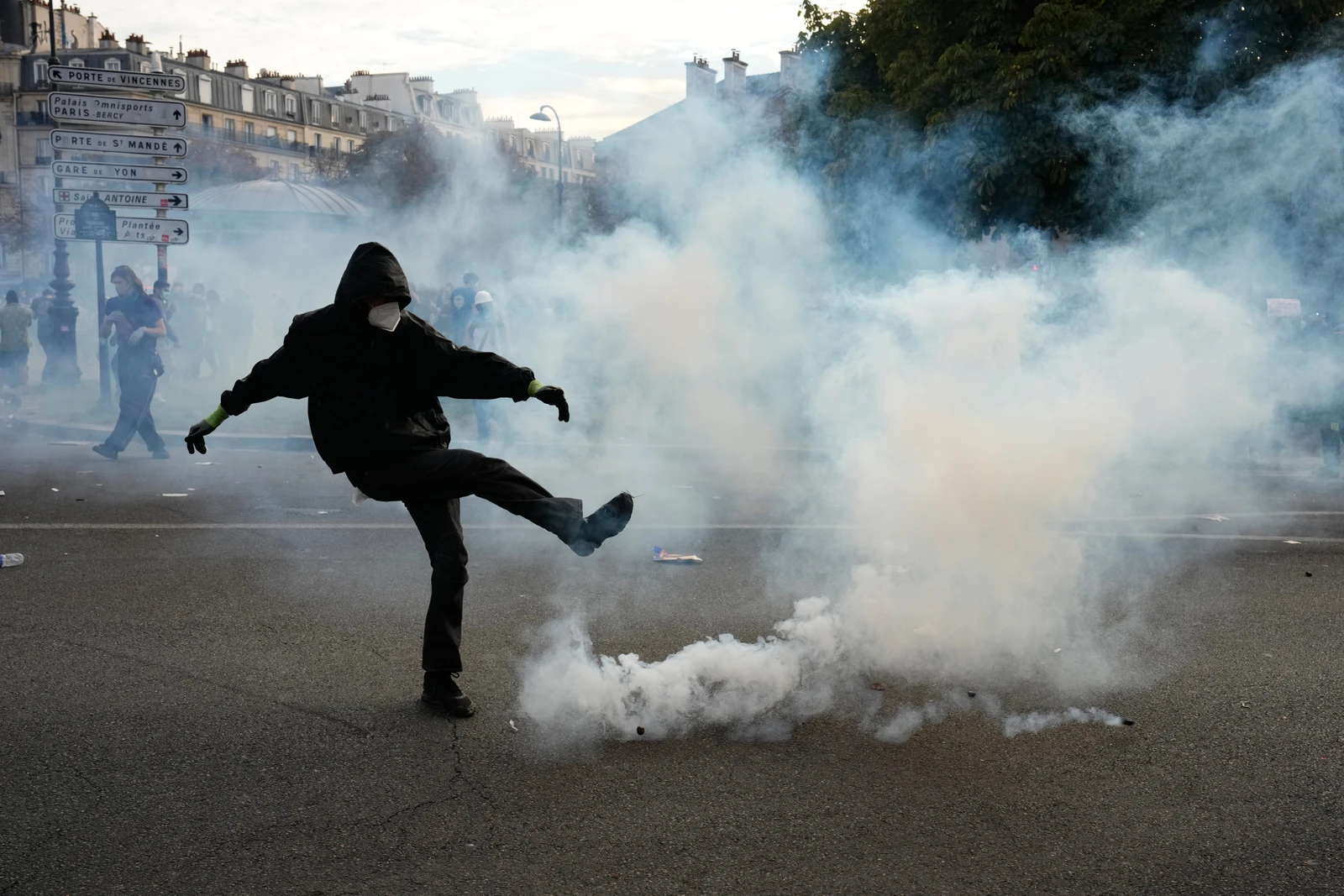
Police fired rubber bullets and tear gas to disperse the protesters shouting: “Punish the bombers”. The dawn-to-dusk strike was called by the main opposition Awami League after a deadly Saturday grenade attack on a crowd listening to a speech by party president and former Prime Minister Hasina Wajed.
Hasina escaped with minor cuts, but 19 people were killed and about 150 wounded. “This is a heinous and barbaric attack,” Foreign Minister Morshed Khan told Reuters in an interview. “If we can avoid the blame game, all parties should put their heads together, take stock of the situation and identify the culprits.” The most high-profile victim, the popular head of the Awami League’s women’s wing, Ivy Rahman, died early yesterday.
“Ivy Rahman’s death intensified the countrywide protest,” Abdul Jalil, general secretary of the party, told Reuters. The League later said the strike would end early — at noon today — to allow people to attend Ivy’s funeral.
The secular party, which helped lead Bangladesh to independence from Pakistan in 1971, blamed Islamist partners in the four-party ruling coalition for the violence and demanded Prime Minister Khaleda Zia resign.
The government has rejected the accusations and blamed the attack on groups that want to destabilize Bangladesh.
The image of Bangladesh as a role model Muslim-majority democracy had taken a short-term hit, Foreign Minister Khan said.
“This image has taken a temporary hit.” he said. “In a matter of months Bangladesh will be again resilient and, Insha Allah, we hope we will be able to take the culprits to task.”
Dhaka was open to the idea of foreign help to investigate the blasts but at a later stage and if required, he said. Several countries, alarmed at the attack on a former prime minister, have offered to help. They include the United States, India and Britain.
“After the initial assessment of the incident, should we require help from any country, we shall not hesitate to go to the best source or sources of such assistance if necessity demands,” Khan said.
In the capital, Dhaka, police used bamboo canes to chase off hundreds of left-wing activists trying to halt rickshaws. About a dozen were wounded, police said. Dhaka’s normally teeming streets were largely deserted and schools, shops, offices and colleges were shut. Armed police patrolled the streets of main cities.
More than 160 people have been wounded in clashes between opposition activists and police since Saturday’s attack.
50,000 Bangladeshis to Perform Haj
A meeting of the council of ministers chaired by Prime Minister Khaleda Zia approved a draft Haj policy for 2005 that will allow 50,000 Bangladeshis to perform Haj next year.
Of them, 8,000 will perform Haj under government scheme while 42,000 under non-government arrangements, officials at the Religious Affairs Ministry said.
Earlier, a meeting chaired by the prime minister had decided to form an inter-ministerial committee to make arrangements for providing facilities to the pilgrims.
The committee will have representatives from the Ministry of Foreign Affairs, Ministry of Religious Affairs, Ministry of Health and Family Planning, Ministry of Civil Aviation, Ministry of Housing and Public Works and the prime minister’s office.
The meeting named Bangladesh ambassador to Saudi Arabia as the chief coordinator for Haj arrangements in Makkah and Madinah.