
JEDDAH, 29 August 2004 — White-collar crimes are rampant worldwide. Saudi Arabia has its share of frauds by the white-collar gentry, although on a small scale. People do get involved in such activities in spite of knowing fully well that no fraud or white-collar related crime can go undetected. The modern world has evolved many ways to detect and even deal with such fraudsters. One of them is forensic accounting, which is a widely used practice all over the world to nip any accounting fraud in the bud.
Forensic accounting is a rapidly growing area concerned with the detection and prevention of fraud and white-collar related crimes. Yet, not many are aware of the practice. This has made Technical Accountancy Saudi Arabia ([email protected]) to organize a 40-hour course over 10 weeks in Jeddah, starting next month and ending in November. The course is designed to promote a proper understanding of forensic accounting among the people.
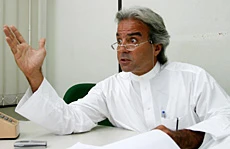
“What’s more, organizing of such courses on a regular basis will surely help control frauds across the Kingdom where embezzlement cases surface periodically,” Abdelmonem Addas, program trainer, told Arab News.
Addas, who holds an MBA from Columbia University, New York, has over 25 years of professional experience with top global financial firms such as Paine Webber, Paris, Lehman Brothers, London, and Republic National Bank of New York, Monaco, said the course, being sponsored by Arab News, involves intensive study of the different skills that comprise the work of a forensic accounting expert witness. The skill areas include investigation, loss calculation and asset valuation. There are, however, numerous sub-areas of expertise.
Forensic accounting crosses over into criminology by the way it looks beyond the facade and the records, and requires a special expertise, similar to investigative skills of being able to tell when someone is lying or not telling the whole truth. The forensic accountant must know and be able to follow generally accepted principles, and have the requisite credentials to qualify as an expert, and have competencies in both written and oral communication, logical reasoning, problem solving, critical thinking and computer skills.
Addas said the course would be open for both Saudis and expats. “It will be an eye opener for businessmen and entrepreneurs and can be attended by businessmen, auditors, brokers and dealers.” The 10-week intensive course is for 30 persons and so far 18 have confirmed participation. It will be held twice a week, from Sept. 12 to Nov. 17. The course fee is $2,500 per person.
The course will deal with the extent and nature of financial crimes, legal elements, perpetrators, lifestyle and motivations, accounting systems and fraud detection, fraud auditing and forensic accounting, investigative methods, theft, embezzlement and money laundering, business and corporate crime, and role of computers and forensic accountant as expert witness.
To tighten internal control of an organization, forensic accounting can be of assistance in various ways such as investigative accounting and litigation support. Forensic accounting analyzes, interprets, summarizes and presents complex financial and business-related issues, Addas said, adding that forensic accounting is engaged in public practice or employed by insurance companies, banks, police forces, government agencies and other organizations.
Addas, who also serves as a professional instructor for Institute of Banking, Riyadh, Arab Academy for Science and Technology, Alexandria, Arab National Training Center, Jeddah, and College of Business Administration in Jeddah, says forensic accountants become involved in wide ranging investigations, spanning different industries. They often take part in criminal investigations, shareholders and partnership disputes, business/employee fraud investigations, matrimonial disputes and professional negligence.
“Each forensic accounting assignment is unique. However, in general, many forensic accounting assignments are meant to meet with the client, perform a conflict check, conduct initial investigation, develop an action plan, obtain the relevant evidence and perform the analysis.
“I hope most of the companies in Saudi Arabia, whose priority is to protect the interests of their shareholders, will go for forensic accounting, which will help in controlling any kind of fraud in the early stages,” Addas said.