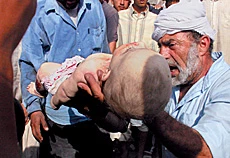
BAGHDAD, 10 September 2004 — Dozens of Iraqis were killed yesterday as US warplanes bombed two towns in rebel control.
US troops mounted a major offensive in Tal Afar, a suspected haven for foreign fighters about 100 km east of the Syrian border in northern Iraq, and went into the tense town of Samarra north of Baghdad, as well as keeping up pressure on Fallujah, west of the capital, through airstrikes.
The operations in Tal Afar are intended to return the city, 50 km west of Mosul, to interim Iraqi government control, the military said.
The US military said 57 insurgents were killed in the attack. Nineveh province health chief Dr. Rabie Yassin said at least 27 civilians died and 70 were wounded. It was unclear whether any of those reported by the Iraqis as civilians were counted as insurgents by the Americans.
Yassin accused US and Iraqi forces of refusing to allow ambulances and medical staff to enter the city and called on the government to intervene.
US troops announced through loudspeakers that for five days, residents would not be allowed to enter the town, which they charge is infested with fighters who infiltrated from Syria.
The Iraqi Red Crescent was setting a camp just outside Tall Afar for local residents whose houses were destroyed or who are fleeing the combat zone.
In Fallujah, American warplanes fired missiles on a building suspected of housing associates of Jordanian-born militant Abu Musab Al-Zarqawi. It was the third straight day of airstrikes on the town.
At least nine people were killed, including two children, said Dr. Ahmad Thair of the Fallujah General Hospital.
Contacts are under way between Fallujah representatives and the interim government of Prime Minister Iyad Allawi. The Fallujah residents want the US attacks to stop and the Americans to pay compensation to people killed in attacks.
American and Iraqi forces entered the central city of Samarra for the first time in months to try to re-seat the city council and regain control. US Humvees and armored vehicles were seen entering the city as two US helicopters hovered overhead.
In a city council meeting, the interim mayor and acting police chief of Samarra were named to serve until the general elections expected by January.
Local leaders in the Salahuddin province, of which Samarra is the capital, and the US 1st Infantry Division have taken necessary steps to return the city to normal, said Maj. Neal O’Brian, a spokesman for the 1st Infantry Division.
In another show of force, Iraqi soldiers raided the Najaf office of Shiite cleric Moqtada Sadr to search for weapons. None was found, but the search marked the first time Iraqi forces had entered Sadr’s office since an agreement last month ended weeks of heavy fighting in the city.
The search is a sign Iraqi security forces are attempting to further consolidate their grip on the area around the Imam Ali Mosque compound, once under the control of Sadr and his followers. It also indicates the cleric and his group may be unwilling at this point to create tensions that might threaten the existing peace deal.
Besides trying to contain the insurgency, Iraq’s government is also grappling with a hostage crisis.
In one of the most brazen abductions so far, two Italian women aid workers and two Iraqi colleagues were snatched from their office in central Baghdad in broad daylight on Tuesday. No word has yet emerged from their captors.
Since April, people from more than two dozen countries have been kidnapped as guerrillas have tried to force foreign troops and firms to leave. More than 20 foreign hostages have been killed, including two Italians.
The abductions are likely to fuel uncertainty over the fate of two French journalists, Christian Chesnot and Georges Malbrunot, who have been held since Aug. 20 despite intense diplomatic efforts to free them.
— Additional input from agencies