
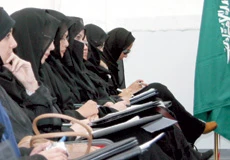
Saudi Arabia today is witnessing a major reform movement based on a strategy of balanced political, economic, social and cultural development plans at all levels. New initiatives and programs to eradicate poverty, illiteracy, unemployment and social injustice are being implemented with great determination and vigor. The Saudi government is implementing reforms through building civil institutions such as the Shoura Council and the National Society for Human Rights in addition to administrative, economic and social changes based on religious and cultural foundations.
Custodian of the Two Holy Mosques King Fahd pledged that Saudi Arabia would tailor reforms to its own needs and presented a comprehensive package for economic growth. The government has recently endorsed changes in the Shoura Council system; more powers were given to the body and it was allowed greater flexibility and wider areas of influence in issues concerning citizens and the nation. These changes showed the government’s resolve to push ahead with both political and administrative reforms. In a keynote address early this year, King Fahd emphasized the Shoura Council’s role in monitoring the performance of government departments and agencies.
According to Dr. Abdul Rahman Al-Zamil, a Shoura Council member and member of its Economic Committee, “The role of Shoura as a parliamentary body has changed radically. We were playing an advisory role to everybody. Now we are playing the advisory role and also monitoring ministries and ministerial performance. We have requested the king to help us become equal with the Council of Ministers, so that it will not pass any law or resolution if the Shoura Council has reservations. If we don’t agree, the matter is passed to the king for review and decision. And because of this, the Council of Ministers today is accepting Shoura Council directives. This is the kind of role we are playing now. It is a legislative role which all of us are happy with.”
The Kingdom has one of the highest birth rates in the world. Two-fifths of the population are below the age of 15, in need of stable families, quality education, good training and ultimately employment. The government is making great efforts to stabilize the economy and provide a better standard of living for citizens. Structural economic reforms call for efficient use of human resources as well as modernization. Saudization is a government initiative to increase the participation of Saudi men and women in the work force. In an effort to help the unemployed, the government recently established the Manpower Development Fund. It finances job training and offers wage-sharing to businesses which employ Saudis.
To address complaints that Saudi graduates do not readily fit into the private sector and move from job to job, the General Organization for Technical Education and Vocational Training (GOTEVOT) has begun an Occupation Ethics Program under which a trainee attends lectures focusing on moral codes for various jobs. The organization will construct 20 new technical colleges and 39 vocational training institutes from a sum of SR3.7 billion provided by the government. The organization, which is the Kingdom’s major technical education and vocational training center, will spend SR270 million on a vocational military training program. Under the newly-established military training program, 10,000 trainees have already been enrolled and undergone training. This year, 5,000 trained graduates will enter the private sector job market while 2,500 are expected to be absorbed into military and military-related organizations.
Restructuring the Saudi job market is a difficult challenge. The government is serious about devising sensible strategies and drawing effective policies. Their implementation will provide ample business opportunities. Moreover, the Saudi leadership has recognized that granting women a more significant role is essential for nation-building, and Saudi economists stress the need for more women in the work force.
Dr. Nahid Taher, senior economist at the National Commercial Bank, says: “The Kingdom is on the right track with different types of structural reforms, both economic and social ones. In order to achieve these targets and economic reforms, women should participate in major economic activities and also be part of these reforms. Without these human resources — which have been unavailable for too long — no economic growth will occur.”
The Saudi government has encouraged the creation of new civil institutions such as the Saudi Journalists Association, Labor Committee and a civil committee for human rights. These new societies and associations represent a significant step toward developing political reform in the Kingdom.
The newly-formed National Society for Human Rights (NSHR) is a non-governmental organization which will oversee rights and contribute to society’s welfare. The government recognizes the objectives of the committee and is prepared to support it in every way, according to the president of the society, Dr. Abdullah Al-Obaid. He said no member of the committee had been appointed from government circles. It was established according to the Paris Convention on Human Rights. It holds no legal or executive authority and is a means of applying pressure on those who violate human rights. Members of the committee affirm that the association will act as a conduit between the individual and the government and will be permitted to seek explanations for decisions.
Dr. Ahmad Seif Al-Din, founding member of the National Society for Human Rights, says: “It is a new society which aims at dealing with human rights in Saudi Arabia. Based on the Shariah, which is the constitution of Saudi Arabia, it will defend the rights of poor people. It also aims at cooperating with various international organizations in the same field; it opposes injustice, torture, intolerance and such things. This does not mean that the NSHR is an alternative to the justice system in Saudi Arabia. In fact, it is an arm to help in defending human rights within the Kingdom and cooperating with other organizations working for the same aim. One of the responsibilities of the NSHR is to establish and spread the concept of human rights within our society.”
Civic institutions allow citizens to engage in dialogue in order to initiate constructive changes and take peaceful legitimate actions supported by the state. Citizens’ civil rights and the right to participate in public affairs were among the recommendations made at the first National Dialogue Forum held in Makkah. National debates were initially encouraged by the government in order to spread a culture of dialogue that has been missing in Saudi society and to work toward shaping national ideas and insights from the Kingdom’s professionals and intellectuals.
Crown Prince Abdullah initiated a series of dialogues. The first was held in Riyadh in June 2003 and ended with a call for wide-ranging reforms. It also led to the establishment of the King Abdul Aziz Center for National Dialogue which hosted a second meeting in Makkah in December 2004. At the second meeting, participants adopted a series of recommendations on combating extremism, called for public involvement in the decision- making process and encouraged the establishment of civic institutions.
The crown prince’s endorsement of the recommendations is an indication of how serious the leadership is about reform. The third dialogue, held in Madinah in June of this year, consisted of 70 male and female thinkers and researchers who discussed women’s rights and duties in the Kingdom. The proposals adopted were based on the teachings of Islam and ranged from setting up a national body to oversee women’s affairs to facilitating their movements in a country where they are not allowed to drive.
Dr. Hanan Al-Ahmadi, associate professor of health administration at the Institute of Public Administration, says: “One of the achievements of the dialogue was the lifting of a virtual ban which had existed for years about discussing women’s issues. It initiated social dialogue that was continued and carried on in other circles — in the media and among the public. It triggered and renewed interests in women’s rights and the role of women in molding the future of Saudi Arabia. The dialogue was essential in laying the foundation for reform. Of course, other efforts are needed. The initial stage of any change is usually a cultural one. The dialogue was necessary as an initial step in resolving cultural differences and discovering the views of various segments of society. It will be followed by organizational change. The dialogue reflected the recognition of the Saudi leadership that women are an integral part of the reform process for a better future. It conveyed the message that men and women are partners in reform and it laid the responsibility for reform and change on our shoulders as citizens, men and women. Among the recommendations of the dialogue was the expansion of women’s participation in public endeavors.”
The theme of the fourth national dialogue will be “Youth Issues: Facts and Aspirations.” There will be youth workshops across the country. Education, health and sports institutions are already preparing for the dialogue to be held in the Eastern Province in November. Moreover, the Jeddah-based Directorate for Education has prepared a program called Dialogue Meetings between pupils and educational leaders at the secondary and intermediary levels. The dialogue aims at solving the problems between pupils and teachers and at addressing the students’ needs.
The Saudi government has endorsed a new educational strategy to steer the country’s educational system toward meeting the requirements of the local job market. In order to raise the standard of education and improve the qualifications of Saudi graduates, the government has set up a body to oversee higher education and a national center to review the educational system. The Supreme Council of Education is headed by Custodian of the Two Holy Mosques King Fahd with members including a number of ministers, the chairmen of King Abdul Aziz City for Science and Technology (KACST) and three university rectors. Three educational experts will also serve on the council for a three-year term.
The Saudi government continues to encourage the formation of civic institutions through mutual collaboration and coordination of efforts. Each institution will be given authority within its field on the basis of a scientific and professional framework governed by an electoral process. Saudi Arabia recently announced the rules and regulations for the country’s first municipal elections to be held from February 2005. The rules state that all citizens above 21, except military personnel, will be eligible to vote.
Muhammad Hamid Al-Nagady, deputy minister of municipal and rural affairs, planning and program, says: “In October 2003, the Council of Ministers announced its intention to re-enact the 1939 law which provided for the elections of some municipal council members with the remainder, including the mayor, being appointed.”
Executive officers in official institutions are urged to do what is necessary to spread awareness among the public to create labor committees that will play a union-type role in the Kingdom. These committees will defend the economic interests of workers, improve their working conditions and express the opinions of members and thereby contribute to the country’s stability.
Other professional entities that have surfaced lately include the Saudi Engineering Society and the Saudi Organization for Certified Public Accountants. Scientific societies have appeared recently in Saudi society under the auspices of various universities but they enjoy independence. Their goals are to vitalize scientific collaboration among researchers and academics in science through meetings, and issuing scientific publications. Their management boards and their chairmen are also elected.
The Kingdom’s institutions are expected to move Saudi society into a politically dynamic mode and place the government and society on a level of political activity unprecedented in Saudi Arabia.
* * *
(Samar Fatany is a Saudi radio broadcaster. She is based in Jeddah.)