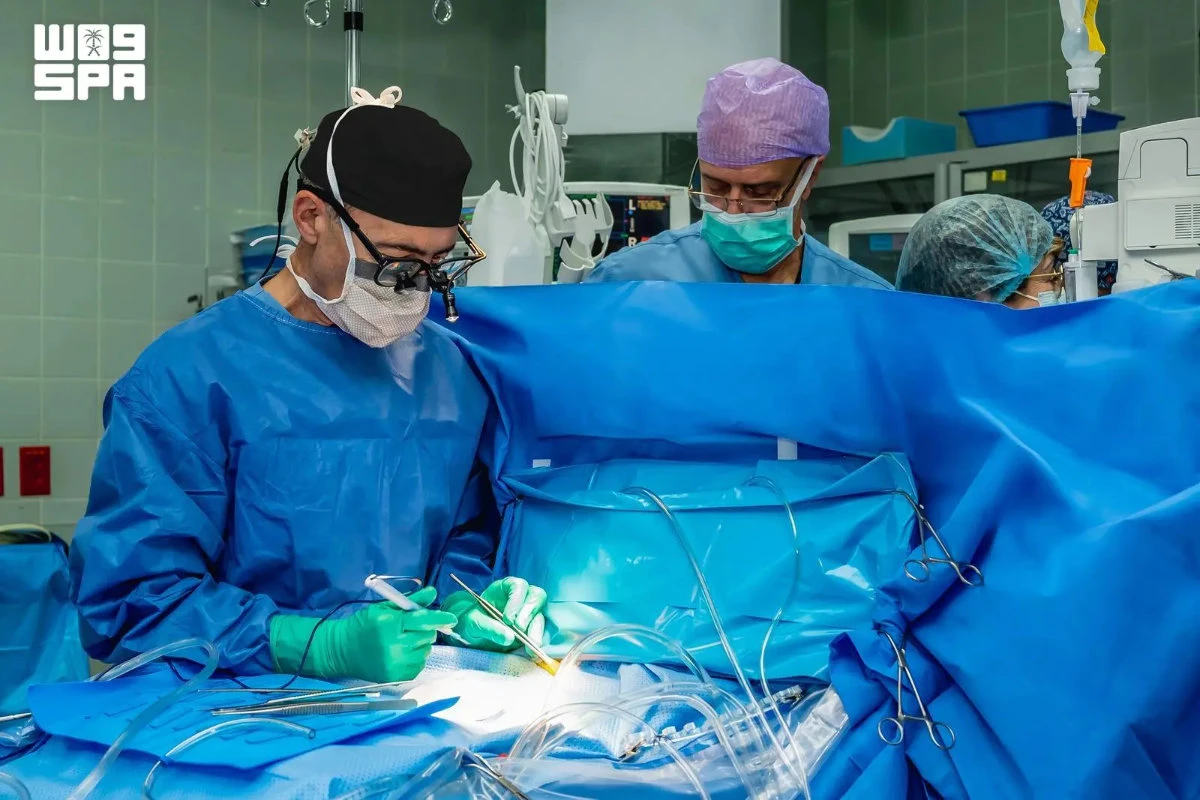
JEDDAH, 30 September 2004 — The complicated case of the Saudi boy Ali Autaif, who might die of renal failure any minute, has taken a new turn.
Ali’s kidney transplantation, which was scheduled to take place on Sept. 21, was delayed by a financial dispute with the private hospital where he was due to undergo surgery.
The case of the 14-year-old took a turn for the better when government authorities stepped in to speed up the lengthy procedures over the process of cash donation. The procedures were approved and the financial cost for the operation was secured.
“Suddenly, a dispute arose at the last moment between the management of the private hospital and the donor over financial claims for previous patients he had sponsored. The hospital insisted on settling their claims,” said the boy’s father, Ibraheem Autaif.
A spokesman for the philanthropist said, “the donor is willing to cover the entire financial cost for the patient that he promised to the family of the boy, if the family wants to have the surgery in another private hospital.”
Ibraheem, meanwhile, started looking for a new government hospital. “I took my son to King Abdul Aziz Hospital in Jeddah on the advice of a Saudi consultant,” Ibraheem said. “I found that the cost of operation there is SR45,000 less. I was waiting to schedule an appointment. Then the kidney donor and I were surprised to see that the surgeon who was supposed to do the operation had gone on vacation.”
Ibraheem then began looking for another hospital which is equipped to carry out the operation. He finally got approval from King Fahd hospital. “The doctor at the hospital advised me not to go for the operation saying that my son’s medical report showed that he will suffer from medical complications.”
Ibraheem took the doctor’s advice with a pinch of salt. He believed that the real reason was an unholy understanding between this doctor and the previous one at the private hospital.
Subsequently, three doctors looked at the boy’s medical report and concluded that the operation would not pose any danger to the patient’s health.
Ibraheem, who is a taxi driver, gave up his job to come to Jeddah along with his son and the Egyptian kidney donor. He stayed in a furnished apartment. After two months of stay there he found himself unable to pay for his living expenses and was threatened with eviction until a Saudi businessman offered to help. He has sent his son back to his mother in Dammam until the problem is solved in Jeddah.
To further complicate the matter, the Egyptian kidney donor, Sayed Saad Abdul Raheem, himself is in trouble. His sponsor has obtained a final exit visa for him after his family brought pressure on the sponsor to expel Abdul Raheem from the Kingdom in order to avoid donating his kidney to the boy.
Abdul Raheem said he had to sleep in public parks after his family discovered where he lived. He believes in doing good deeds and he will surrender neither to his sponsor’s decision to deport him nor to his family’s threat. He said if he was deported, the life of the boy would be in danger. He is asking the Kingdom’s human rights organization to take up the issue because if the operation is delayed the boy could die any moment.