
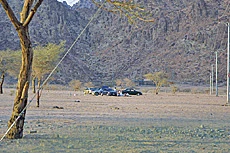
Shabanna is one of the oldest traditions in Saudi Arabia and begins during the last two weeks of the month of Shabaan, the month before Ramadan. It is a traditional time that looks like a holiday celebration. It is a time of family gatherings to celebrate the approach of the month of Ramadan. Madinah has its own unique style that distinguishes it from other Saudi cities. It is an old tradition that stretches back for centuries. Some people celebrate the first half of the month while others prefer the second half. On the 15th of the month of Shabaan, people go out and celebrate. They celebrate Shabanna the old fashioned way. Families take the opportunity of meeting and going outside the city.
Zainab Ali, a mother of five, said, “I have relatives in Riyadh and the Eastern Province. The best time for us to come together as a family is during holidays and Shabanna. We all go out in the third week of Shabaan. We rent a farm outside Madinah and camp there for four days. Shabanna means a great deal to us. The best place for Shabanna is in Madinah because we live in a religious environment with visitors from all over the world.”
Sami Al-Zahrani said, “Shabanna in Jeddah is no different from that celebrated in any other place in its essence. We celebrate the event in a slightly different way. I love to meet my friends during Shabanna and go diving and swimming. To me, Shabanna is a time to enjoy and have fun before the beginning of Ramadan. The best thing to do is to go out with friends because I will have plenty of time with my family during Ramadan.”
Abu Yousef says, “Shabanna is an occasion for a family gathering where not only immediate family gets together but extended family as well. We don’t usually get together for dinner. We get together for lunch because the idea is about doing what we will not be doing during Ramadan. We have a big family lunch of dishes that we probably won’t eat in Ramadan. The dishes we’d have would probably be fish, in fact an assortment of different fish dishes. In Ramadan we don’t eat fish because it tends to make you thirsty, and we try to avoid that during the month of fasting. I remember we’d have a long wide mat on the floor, spread with all kinds of food.” Abu Yousef chuckled as he remembered. “Indeed I don’t think there’s any table that could’ve taken care of the whole family. There were grandparents, their children, mostly adults and their children as well. Then there were uncles, aunts and cousins. There would be from 30 to 40 sometimes. And after lunch we sat around and spent the rest of the day together, right on into the evening.”
Umm Ahmad said, “When I was young, we had the real Shabanna. It wasn’t a formal occasion. The whole point was getting together; it wasn’t really about eating or the variety of dishes. In fact we women would get together before the meal time and prepare the food. Without any formal organization, we would prepare what we were familiar with and decide who was the best cook for each dish. Some were better at desserts; others at salads and others for rice or meat. We brought our contributions with us and we helped the hosts of the house where we had the Shabanna. It was usually held at the grandparents’ house because it was the largest family house. We’d sit all together for most of the time though women sat at one end of the mat with men at the other; uncles, aunts, nieces and nephews sitting beside one another.” Umm Ahmad lamented, “I miss those days and I miss the sounds. How I wish they’d return but life’s not that way.”