JEDDAH, 10 December 2004 — Saudi youth have called on the authorities to promote the culture of dialogue, tolerance and respect of each other’s opinions as well as their acceptance.
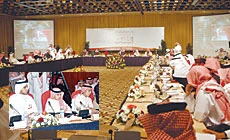
Youth should also be included in the leadership of civic organizations, said participants in the National Dialogue Forum called to discuss problems facing youngsters.
The forum is the fourth to be organized by King Abdul Aziz Center for National Dialogue, itself a product of the first forum held in Riyadh two years ago to promote dialogue among the different sectors of Saudi society.
“Saudi youth shouldn’t just be included in leadership of civic organizations,” said a university professor who preferred to remain anonymous. “There should be organizations and establishments catering only for youth. We don’t have any of those for our youth and then we complain about them going astray.”
Participants also called for promoting the culture of dialogue, tolerance, respect and acceptance of each other’s opinions. Willingness of such an approach was illustrated as obvious and mutual respect and appreciation and acknowledgement was exchanged as opposite gendered participants among the attending youth contributed to the forum.
On behalf of the youth, participants also called on youth welfare organizations to pay more attention to the cultural, social, scientific and sporting needs and for designing special programs for the gifted.
The recommendations came at the end of a three-day National Dialogue Forum held in Dhahran. The participants also said they wanted to see young Saudis have access to knowledge through the establishment of cultural and literary centers as well as public libraries all over the Kingdom. Priority in any effort aimed at the dissemination of knowledge should be given to remote and rural areas away from the center.
An attendee, a young man who chose to call himself Hamed Al-Ahmad, told Arab News: “There should’ve been more of us and less of older generation participants. We’re here to participate by ourselves for ourselves and not for others on our behalf. It’s the ‘on the behalf’ approach that is part of the problem leading us to all this. I don’t mean any disrespect to the older or more experienced people but being older and experienced or more qualified isn’t the only measure that decides who does the talking and who must always do the listening.”
Among the recommendations was planning a strategy for evaluating education for all stages and developing its structure taking into consideration and in light of the current challenges and changes such as the population growth. Participants urged that teaching and educational methodologies and tools be modernized and that there should be more focus on scientific research.
The most prominent of points emphasized was the development of individual skills for the youth by supporting them in areas beyond schooling, general education and letting youth take part in shaping their futures.
When Arab News asked a group of youth on their hopes regarding the results of the forum, they replied: “It’s going to be like nothing happened. We’re not being pessimistic, just realistic. Nothing came of the other forums, why would this be any different?”
Among the most prominent of participants was Dr. Mohammad Al-Amoudi who criticized the issue of young children learning English and said that the Arabic identity would not dissolve if the child learned English from a very young age.
Abdulhameed Mohammad Qashqari, the youngest participant at 17 years, emphasized the necessity of suitable training for youth and not teaching specialties that are useless in the local job market.
He also cited the obstacles facing those entering the arena of employment — low salaries, increased working hours and the command of English language.
Faisal Ali, a university student following the forum, told Arab News: “There’s no more time to talk about ‘becoming’ now. If we don’t welcome and embrace change, it will force itself upon us — who better than youth to do the job? The older generations forget themselves about the time when they were our age. We are the future and we are their fruit. What does that tell us and them? It’s time.”