JEDDAH, 23 December 2004 — Saudi-Libyan relations took a sharp turn yesterday with the Kingdom recalling its ambassador to Libya and asking Tripoli to follow suit.
Foreign Minister Prince Saud Al-Faisal said the move relates to the “Libyan plot to which the Kingdom was subjected” — a reference to a Libyan conspiracy to assassinate Crown Prince Abdullah.
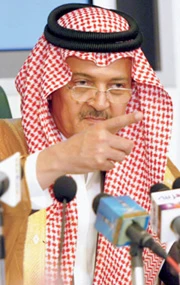
“The decision we have made was to recall our ambassador from Libya and ask for the Libyan ambassador to be withdrawn. Saudi Arabia will deliver a memorandum to the Libyan ambassador in Riyadh asking him to leave. We have asked our ambassador in Tripoli to come home,” Prince Saud told a press conference in Riyadh
The plot against the Kingdom had surfaced in June when The New York Times reported that Libyan leader Muammar Qaddafi tried to get the crown prince assassinated. Details of the plot came to light earlier this year when Abdul Rahman Al-Amoudi, an American Muslim activist, pleaded guilty to illegal financial dealings with Libya and testified that he had been involved in a Libyan conspiracy to kill the crown prince. A US court sentenced him to 23 years in jail for illegal financial dealings with Libya and for his role in the plot.
Prince Saud said the Kingdom’s response has been confined to recalling the ambassadors and that it was not taking further measures against Libya at the moment despite the hideousness of the Libyan act.
“Despite the ugliness of what happened, Saudi Arabia is confining itself to these measures. This is being done in appreciation of the brotherly Libyan people, especially with the approach of Haj and to avoid any delay or inconvenience caused to the Libyan pilgrims.”
Prince Saud spoke at length about the row between the Kingdom and Bahrain over the latter’s signing of a free trade agreement with the United States, saying such moves could effectively put an end to the Gulf Cooperation Council (GCC) as a unified economic and customs entity. Both countries are members in the GCC, which also groups the United Arab Emirates, Kuwait, Qatar and Oman.
He said the Kingdom was aware of negotiations between some GCC members and other countries, but did not know the negotiations were relating to a free trade zone. “A study by the GCC secretariat general has shown the danger of such agreements signed by some members and that any agreement of this nature would effectively mean an end to the GCC as an economic and customs unit,” he said.
He said despite all this, the Kingdom handled “this dangerous situation” rationally and reasonably and through consultations and negotiations because it has good feelings toward all GCC members.
Prince Saud said the problem is not between the Kingdom and one or more GCC members but it touches the council, its continuance and future.
“It would be wrong to view the matter as if it were a personal dispute between the Kingdom and one or more countries or a breach by the Kingdom of other countries’ sovereignty. The Kingdom’s position is not built on a narrow selfish interest but emanates from its keenness to protect this entity (GCC) and maintain a long march of more than a quarter of a century.”
He said Saudi Arabia would not resort to blowing up the problem, and would always be keen on finding a solution to the satisfaction of all parties as long as there was a means to arrive at such a solution. He expressed the hope that collective efforts would be made to overcome the crisis and continue with the GCC’s progress.
On the repercussions of the Bahrain-US agreement on the Kingdom’s accession to the World Trade Organization, the foreign minister said he did not want to link the accession to the agreement, but added that the damage caused by the agreement to other GCC countries was great. “Naturally, there would be damage because the negotiating areas that could yield privileges would be affected by the agreement.”
He said the solution is not decided by the Kingdom alone but should be collective for the sake of GCC’s future.
Asked about a US request to freeze the assets of Saudi citizen Adel Al-Batarji, Prince Saud said a memorandum had been presented by Saudi Arabia in this regard. “Any action that the United Nations takes, including the freezing of his (Al-Batarji’s) assets will be undertaken by Saudi Arabia,” he said.
On whether there was any coordination with the US and Britain on the measures being taken against Saudi dissident Saad Al-Faqih, the foreign minister said there was a resolution by the Security Council in this regard, and the matter rests with the UN body. The US, backed by Britain, asked the United Nations to freeze the assets of Al-Faqih. The request was connected to the Libyan conspiracy against the Kingdom.
Asked about arrests in the Kingdom, Prince Saudi replied: “Even within the framework of reform if someone committed a crime punishable by law and was referred to court, this does not run contrary to reform. The state did not hide anything. They (the detainees) are appearing before court and if it was proven they were innocent they would be released; otherwise, they would receive their punishment.”