DAMMAM, 30 December 2004 — A Saudi father whose son was murdered by fellow Saudi students in Denver, Colorado, in 2001 pardoned his son’s killers in a case that shocked the Eastern Province where the family of the murdered son lives.
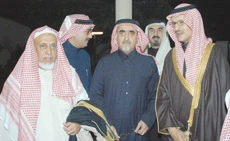
The case and the subsequent mediation efforts that led to the pardon have been closely followed by the Eastern Province Governor Prince Muhammad ibn Fahd, Prince Abdul Aziz ibn Salman, deputy minister of petroleum, Saad Al-Othman, deputy governor of the Eastern Province, and Sheikh Muhammad ibn Zayed All-Sulaiman, chairman of the Eastern Province courts.
Three Saudis were convicted in the murder of Abdul Aziz Al-Kohaji, then 22, while attending Community College of Denver. One of the three, Naif Al-Yousif, then 24, was convicted of first-degree murder by a United States court and sentenced to life imprisonment.
The other two, Mishaal Al-Suwaidi and Tariq Al-Dosary, fled to Saudi Arabia, where they were arrested, tried and convicted. They were sentenced to die by the sword.
Al-Kohaji was reported missing Jan. 18, 2001. His body was found in a landfill in Erie, 24 kilometers north of Denver, on Feb. 8, 2001. Police then said they believe he was killed by three acquaintances in a robbery plot. Friends reported Al-Kohaji missing after he failed to show up for classes. Police said he had been taped to a chair and strangled before his body was thrown into a trash bin.
Prince Abdul Aziz said the father, Ibrahim Al-Kohaji, pardoned the killers of his son seeking nothing but reward from the Almighty Allah. A mosque will be built in memory of the murdered son after the family obtained the approval of Prince Muhammad ibn Fahd who played a leading role in assisting Al-Kohaji family from the beginning until the announcement of the pardon.
The father said a week before the sentence was carried out on the two suspects, police contacted him and informed him of the date of execution. He said the family had been in contact with scholars and religious men to take their opinion and they all advised them on issuing a pardon.
“I asked the authorities to give us a few months to reflect on the matter, during which period I contacted Prince Abdul Aziz who together with Minister of Petroleum Ali Al-Naimi, and Prince Bandar ibn Sultan, the Kingdom’s ambassador to Washington, played an honorable role in the case. Prince Abdul Aziz asked to come and see in the presence of Sheikh Al-Sulaiman and Al-Othman,” he said.
He said the reason that led him to pardon was that the Saudi judiciary system applies the Shariah, and that the sentencing of the two to death came as consolation to the family. “The scholars I contacted have all encouraged me to issue the pardon and seek the reward from the Almighty Allah. I chose the divine reward over all other considerations. We saw that our son was gone and will not return, and we decided to pardon without seeking anything in return. I wanted to prove that we, Saudis, have a fair and just judiciary system and strict law enforcement authorities and that we can pardon from a position of strength.”